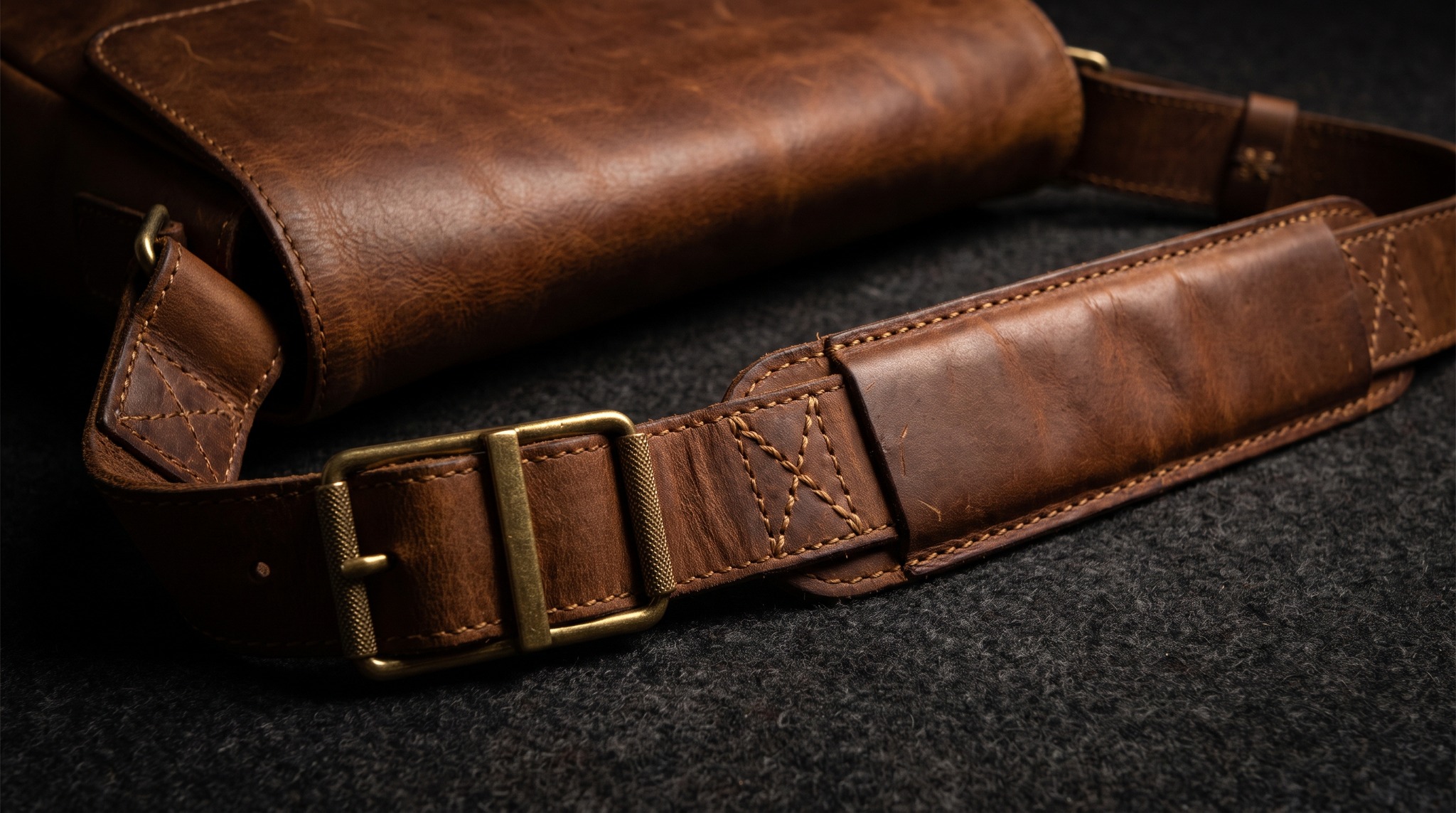
Bag with Shoulder Strap: Adjusting Length, Checking Padding
You carry your bag over your shoulder daily and feel an uncomfortable pressure or pulling after just a few hours? The strap cuts in, constantly slips down, or the bag hits your hip when walking? These problems usually arise from incorrectly adjusted strap length or insufficient padding. With a few simple adjustments and the right attention to material and construction, carrying comfort can be significantly improved.
The Right Strap Length for Your Height
The optimal length of the shoulder strap depends on your height and the desired carrying position. As a rule of thumb: the bag should end at hip height, no lower than your waistline and no higher than your navel. For a height of 175 to 185 cm, the ideal strap length is usually between 110 and 130 cm, measured from attachment point to attachment point. Shorter individuals require correspondingly shorter straps, taller individuals longer ones. Adjust the length so that the bag sits close to your body without restricting your freedom of movement.
Padding: Material and Width Matter
High-quality padding distributes weight evenly across the shoulder and prevents pressure points. Check whether the strap is at least 4 cm wide and has a continuous foam insert of at least 8 mm thickness. Leather or neoprene as outer material provides better grip than smooth synthetic fibres. The padding should be firmly stitched, not just glued, and should not shift even under load. Test the strap by loading the bag with typical weight and carrying it for a few minutes.
Adjustment Mechanisms: Buckles and Sliders
Modern bags use different systems for length adjustment. Metal buckles with pin closures allow precise adjustment in small increments, but can come undone if of inferior quality. Slide buckles made of metal or reinforced plastic can be adjusted continuously, but require occasional tightening. Ensure that all adjustment elements sit firmly and do not loosen unintentionally. With high-quality Cases and Bags, the fittings are made of solid brass or stainless steel and withstand years of use.
Carrying Position for Different Occasions
The ideal carrying method varies depending on the situation. For everyday use, the classic shoulder position with the bag at the side of the hip is recommended. For longer distances or heavy loads, the crossbody carrying method diagonally across the upper body relieves the shoulder. The strap should be adjusted so that the bag sits securely on the back or at the side. For formal occasions, carry the bag shorter so that it ends just below the armpit and does not strike against the suit fabric.
Care and Inspection of Attachment Points
Regularly check the points where the strap is attached to the bag. High-quality models have double-stitched tabs with metal rings or carabiner hooks. The seams should show no frayed areas, and the rings must not be bendable. Leather straps occasionally require treatment with leather care products to remain supple. Textile straps can usually be cleaned with a damp cloth. Replace worn straps in good time before the attachment gives way.
Related items: Caps, Belts, Luxury Slippers. The complete range: Menswear and Accessories.
All Il Padrino Moda news at a glance
Related categories: Caps, Belts, Luxury Slippers. The full range: Men's Fashion and Accessories.
Read more: Women's Jewellery for Men's Wardrobes: Adjusting Chain Thickness and Length, Suit Breast Pocket: Size and Position for Pocket Square, Made in Italy: How to Recognise Real Craftsmanship, Rubber Stopper for Leather Soles: Function and Use with Slippers, Buying a Bag with Patina: Signs of Use or Damage