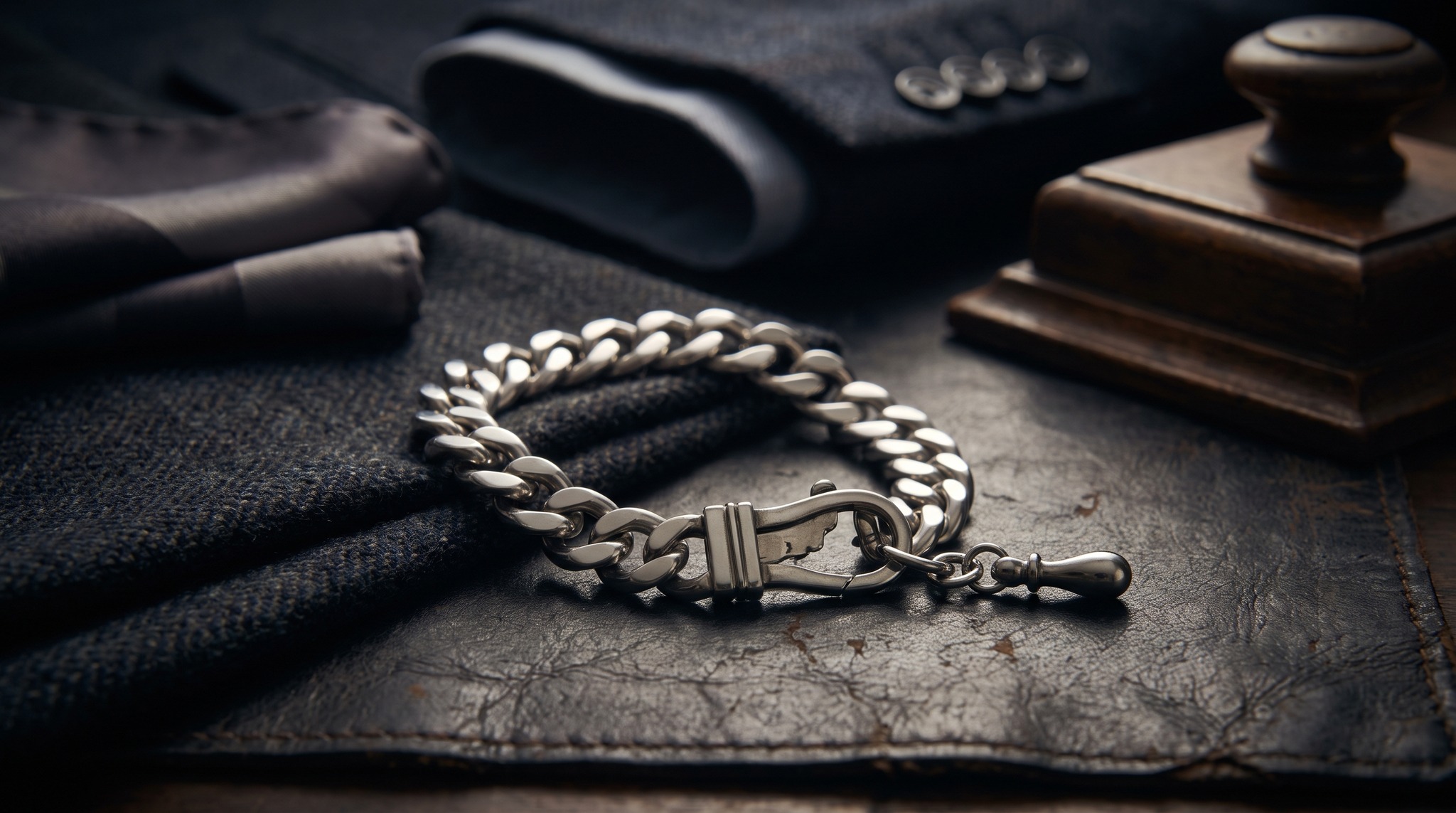
Adjusting Bracelet Length: Measuring Your Wrist and Allowing Play
You have found a statement bracelet that perfectly complements your look, but when wearing it, it either slips over your hand or constricts your wrist. The correct length determines whether a bracelet appears elegant or becomes a burden. How do you measure your wrist correctly, and how much play should remain between skin and metal? We clarify these questions below.
Measuring Your Wrist Correctly
Take a flexible measuring tape and place it around the narrowest part of your wrist, just below the wrist bone. The tape should fit snugly but not cut in. Note the value in centimeters. If you do not have a measuring tape at hand, use a piece of string or a strip of paper, mark the point where the ends meet, and then measure with a ruler. This circumference forms the basis for the bracelet length.
Adding the Correct Amount of Play
To the measured wrist circumference, add between half a centimeter and two centimeters, depending on the desired fit. Half a centimeter creates a tight fit, ideal for narrow link bracelets or leather bracelets that should sit close to the wrist. One centimeter of play provides comfortable everyday wear: the bracelet sits securely but does not slip over the hand. Two centimeters of allowance create a loose, casual fit, where the bracelet slides slightly back and forth on the forearm. This more generous allowance is recommended for wide statement pieces or curb chains.
Rule of Thumb for Different Bracelet Types
Different bracelet styles require different fits. The following guidelines serve as orientation:
- Link bracelets and curb chains: wrist circumference plus 1 to 1.5 centimeters
- Leather bracelets with clasp: wrist circumference plus 0.5 to 1 centimeter
- Wide cuffs: wrist circumference plus 1.5 to 2 centimeters
- Bead bracelets or elastic bands: wrist circumference plus 1 to 2 centimeters, depending on elasticity
Using Adjustable Clasps
Many high-quality bracelets feature adjustable clasps or extension chains that allow for individual adjustment. Check before purchasing whether the chosen model offers this option. This allows you to vary the length depending on daily condition, temperature, or wearing comfort. For permanently closed bracelets without adjustment options, precise advance measurement is all the more important.
Considering Wearing Position and Combination
Consider where you want to wear the bracelet. It sits tighter directly at the wrist than further up on the forearm. If you combine multiple bracelets, each individual piece should have sufficient freedom of movement so they do not rub against each other or catch. In the Men's Jewelry category, you will find pieces that can be worn both solo and stacked.
Factoring in Material and Weight
Heavy link bracelets made of solid metal require more play than lightweight leather bracelets, as they would otherwise rest uncomfortably on the bone. Width also plays a role: a wide bracelet encompasses more surface area and should therefore sit more loosely. If in doubt, test different lengths before committing. High-quality pieces from the Jewellery category deserve a fit that emphasizes their character rather than hindering it.
Related items: Ladies Jewelry, Suits, Suits and jackets. The complete range: men's fashion and accessories.
All Il Padrino Moda news at a glance
Related categories: Ladies Jewelry, Suits, Suits and jackets. The full range: Men's Fashion and Accessories.
Read more: Jewellery Storage for Travel: Case or Roll, Jacket Tailoring: Where the Seam Shapes the Silhouette, Women's Jewellery in a Masculine Style: Wearing Chains, Rings and Bangles with Confidence, Cap Material: Wool, Linen or Cotton Depending on the Season, Belt Hole Spacing: Which Width Helps with Weight Fluctuations