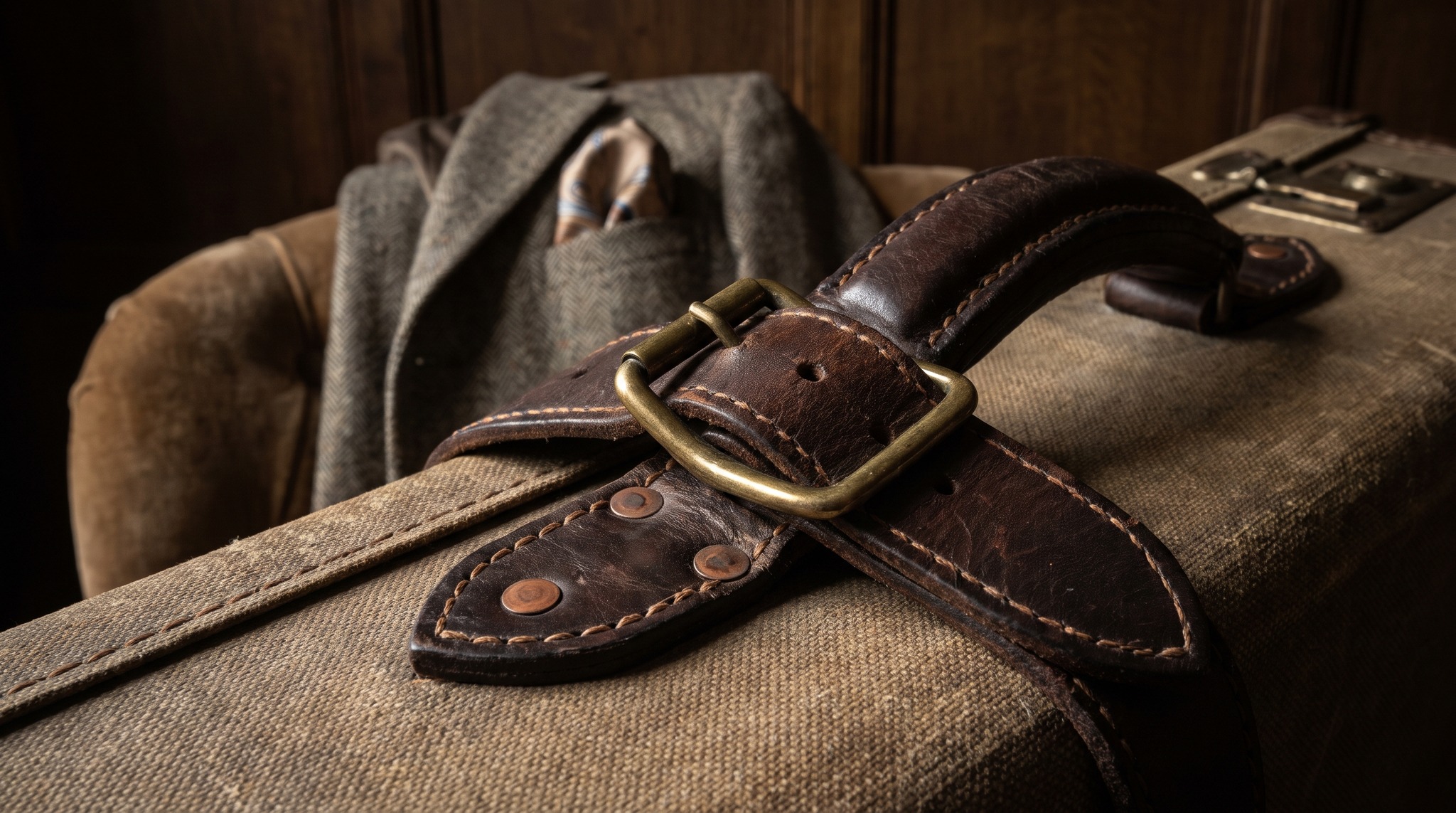
Attaching Suitcase Straps: How to Properly Install Stitching, Rivets or Buckles
You have purchased a high-quality leather suitcase or want to replace a damaged carrying strap? The type of attachment determines how long the strap will last and whether it can be replaced if necessary. Whether you choose a stitched connection, rivets or a buckle solution depends on the suitcase material, the load and your craftsmanship skills. This guide shows you the three common methods with their respective advantages and disadvantages.
Stitched Attachment: Classic and Permanent
A stitched connection is particularly suitable for leather suitcases and canvas luggage. You need a saddler's needle, waxed polyester thread at least 1.2 millimetres thick and an awl for pre-punching the holes. Fold the strap double around the attachment point on the suitcase, pre-punch holes at regular intervals of five to six millimetres and sew with a saddle stitch. This method withstands loads of up to 25 kilograms, but is difficult to undo.
Setting Rivets: Robust and Workshop-Grade
Hollow rivets or double-cap rivets provide an extremely durable connection suitable for hard-shell suitcases and reinforced leather goods. Mark the position, pre-drill with a 4.5-millimetre drill bit and set the rivet with a riveting tool. Ensure that the rivet length matches the material thickness exactly: for a three-layer structure consisting of strap, reinforcement and suitcase wall, you need rivets with a shaft length of eight to ten millimetres. Professionally set rivets last a lifetime.
Buckles and Carabiners: Flexible and Replaceable
If you want to remove or replace the strap regularly, buckles are the right choice. D-rings made of brass or stainless steel are permanently mounted on the suitcase, while the strap is attached with a clip buckle or carabiner hook. This solution is frequently found on vintage-style Cases and Bags. The D-rings themselves are attached either with screws through the suitcase wall or with a combination of rivets and washers.
Consider Material Thickness and Load Limits
A carrying strap should be at least 30 millimetres wide and 3.5 millimetres thick if you regularly transport weights over ten kilograms. On Cases and Bags from the 1920s, straps were often 40 millimetres wide and made from vegetable-tanned cowhide. Before installation, check whether the attachment points on the suitcase itself are stable enough: for hard shells, you should attach reinforcement plates made of aluminium or plastic on the inside, for leather goods a double layer of the outer material is usually sufficient.
Tools and Work Steps at a Glance
For professional strap attachment, you need the following basic equipment:
- Awl or punch for holes between 2 and 4.5 millimetres
- Saddler's needles in size 18 or 20
- Waxed thread, at least 1.2 millimetres in diameter
- Riveting tool or rivet pliers for hollow rivets
- Metal saw and file for shortening rivets
- Screwdriver and washers for buckle installation
Care After Installation
Treat newly attached leather straps with leather grease or saddle soap to keep the material supple and prevent it from breaking at the attachment points. Check stitching and rivets every six months for wear, especially if you use the suitcase frequently. With stitched connections, the first weak points appear as frayed thread, with rivets as play between rivet and material. Timely replacement prevents the strap from giving way at the most inconvenient moment.
Related items: Caps, Belts, Luxury Slippers. The complete range: Men's Fashion and Accessories.
All Il Padrino Moda news at a glance
Related categories: Caps, Belts, Luxury Slippers. The full range: Men's Fashion and Accessories.
Read more: Replacing a Belt Buckle: Releasing the Mechanism and Fitting a New Clasp, Women's Jewellery for Men's Style: Adjusting Chain Thickness and Length, Baroque Chest of Drawers as Storage Surface: Height, Width, Number of Drawers, Pleated Trousers in Winter: Wool Weight and Lining, Storing Accessories: Box, Display Case or Drawer for Jewellery and Belts