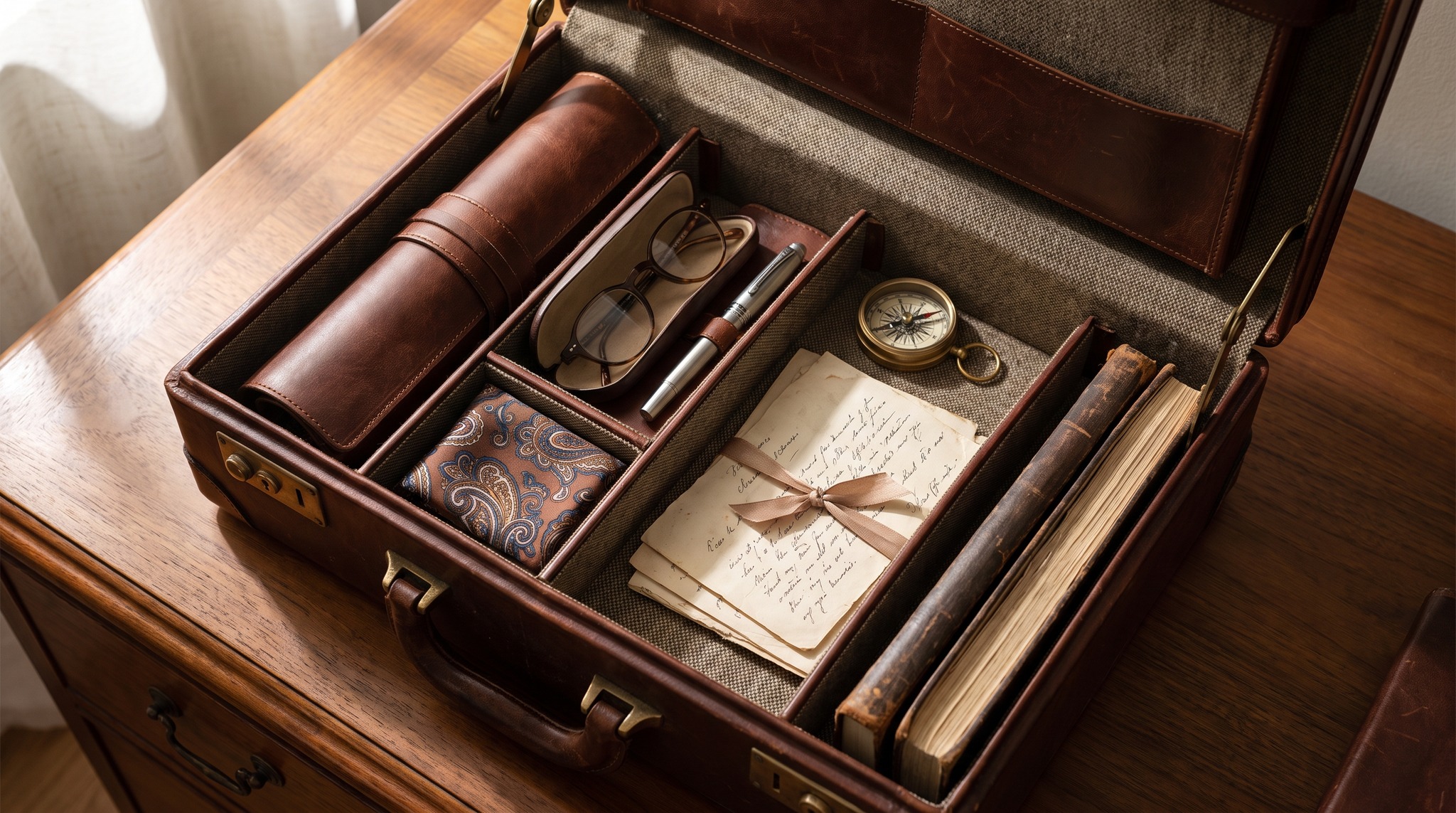
Bag with Interior Compartments: Organisation for Jewellery and Papers
Anyone who carries statement jewellery, business cards, papers and small items knows the problem: everything slides around together, rings get scratched, chains become tangled, important documents crease. A well-designed bag with interior compartments provides the solution. But which layout makes sense? How many compartments does one really need? And what matters when it comes to material and construction?
Why Interior Compartments Make the Difference
A bag without structure quickly becomes a jumble. Jewellery pieces lie loose, papers fold, keys scratch surfaces. Interior compartments create defined zones: a padded compartment for rings and cufflinks, a flat one for documents, a narrow one for cards. This saves time when searching and protects delicate pieces from damage. High-quality Cases and Bags offer this structure as standard, often with removable dividers or zip compartments.
The Ideal Compartment Layout for Everyday Use
For daily use, the following layout has proven effective:
- A padded main compartment for larger items such as wallet or smartphone
- Two to three flat slip pockets for papers, tickets or invitations
- A zip compartment for jewellery, ideally with soft interior lining
- A narrow card slot for business cards or identification
- An exterior pocket for quick access to keys or tissues
This structure works for both briefcases and smaller vintage-style leather bags.
Material and Construction of Interior Compartments
The interior compartments should be made from soft, scratch-resistant material. Suede or microfibre protects jewellery surfaces better than rough cotton fabric. Zips must run smoothly and lie flat so they do not cause pressure marks in the leather. Seams should be double-stitched, particularly at heavily stressed points such as compartment openings. With high-quality Accessoires, quality is often evident in the details: reinforced corners, cleanly finished edges, even stitching.
Consider Size and Proportions
The compartment size must suit the contents. A jewellery compartment should measure at least 8 by 12 centimetres so that rings do not knock against each other. Document compartments work best in A5 format or larger. Too many small compartments create more chaos than order. Three to five well-dimensioned areas are usually sufficient. The main compartment should occupy at least two-thirds of the bag volume so that larger items do not need to be squeezed in.
Removable Organisers as a Flexible Solution
Some bags offer removable interior pockets or organisers. This solution has advantages: you can use the organiser separately, replace it if needed, or transfer it to another bag. Leather cases with their own compartments can thus be used as jewellery rolls and easily taken along when travelling. Ensure that removable elements can be secured with press studs or loops so they do not shift around in the main compartment.
Care and Longevity of Interior Compartments
Interior compartments made from fabric or leather require regular care. Remove dust and crumbs with a soft brush. Fabric inserts can be removed and carefully hand-washed in some models. Treat leather compartments with a colourless care product, but sparingly, so the material does not swell. Check seams and zips every few months for wear. Repaired in good time, high-quality bags with well-designed interiors last for decades.
Related items: baroque mirrors, Pleated trousers, Caps. The complete range: menswear and accessories.
All Il Padrino Moda news at a glance
Related categories: baroque mirrors, Pleated trousers, Caps. The full range: Men's Fashion and Accessories.
Read more: Jewellery Storage for Travel: Case or Roll, Jacket Tailoring: Where the Seam Shapes the Silhouette, Suit button stance: one, two or three buttons to fasten, Belt Buckle: Size and Shape for Every Occasion, Determining Ring Size: Circumference, Width, Comfortable Fit