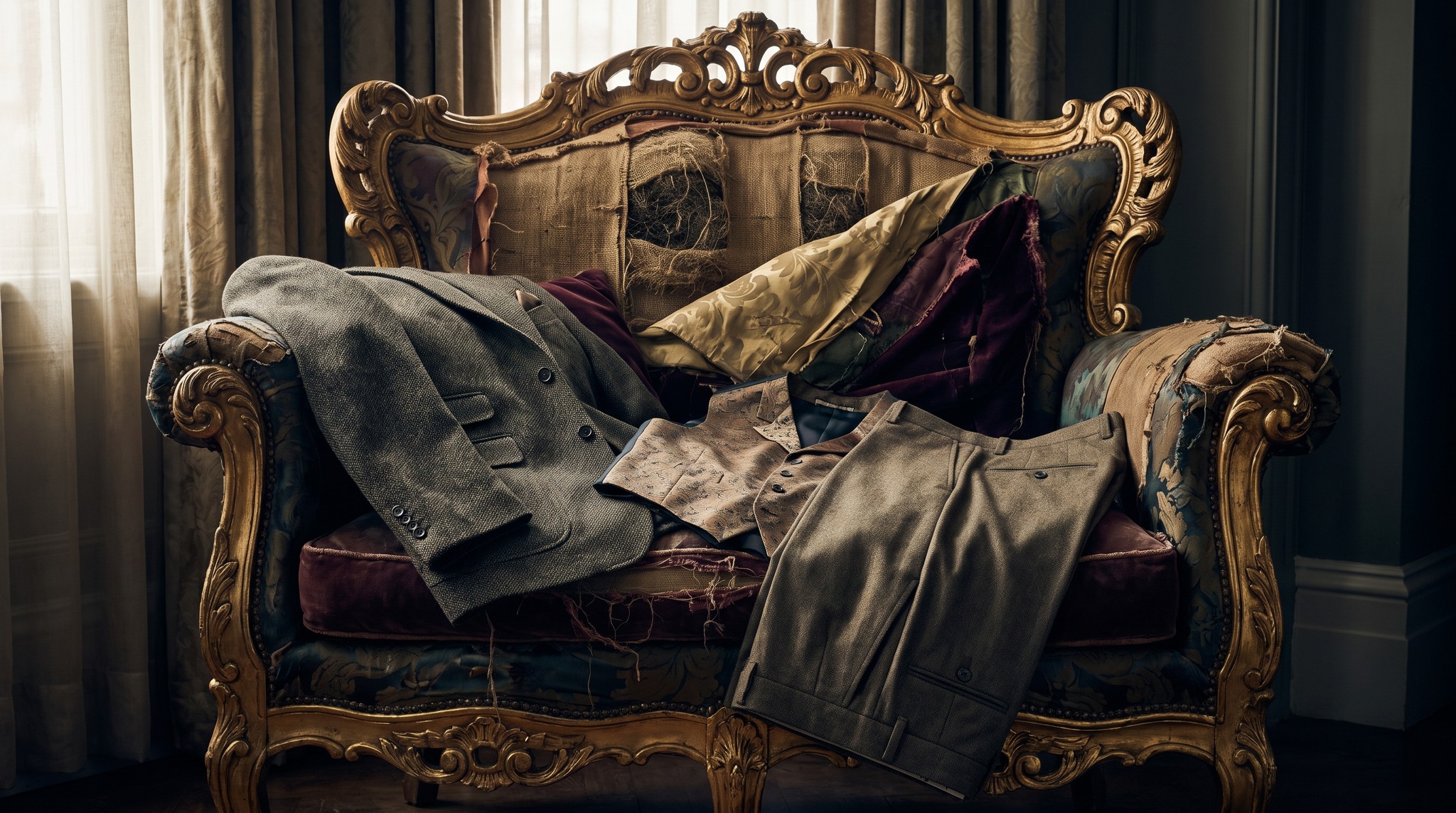
Reupholstering Baroque Armchairs: Foam, Spring Core or Horsehair
You own a baroque armchair whose upholstery is worn out or whose cover no longer matches your interior? Then you face the question of which material is right for the new upholstery. Foam, spring core and horsehair differ considerably in seating comfort, durability and authenticity. We show you which upholstery suits your armchair and your requirements.
Horsehair: the historically correct choice
Original baroque mirrors was upholstered exclusively with horsehair in the 17th and 18th centuries. The material provides a firm, elastic base that adapts to the body without giving way. Horsehair is breathable, regulates moisture and retains its shape for decades. However, processing requires craftsmanship: the hair must be built up in layers, fixed with linen and distributed evenly. The costs are significantly higher than those of modern materials, but for listed or museum pieces, horsehair is often the only option.
Spring core: comfort with tradition
Spring core upholstery consists of individual steel springs sewn into fabric pockets and connected to each other. Above these are layers of felt, fleece or foam. Spring core offers medium-firm to soft seating comfort with good resilience. The upholstery adapts to the body without the armchair losing its shape. Spring core is particularly suitable for armchairs that are used daily, as the material is robust and durable. However, after years, noises may occur when the springs loosen or the connections wear out.
Foam: modern, affordable, versatile
Upholstery foam is available in different densities and degrees of firmness. For baroque armchairs, a density of at least 35 kg/m³ is recommended, preferably 40 to 50 kg/m³, to ensure sufficient support and durability. Foam can be cut precisely, is easy to process and inexpensive. However, inferior foam loses its elasticity after just a few years, sags and must be replaced. High-quality cold foams last longer, but do not achieve the lifespan of horsehair or spring core. Visually and haptically, foam upholstery differs significantly from historical techniques.
Combinations: the best of both worlds
Many upholsterers combine materials to unite comfort and authenticity. A common solution is a spring core as a base, above it a layer of foam for softness and as the top layer a thin layer of horsehair or felt for the characteristic feel. This creates upholstery that feels historical but meets modern comfort requirements. A combination of foam and horsehair is also possible: the foam forms the basic shape, horsehair provides the surface and prevents the cover from resting directly on the plastic.
What you should consider when choosing
The decisive factor is how you use the armchair. For an exhibition piece or a rarely used armchair, horsehair is the authentic choice. For daily use, spring core offers the best compromise between comfort and durability. Foam is suitable if the budget is limited or if the armchair is to be reupholstered in a few years anyway. Consult an upholsterer who examines the furniture: the condition of the frame, existing webbing and the original upholstery provide clues as to which technique is suitable. Make sure that the craftsman has experience with historical furniture, because baroque armchairs require different techniques than modern upholstered furniture.
Related: Men's Jewelry, Suits, Suits and jackets. The complete range: Men's Fashion and Accessories.
All Il Padrino Moda news at a glance
Related categories: Men's Jewelry, Suits, Suits and jackets. The full range: Men's Fashion and Accessories.
Read more: Wool Cap in Rain: Waterproofing or Natural Drying, Retrofitting Suitcase Handles: Renewing Leather Wrapping Yourself, Ironing Pleated Trousers: Creating Creases Without Shine, Earrings with High Collars: Style Rules for Gentlemen, How to Wear Slippers Properly: Style Rules With and Without Socks