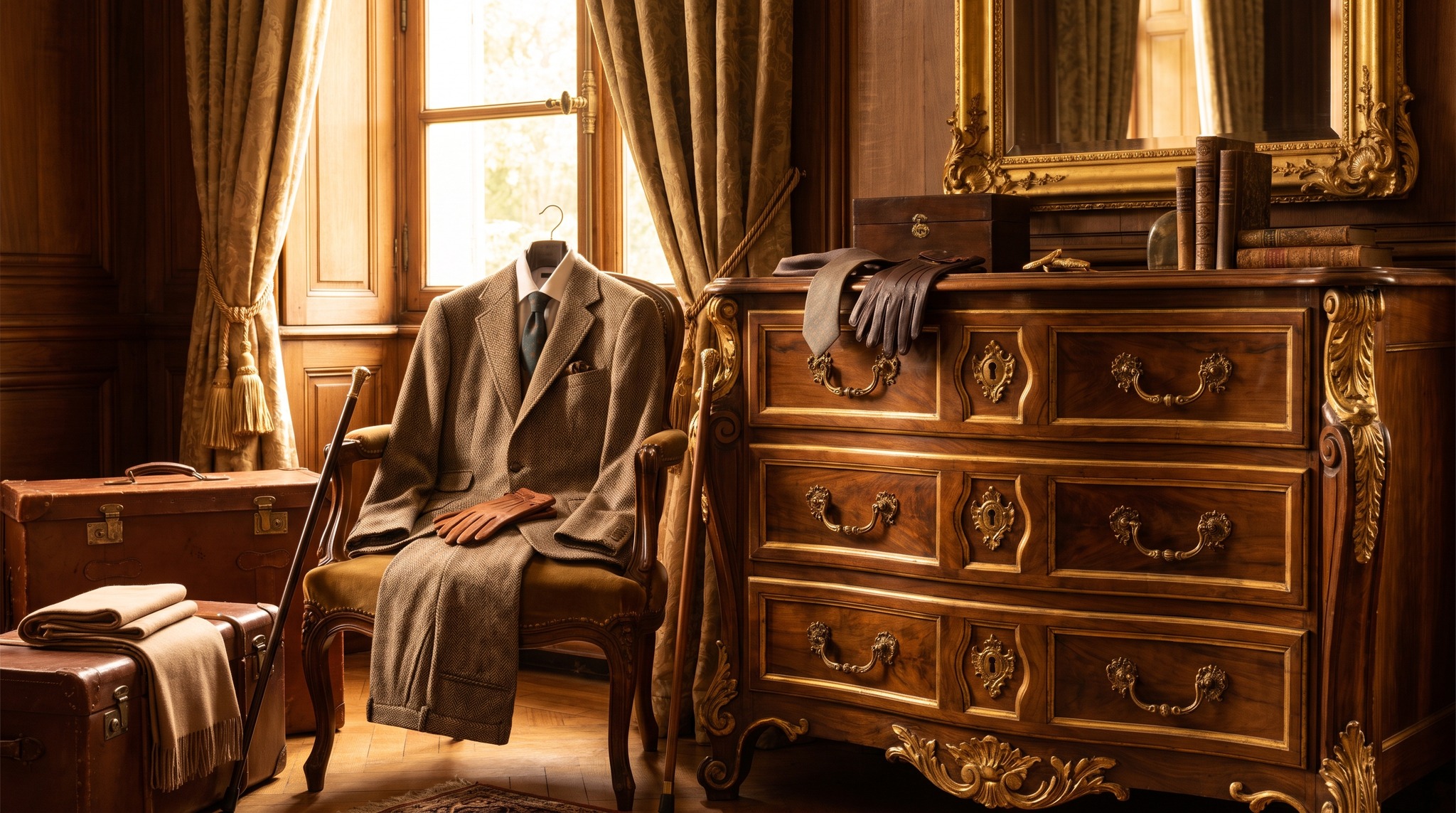
Illuminating a Baroque Chest of Drawers: Spotlights or Indirect Light
You have acquired a magnificent Baroque chest of drawers and are now wondering how to showcase this piece of furniture to its best advantage. The right lighting determines whether the carved ornaments, gilded fittings and curved lines stand out or disappear into the room. You face a choice: directional spotlights that highlight individual details, or soft indirect light that plays around the entire chest. Both approaches have their merits, but the decision depends on room size, furniture position and the desired effect.
Directional Spotlights for Three-Dimensional Effect
Ceiling spotlights or adjustable spots create targeted light accents on the chest of drawers. A beam angle of 30 to 40 degrees illuminates the front surface without lighting the entire room. Position the spotlight approximately 1.5 to 2 metres in front of the chest at a 45-degree angle to the surface. This way, the carvings cast distinct shadows that create depth and three-dimensionality. LED spotlights with warm white light (2700 to 3000 Kelvin) emphasise gold tones and dark woods without distorting the patina. Dimmers allow you to adjust the intensity according to the time of day.
Indirect Light for Harmonious Overall Effect
Wall washers or LED strips behind the chest of drawers create a halo of light that sets the furniture apart from the background. This technique is particularly suitable for rooms where the chest should not stand alone but be part of an ensemble. The light gently grazes the surface without casting hard shadows. Mount LED strips at least 10 centimetres from the wall to ensure even light distribution. Colour temperatures around 2700 Kelvin create a warm atmosphere that suits baroque mirrors and emphasises its opulent character.
Combining Both Light Sources
The most effective presentation often results from the interplay of spotlight and indirect light. A central spotlight highlights the centre of the chest, whilst surrounding light emphasises the silhouette. This layering creates depth and prevents individual areas from being overexposed. Ensure that both light sources can be switched separately. This allows you to choose between representative full illumination and subtle background lighting depending on the occasion. Total brightness should not exceed 300 to 500 lumens per square metre of furniture surface to avoid overexposure.
Distance and Alignment as Success Factors
The position of the light source determines which details become visible. Spotlights placed too close create harsh contrasts and cause glare on gilded surfaces. A minimum distance of 80 centimetres from the chest prevents hotspots. For indirect lighting, the rule is: the greater the distance between LED strips and wall, the softer the light gradient. For a 120-centimetre-wide chest, a continuous LED strip of at least 100 centimetres in length is recommended. Avoid light sources at eye level that shine directly onto glossy surfaces, as these create reflections and overexpose the ornamentation.
Colour Rendering and Material Protection
High-quality LEDs with a colour rendering index (CRI) above 90 display wood tones, gilding and inlays true to life. Inexpensive lamps distort colours and make fine veneers appear dull. Also ensure UV-free light sources, as ultraviolet radiation bleaches wood and damages lacquers. Modern LED technology meets this requirement as standard. For valuable antiques, you should limit the lighting duration: continuous illumination for more than eight hours daily accelerates ageing processes. Timers or motion sensors offer practical solutions for needs-based lighting without loss of comfort.
Related items: Men's Jewelry, Suits, Suits and jackets. The complete range: Men's Fashion and Accessories.
All Il Padrino Moda news at a glance
Related categories: Men's Jewelry, Suits, Suits and jackets. The full range: Men's Fashion and Accessories.
Read more: Suit Jacket Vent: Centre, Side or None, Slipper Fit: Where the Shoe May Pinch and Where It Must Not, Rings for Men and Women: Shape, Size, Effect, From the Ballroom to the Screen: The History of the Zoot Suit, Cufflinks: The Smallest Detail With the Greatest Effect