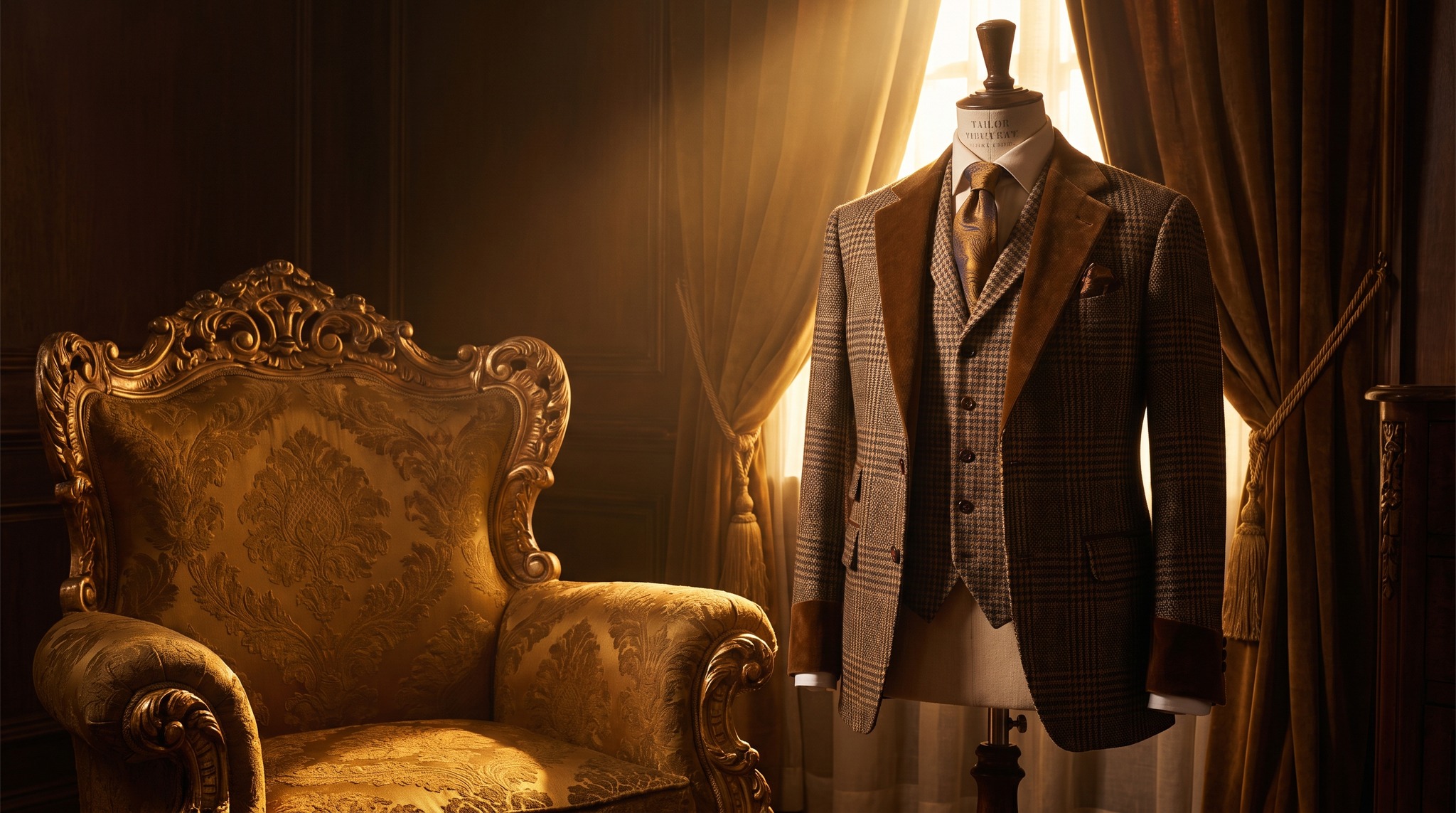
Baroque in Fabric and Space: Why 1920s Cuts and Heavy Furniture Share the Same Attitude
Those who choose wide-cut pleated trousers and zoot suit jackets often sense a curious kinship with opulent interiors of past epochs. In fact, the silhouettes of the 1920s and baroque interior design share more than just a penchant for theatricality. Both rely on volume, on deliberate exaggeration of form, and on an attitude that occupies space rather than retreating. Why does a man in a three-piece suit with a high waist feel so harmonious in a room with carved consoles and heavy velvet?
Volume as an Expression of Confidence
The Baroque loved curved lines, elaborate carvings, and furniture that dominated the room. The fashion of the 1920s worked with similar principles: shoulder sections were emphasised, trousers were cut with waistband heights of 38 to 42 centimetres, leg widths reached 26 to 30 centimetres at the hem. Both styles understand form not as a means of adaptation, but as a statement. A jacket with wide lapels and a low button stance takes up the same space as a baroque armchair with a high backrest.
Fabric and Material as Carriers of Weight
Baroque upholstered furniture relied on heavy velvet and brocade fabrics, on materials that developed presence through their own weight. The Suits and jackets of the twenties followed the same logic: wool fabrics weighing 280 to 350 grams per square metre, lining made of viscose or silk, buttons made of horn or mother-of-pearl. The weight of the fabric ensures that the folds drape rather than crease, that the silhouette maintains its form. Heavy materials demand an upright posture, they carry the body rather than clinging to it.
Ornament and Detail as Signs of Craftsmanship
In the Baroque, every surface was an opportunity for decoration: inlays, gilding, turned legs. The fashion of the 1920s translated this design ambition into pinstripes, contrast stitching, piping, and decorative buttons on the cuffs. Both epochs understood clothing and furnishings as a total work of art, in which no element was placed by chance. Those who choose baroque mirrors today seek the same attention to detail that distinguishes a hand-sewn buttonhole or double waistband construction.
The Stage as a Common Reference Point
Baroque and the fashion of the Roaring Twenties emerged in times when representation and staging were central. The ballroom, the theatre, the salon: spaces where appearance and performance merged. A man in a three-piece suit with waistcoat and watch chain moves in a baroque-furnished room not as a foreign body, but as part of a considered composition. Both styles demand a conscious posture, a controlled gait, a presence that cannot be casual.
Fit as an Architectural Principle
A baroque piece of furniture follows clear proportions: the height of the backrest to the depth of the seat, the ratio of leg to body. The same applies to a zoot suit: the waistband height determines where the waist sits, the shoulder width defines the silhouette, the hem length the ratio of torso to leg. Both systems work with fixed rules that create harmony through proportion. Those who know these rules can break them, but never ignore them.
Why This Kinship Is Felt Again Today
In an era of simple cuts and minimalist interiors, both baroque furniture and 1920s suits appear as deliberate counterproposals. They demand courage for opulence, for visible design, for attitude. Those who combine both create not a costume, but an atmosphere in which fabric and space speak the same language: that of confident form.
All Il Padrino Moda news at a glance
Related categories: Belts, Cases and Bags, Luxury Slippers. The full range: Men's Fashion and Accessories.
Read more: Shoulder, Length, Waist: What Makes a Jacket Look Large or Small, Cufflinks, Pocket Square, Chain: How Much Detail Can an Outfit Handle, From the Ballroom to the Screen: The History of the Zoot Suit, Cufflinks: The Smallest Detail With the Greatest Effect, Braces or Belt: What Suits High Pleated Trousers