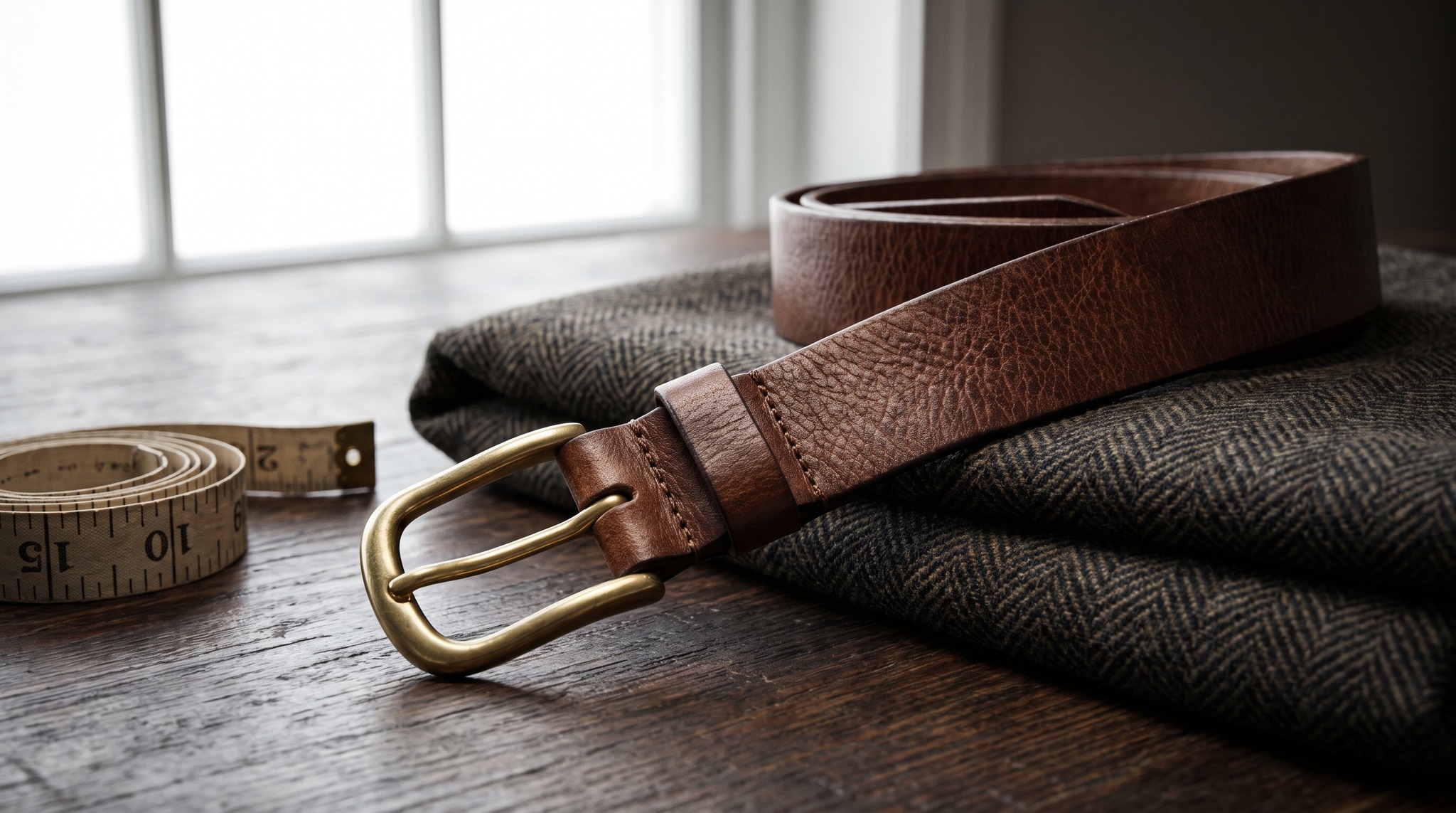
Belt Hole Spacing: Which Width Helps with Weight Fluctuations
Anyone purchasing a high-quality leather belt wants to wear it for years. But what happens when your waistline changes? Two kilograms more in winter, three less after a holiday: such fluctuations are normal. The question is how much flexibility a belt must offer so that it does not become too tight or too loose after just a few months. The hole spacing determines whether you remain flexible or need to buy a replacement.
The Standard Hole Spacing is 2.5 Centimetres
Most belts have five holes with a spacing of 2.5 centimetres. The middle hole is considered the ideal position: here the buckle sits centrally, the belt appears balanced. From this middle hole you have two holes to the left and right, providing a total of ten centimetres of flexibility. With moderate weight fluctuations of three to four kilograms, this range is usually sufficient to adjust the fit without the belt appearing visually unbalanced.
How Much Waist Circumference Corresponds to One Hole
A hole spacing of 2.5 centimetres does not mean that your waist may increase by exactly this amount. After all, the belt wraps around the entire circumference. As a rule of thumb: one hole corresponds to approximately two to three kilograms of weight change, depending on body structure and distribution. Those who regularly fluctuate between two clothing sizes should ensure that the belt is worn in the middle hole at their current size. This leaves room for movement in either direction.
Wide Pleated Trousers Require Stable Belt Guidance
Extravagant trousers with a high waist and wide cut require a belt that not only fits but also provides support. With Belts featuring classic hole punching, the thickness of the leather and the width are therefore crucial. A 3.5 to 4 centimetre wide belt stabilises the waistband better than a narrow model and distributes the tension more evenly. Particularly with weight fluctuations, a solid belt prevents the waistband from slipping or forming unsightly wrinkles.
When an Additional Hole Makes Sense
Some wearers have a sixth hole punched retrospectively to extend the flexibility. This works as long as sufficient leather extends beyond the buckle. As a rule of thumb:
- At least eight centimetres of overhang after the buckle, so that the belt does not appear too short.
- No more than 15 centimetres, otherwise the end dangles awkwardly.
- An additional hole at the end of the row provides 2.5 centimetres of reserve without affecting the appearance.
Choosing the Right Size from the Start
When purchasing, you should know your current waist measurement and compare it with the belt size. Quality manufacturers specify the length from the buckle pin base to the middle hole. If your waist measurement falls exactly there, you automatically have flexibility. Those between two sizes should choose the longer option: better to fasten one hole tighter than to be at the limit. This way the belt remains wearable for years, even if your silhouette changes slightly.
Related items: Cases and Bags, Luxury Slippers, Jewellery. The complete range: Menswear and Accessories.
All Il Padrino Moda news at a glance
Related categories: Cases and Bags, Luxury Slippers, Jewellery. The full range: Men's Fashion and Accessories.
Read more: Determining Ring Size: Circumference, Width, Comfortable Fit, Breaking in slippers: stretching leather without damage, The Suit in Summer: Choosing Fabric Weight and Lining Correctly, Cufflinks, Pocket Square, Chain: How Much Detail Can an Outfit Handle, Arm Jewellery for Men: Pearls, Stone and Metal in 1920s Style