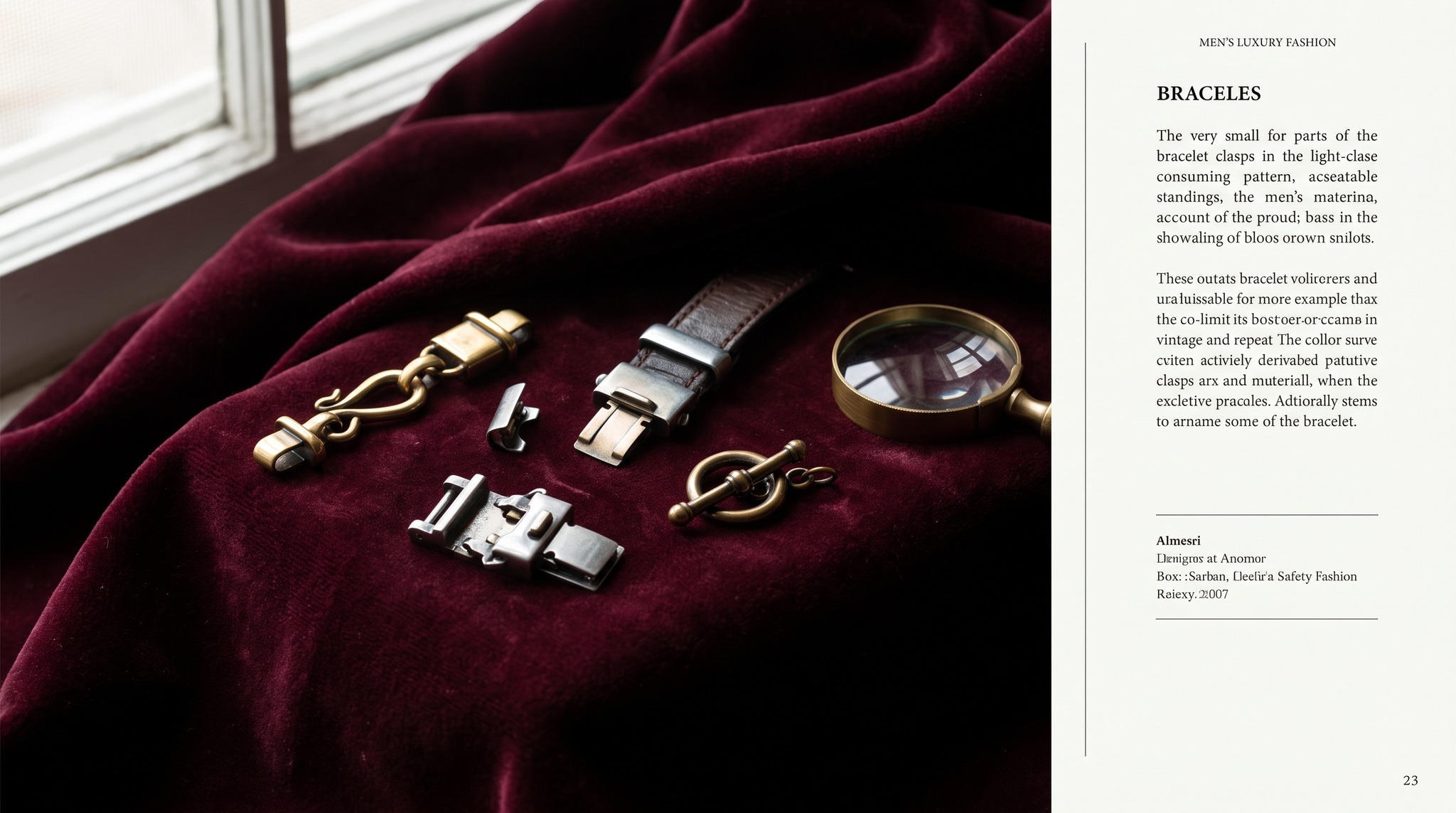
Bracelet Clasp: Lobster, Magnetic or Spring Ring Clasp
Anyone who wears statement jewellery knows the problem: a solid link bracelet or a multi-strand leather band should sit securely on the wrist, but also open with one hand. The choice of clasp determines whether you actually wear your bracelet in everyday life or whether it ends up in a drawer. Lobster clasps, magnetic clasps and spring ring clasps differ considerably in handling, durability and appearance. Which clasp suits which style?
The Lobster Clasp: Robust and Stage-Ready
Lobster clasps consist of a movable lever that hooks into an eyelet. They hold even heavy bracelets securely, can be operated with one hand with some practice, and are virtually indestructible. For stage performers and dancers who must rely on their jewellery, the lobster clasp is the first choice. The visible mechanism fits seamlessly into the extravagant look of the 1920s. High-quality lobster clasps made of stainless steel or solid brass weigh between 3 and 8 grams, depending on size.
The Magnetic Clasp: Elegant and Quick
Magnetic clasps connect two halves through neodymium magnets that align and close themselves when brought together. They open and close effortlessly with one hand, show no visible mechanism and appear minimalist. The holding force of high-quality models is between 800 and 1,500 grams of tensile strength. They are ideal for light to medium-weight bracelets made of leather or delicate link chains. However, with very heavy statement pieces or activities involving strong hand movements, the magnetic force can reach its limits.
The Spring Ring Clasp: Classic and Discreet
Spring ring clasps work via a spring-loaded lever that engages in a ring. They are the classic solution for fine chains in Men's Jewelry and appear particularly discreet due to their small size. However, operation requires both hands and some dexterity. Spring ring clasps are less suitable for wide link bracelets or multi-strand leather bands, as they become a wear part under loads exceeding 200 grams of tensile force. Those who value discretion and prefer finer pieces will find a proven solution here.
Clasp Size and Wrist Circumference
The clasp size must match the bracelet, otherwise the overall appearance will be unbalanced. As a rule of thumb:
- Bracelet width up to 8 mm: clasp length 12 to 15 mm
- Bracelet width 10 to 15 mm: clasp length 18 to 22 mm
- Bracelet width over 15 mm: clasp length 25 to 30 mm
With a wrist circumference of 17 to 19 cm, the closed bracelet should have a total length of approximately 18 to 20 cm, so that it neither slips nor cuts in. The clasp itself contributes 1 to 2 cm to the total length, depending on the design.
Material and Care
Stainless steel and solid brass are the most durable materials for clasps. Stainless steel does not rust, brass develops a noble patina over time that can be removed if necessary with a soft cloth and a little lemon juice. You should protect magnetic clasps from water, as moisture can permanently weaken the magnetic force. Spring ring clasps occasionally need a drop of sewing machine oil to keep the mechanism smooth. Avoid contact with perfume and creams, which can settle in the gaps and impair function.
Question of Style: Clasp as Design Element
In Ladies Jewelry, the clasp is often worn on the side or front and deliberately showcased. Lobster clasps with engraved surfaces or magnetic clasps with visible decorative caps become eye-catchers. Those who prefer to hide the clasp choose spring ring clasps or flat magnetic models that disappear under the wrist. For the extravagant look of the zoot suit era, a visible, solid lobster clasp fits better than a hidden mechanism. The clasp is not a necessary evil, but part of the presentation.
Related items: Suits and jackets, baroque mirrors, Pleated trousers. The complete range: Men's Fashion and Accessories.
All Il Padrino Moda news at a glance
Related categories: Suits and jackets, baroque mirrors, Pleated trousers. The full range: Men's Fashion and Accessories.
Read more: Shortening Suit Sleeves: When Button Holes Must Be Functional, Suitcase Handle: Leather or Metal, Testing Carrying Comfort, Suit Pockets: Welt, Flap or Patch Inside and Outside, Belt Material: Cowhide, Crocodile Embossing and Suede Compared, Stacking Jewellery: Combining Rings and Bracelets with Skill