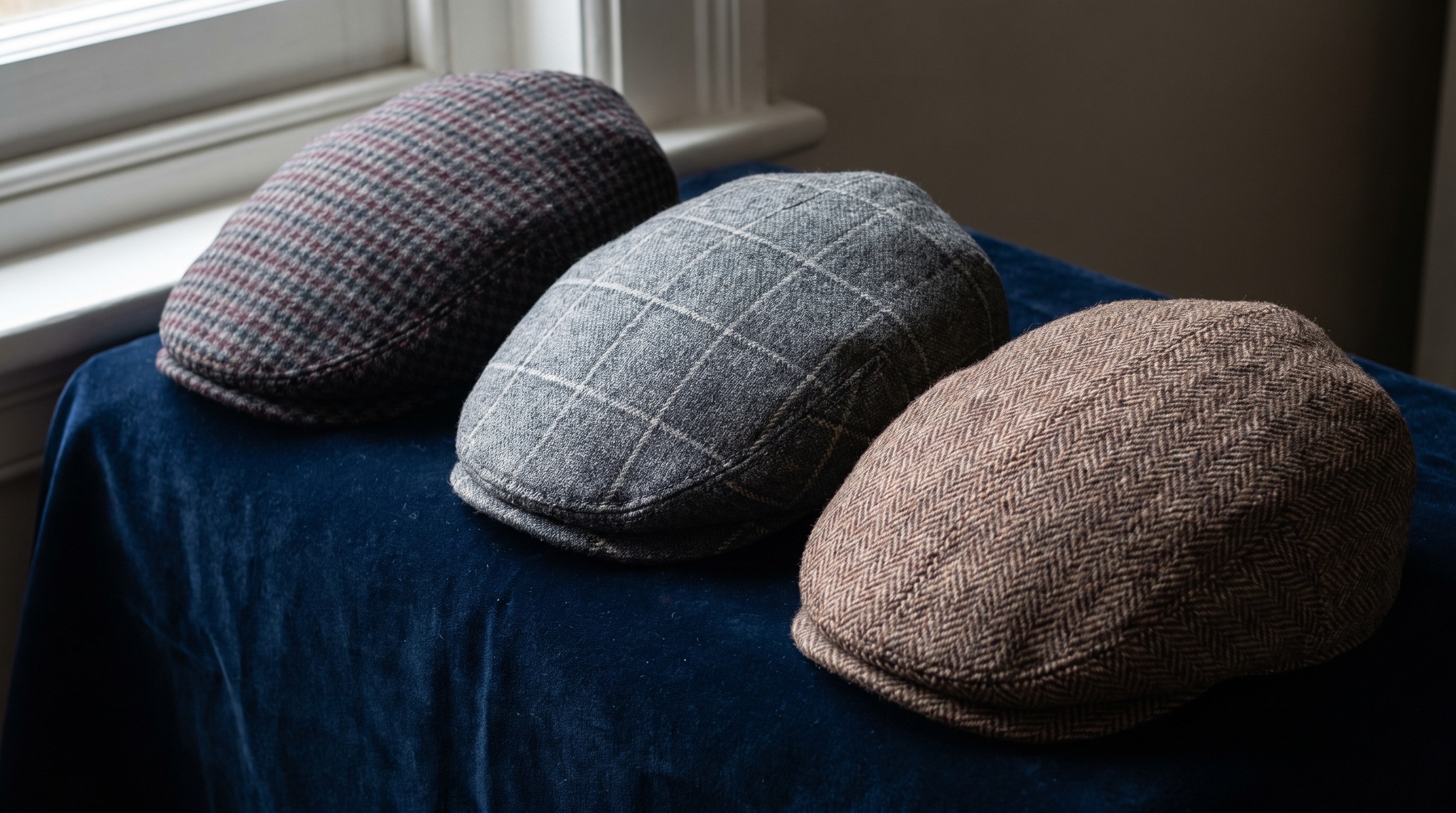
Cap Fabric: Herringbone, Houndstooth or Chevron for Your Face Shape
You want to wear a cap that not only emphasizes your style but also harmonizes with your facial features? The choice of fabric pattern plays just as important a role as cut and fit. Herringbone, houndstooth and chevron are classic weave patterns that create different visual effects. Which pattern suits which face shape and what you should consider when making your selection is explained here.
Herringbone for Distinctive Facial Features
The herringbone pattern is characterized by its V-shaped structure, which gives the fabric a subtle liveliness. The diagonal lines create a subtle dynamic without being obtrusive. Particularly with square or angular face shapes with a pronounced jawline, herringbone has a balancing effect: the soft transitions of the pattern visually soften hard contours. When choosing a cap in this pattern, look for a medium fabric weight between 280 and 350 g/m², which gives the headwear structure without appearing stiff.
Houndstooth for Round and Oval Faces
Houndstooth is a graphic pattern of staggered checks that creates structure and contrast. The clear lines and geometric interplay of light and dark give the cap a distinctive note. For round faces with soft contours, houndstooth creates a welcome accentuation: the pattern draws the eye upward and visually elongates. Oval face shapes also benefit from the graphic presence of the houndstooth pattern, as it emphasizes proportions without dominating. Choose a cap with a medium brim width of 6 to 7 cm to maintain balance.
Chevron for Narrow and Elongated Faces
Chevron patterns consist of continuous zigzag lines that run horizontally and thus suggest width. This visual effect makes chevron the ideal choice for narrow or elongated face shapes: the horizontal lines interrupt the vertical emphasis and create balance. The pattern appears lively and confident without being overloaded. Make sure that the chevron lines are not set too closely together; a spacing of 1.5 to 2 cm between the peaks ensures a harmonious appearance.
Consider Fabric Weight and Construction
Besides the pattern, fabric quality also determines wearing comfort and durability. High-quality Caps use wool blend fabrics or pure virgin wool with a weight between 300 and 400 g/m². This weight guarantees that the cap retains its shape and does not stretch out after just a few months. The weave density should be tight enough to keep out wind but remain breathable. Check the inside: a soft sweatband made of cotton or leather significantly increases wearing comfort.
Choose Color Contrast to Match Skin Tone
The effect of a pattern also depends on color contrast. For fair skin, patterns with medium contrast are recommended, such as grey-white or beige-brown, to avoid appearing too harsh. Darker skin tones can handle stronger contrasts such as black-white or navy-cream. As a general rule: the smaller the pattern, the more subtle the overall effect. Large-scale patterns create stronger accents and require corresponding confidence in appearance.
Check Fit and Sizing
No rule of thumb replaces trying on. Put on the cap and check in the mirror whether the pattern emphasizes your facial features favorably. The cap should sit horizontally, with the brim ending approximately at eye level. For adjustable models, ensure that the size adjustment offers at least 2 cm of leeway. A well-fitting cap does not slip but also does not press. The pattern should run evenly, without offset at the seams, a sign of careful construction.
Related items: Men's Jewelry, Suits, Suits and jackets. The complete range: Men's Fashion and Accessories.
All Il Padrino Moda news at a glance
Related categories: Men's Jewelry, Suits, Suits and jackets. The full range: Men's Fashion and Accessories.
Read more: Suit Collar: Coordinating Height and Width with Collar Size, Pleated Trousers with Waistcoat: Coordinating Waistband Finish and Length, Belt Material: Cowhide, Crocodile Embossing and Suede Compared, Stacking Jewellery: Combining Rings and Bracelets with Skill, Suit Combination: Coordinating Two Trousers with One Jacket