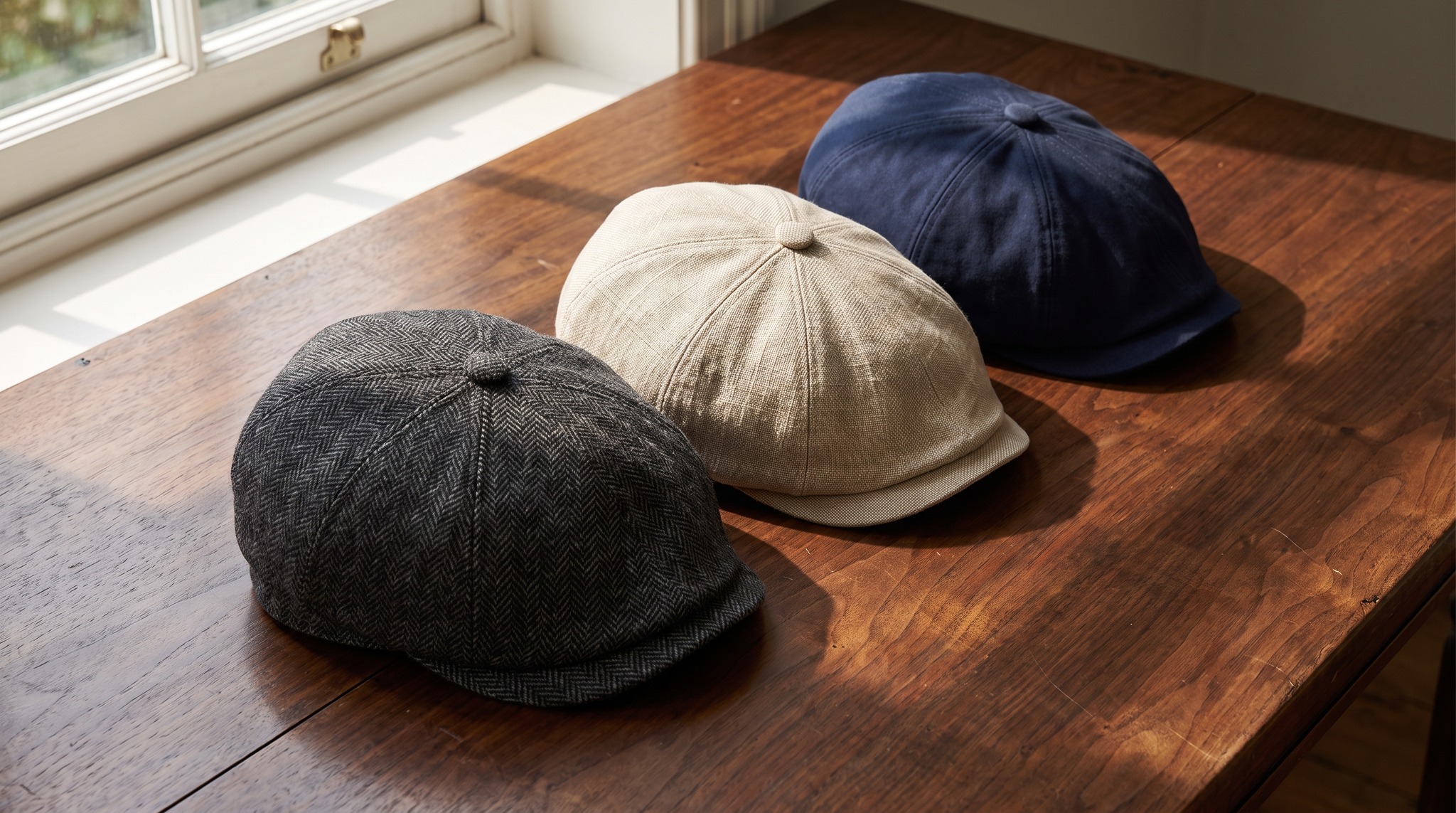
Cap for the Season: When Tweed, When Linen
You enjoy wearing flat caps or newsboy caps, but wool feels too warm in summer and linen seems out of place in winter? Choosing the right fabric determines whether a cap suits the season and whether you feel comfortable wearing it. Tweed, linen, cotton: each material has its optimal wearing time. We will show you which cap belongs to which season and what you should consider when selecting the fabric.
Tweed Caps for Autumn and Winter
Tweed is the classic autumn and winter material for caps. The woven wool fabric weighs between 300 and 500 grams per square metre, provides excellent insulation and protects against wind. Characteristic features are the mottled appearance and slightly rough texture. Tweed caps pair perfectly with wool coats, cashmere scarves and leather jackets. You ideally wear them from October to March, and in milder temperatures also in April. The structure of the fabric gives the cap a distinctive, masculine character.
Linen for Summer and Spring
Linen breathes, cools and absorbs moisture: properties that a summer cap requires. The natural material weighs only 150 to 200 grams per square metre and allows air to circulate. You wear linen caps from May to September, and on hot days even longer. The fabric creases naturally, which is part of the casual character of a summer cap. Combine linen with light linen trousers, silk shirts or lightweight cotton suits. The matte surface reflects sunlight less intensely than synthetic fabrics.
Cotton as a Transitional Solution
Cotton caps work in spring and autumn, when tweed would be too warm and linen too cool. Gabardine, canvas or corduroy made from cotton weigh approximately 200 to 280 grams per square metre. These fabrics are more durable than linen and easier to care for than tweed. They are suitable for March, April, September and October. Cotton can be washed at 30 degrees, whilst tweed should only be dry-cleaned. In our range you will find Caps made from all three materials, tailored to different occasions.
Rules of Thumb for the Right Choice
- Below 10 degrees: tweed or heavy wool, lining optional
- 10 to 18 degrees: cotton, lightweight corduroy or unlined tweed
- Above 18 degrees: linen, linen-cotton blends or thin canvas
- In rain: wool fabrics dry more slowly, cotton faster, linen fastest
Colour and Pattern According to Season
In winter, dark tones dominate: anthracite, brown, navy blue. Tweed often features herringbone or check patterns. In summer, choose light colours: beige, light grey, sand tones. Linen looks most harmonious in natural colours. Spring and autumn allow medium tones such as olive green, rust red or dove blue. The colour choice should complement your remaining outfit, not work against it.
Care Extends Longevity
Brush tweed caps after wearing with a soft clothes brush to remove dust. You may wash linen caps at low temperature, then pull them into shape and dry flat. Cotton caps also tolerate the machine. Store Caps on a hat stand or in a box so they retain their shape. Avoid direct sunlight during storage, especially with dark wool fabrics.
Related items: Men's Jewelry, Suits, Suits and jackets. The complete range: men's fashion and accessories.
All Il Padrino Moda news at a glance
Related categories: Men's Jewelry, Suits, Suits and jackets. The full range: Men's Fashion and Accessories.
Read more: Trouser Waistband Inside: Elastic, Adjustable Side Tabs or Fixed Width, Belt Buckle to Waistband: Which Height for Which Waistband Width, Women's Jewellery for Men's Wardrobes: Adjusting Chain Thickness and Length, Jacket Sleeve End: Button Spacing and Cuff Length, Replacing Suit Lining: When the Effort is Worthwhile