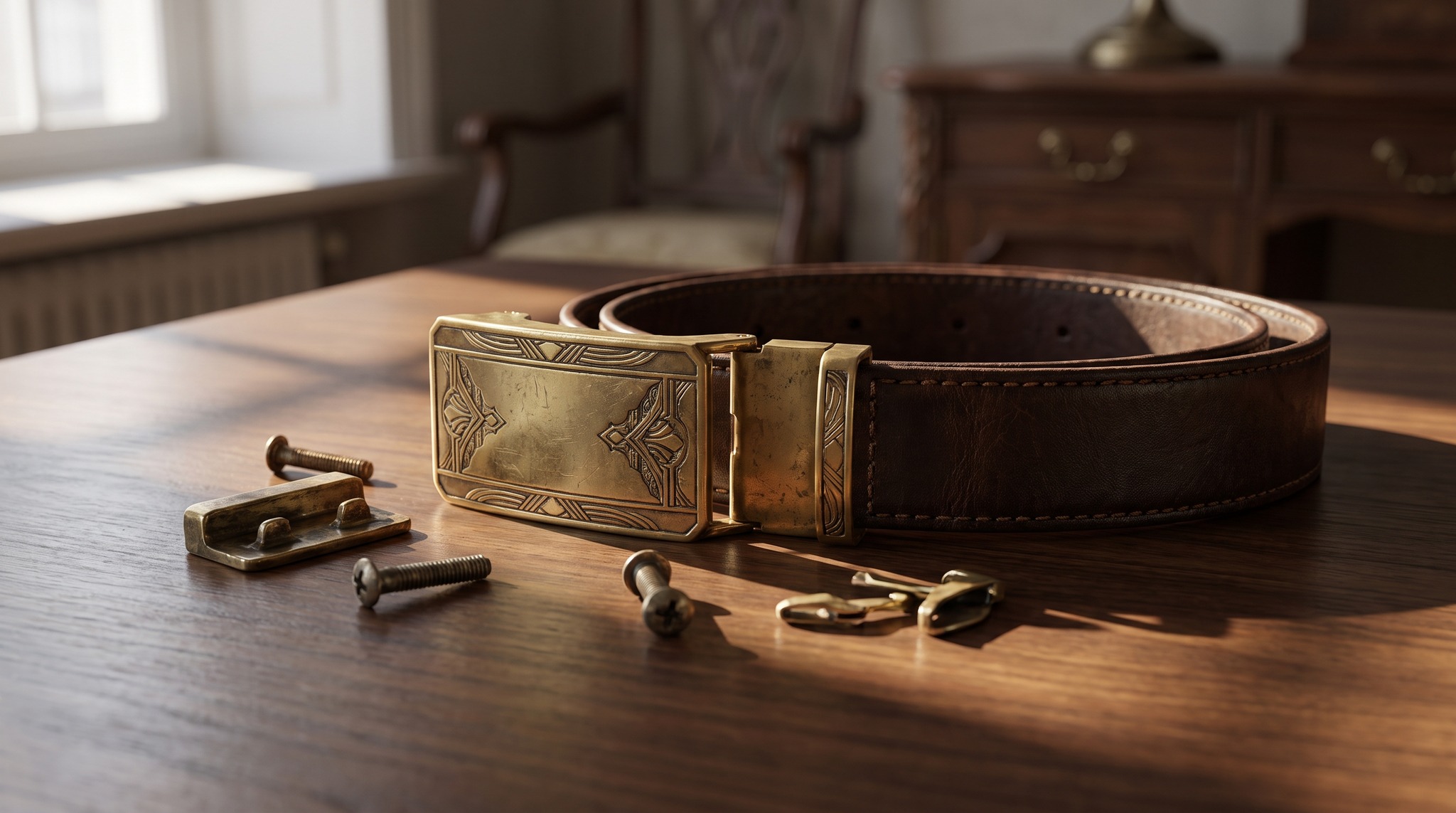
Changing Belt Buckles: Mechanics and Fastening
You have a high-quality leather belt whose buckle no longer matches your current style? Or you want to salvage the buckle from a damaged belt and mount it on a new strap? Changing a belt buckle is easier than many think. The key factors are the correct mechanics and a basic understanding of the fastening systems. With just a few simple steps, you can transform a classic accessory into a statement piece.
Common Fastening Systems at a Glance
Belt buckles are fastened in three ways: by screw system, clamp mechanism or snap fastener. The screw system uses one or two small screws on the back of the buckle that fix the leather strap. With the clamp mechanism, the leather is pulled through a metal bracket and clamped in place. The snap fastener system allows the quickest change: the buckle clicks onto a metal button at the belt end and can be released again by pressing. The latter is frequently found in modern, interchangeable systems.
Tools and Preparation
For screw systems, you need a small Phillips or flathead screwdriver, depending on the screw type. First check the back of the buckle: if you see tiny screws, carefully turn them out anticlockwise. Place the screws in a safe location, as they are easily lost. With clamp systems, a flat object is often sufficient to lift the bracket. Snap fastener systems require no tools, just a bit of finger strength.
Step by Step: Removing the Buckle
Lay the belt flat in front of you, buckle facing up. With screw systems, remove both screws completely and lift off the buckle. With clamp mechanisms, carefully slide the leather strap out of the holder after lifting the bracket. Snap fastener systems open by simultaneously pressing the side releases or by pulling while turning at the same time. Take care not to crease or damage the leather. High-quality Belts made from thick cowhide leather are quite forgiving, but unnecessary creases affect the appearance.
Mounting the New Buckle
Feed the belt end through the opening of the new buckle. With screw systems, position the buckle so that the drill holes in the leather align with the threads. Insert the screws and tighten them evenly, but not too firmly: over-tightened screws can tear the leather or damage the thread. With snap fastener systems, press the buckle firmly onto the button until an audible click confirms the lock. The buckle should sit firmly, but the leather must still move freely through the prong slot.
Checking Fit and Compatibility
Not every buckle fits every belt. The width of the buckle must correspond exactly to the belt width: standard measurements are 35, 40 or 45 millimetres. The prong must be long enough to reach through the leather without protruding too far. With particularly thick leather, from about four millimetres thickness, you need a buckle with a correspondingly deep frame. Measure the width of your belt with a ruler or tape measure before purchasing.
Care After Changing
After mounting, you should check the fastening points. Verify that all screws are tight and the buckle does not wobble. If necessary, apply some leather care to the area where the buckle rests: this is where the most friction occurs through movement. Regular inspection of the fastening extends the lifespan of both components. This way, your accessories remain in perfect condition even with intensive wear.
Related items: Cases and Bags, Luxury Slippers, Jewellery. The complete range: Menswear and Accessories.
All Il Padrino Moda news at a glance
Related categories: Cases and Bags, Luxury Slippers, Jewellery. The full range: Men's Fashion and Accessories.
Read more: Brooch for Men: Size, Position, Occasion, Jacket Lining Torn: Repair or Complete Replacement, Clothing for Door Staff: What Counts for Professional Appearance, Shoulder, Length, Waist: What Makes a Jacket Look Large or Small, Attending a Wedding in 1920s Style