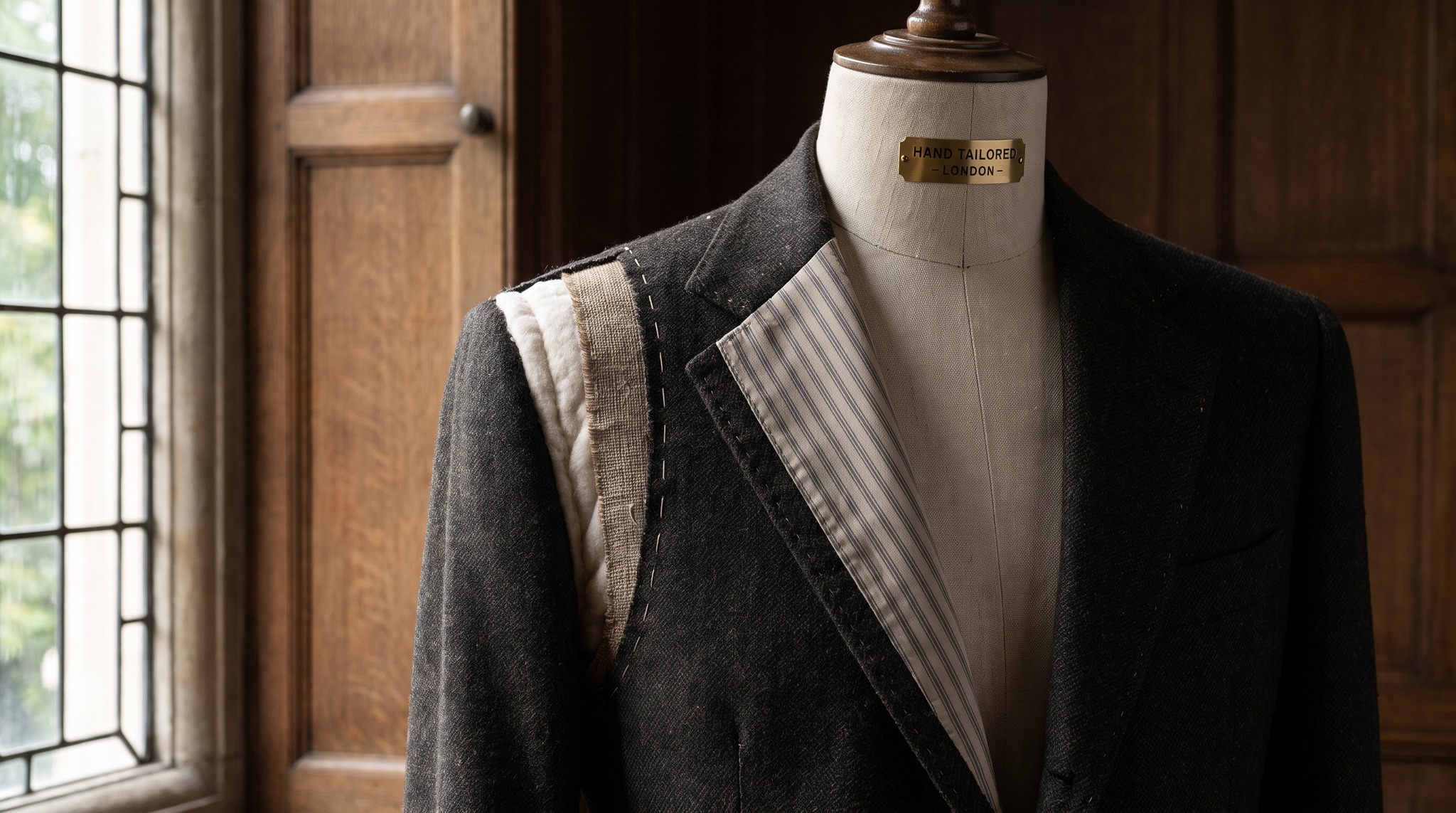
Jacket Shoulder Pads: When Reinforcement Changes the Line
You have a jacket in your wardrobe that fits perfectly, yet the shoulder area somehow seems lifeless? Or you wonder why some jackets create a striking, almost architectural silhouette, while others rest softly on the shoulder? The difference lies in the construction of the shoulder, more precisely: in the type, thickness and placement of the padding. This invisible ingredient determines whether a jacket emphasizes your natural line or creates a new, confident shape.
The Anatomy of the Jacket Shoulder
A shoulder pad traditionally consists of several layers of felt, wadding or modern foams, which are incorporated between the outer fabric and lining. The thickness varies from a few millimeters for a natural shoulder to two centimeters for heavily structured models. The length is also crucial: a short pad ends about five centimeters before the sleeve attachment, a long one extends to the upper arm. The shape ranges from flat-conical to pronounced wedge forms that deliberately build volume.
Natural Shoulder: Understatement with Substance
The so-called natural shoulder almost completely dispenses with reinforcement. Here the fabric rests softly on your anatomical shoulder, the padding rarely measures more than three to five millimeters. You will frequently find this construction in Italian jackets in the Neapolitan style. The line follows your body without correcting it. Ideal if you have broad shoulders and do not wish additional emphasis, or if you prefer a relaxed, unpretentious appearance.
Structured Shoulder: Presence Through Architecture
A substantial shoulder pad of one to two centimeters thickness creates a clear, almost geometric line. The shoulder seam sits exactly on the shoulder bone or minimally above it, the fabric falls vertically from there. This construction optically broadens the upper body, tightens the silhouette and lends you immediate presence. Particularly effective with Suits and jackets in the style of the 1940s, where the broad shoulder belongs to the dramatic contrast with high waist and wide leg.
When Which Reinforcement Makes Sense
The choice of shoulder pad depends on three factors: your build, the occasion and the desired effect. Narrow or sloping shoulders benefit from medium to strong padding that balances proportions. For the stage, the appearance or when you consciously want to make a statement, a structured shoulder reinforces your presence. In everyday life or at summer occasions, a natural shoulder appears more casual. Also consider the weight: strong pads require firmer fabrics from 280 grams per square meter, so that the shape does not collapse.
Adjustment and Care of the Shoulder Area
A good tailor can insert, replace or reduce shoulder pads retrospectively. The procedure takes about two hours and costs between 80 and 150 euros, depending on the construction. When caring for them, ensure you hang Suits and jackets on padded hangers that support the shoulder shape. Flat wire hangers cause the pads to shift or compress over time. After cleaning, the jacket should air for at least 24 hours so that the padding regains its shape.
The Shoulder as Signature Element
In the 1920s and 1930s, tailors experimented systematically with shoulder pads for the first time to dramatize the masculine silhouette. What was considered innovation then is today a design tool: you decide whether your jacket traces your natural line or creates a new, confident form. The shoulder is the first thing others perceive, even before lapels or button placement. A consciously chosen padding transforms a garment into a means of expression.
Related: Luxury Slippers, Jewellery, Ladies Jewelry. The complete range: Men's Fashion and Accessories.
All Il Padrino Moda news at a glance
Related categories: Luxury Slippers, Jewellery, Ladies Jewelry. The full range: Men's Fashion and Accessories.
Read more: Belts Without Buckles: Clamp Closures and Slide Bars in Detail, Suit Waistcoat: Back, Button Count, Length to Trousers, Luxury Slippers: The Entrance Starts at the Floor, Pleated Trousers in 1920s Style: Wide Cut, Sharply Pressed, Belt with Pleated Trousers: Buckle Centred or Offset to the Side