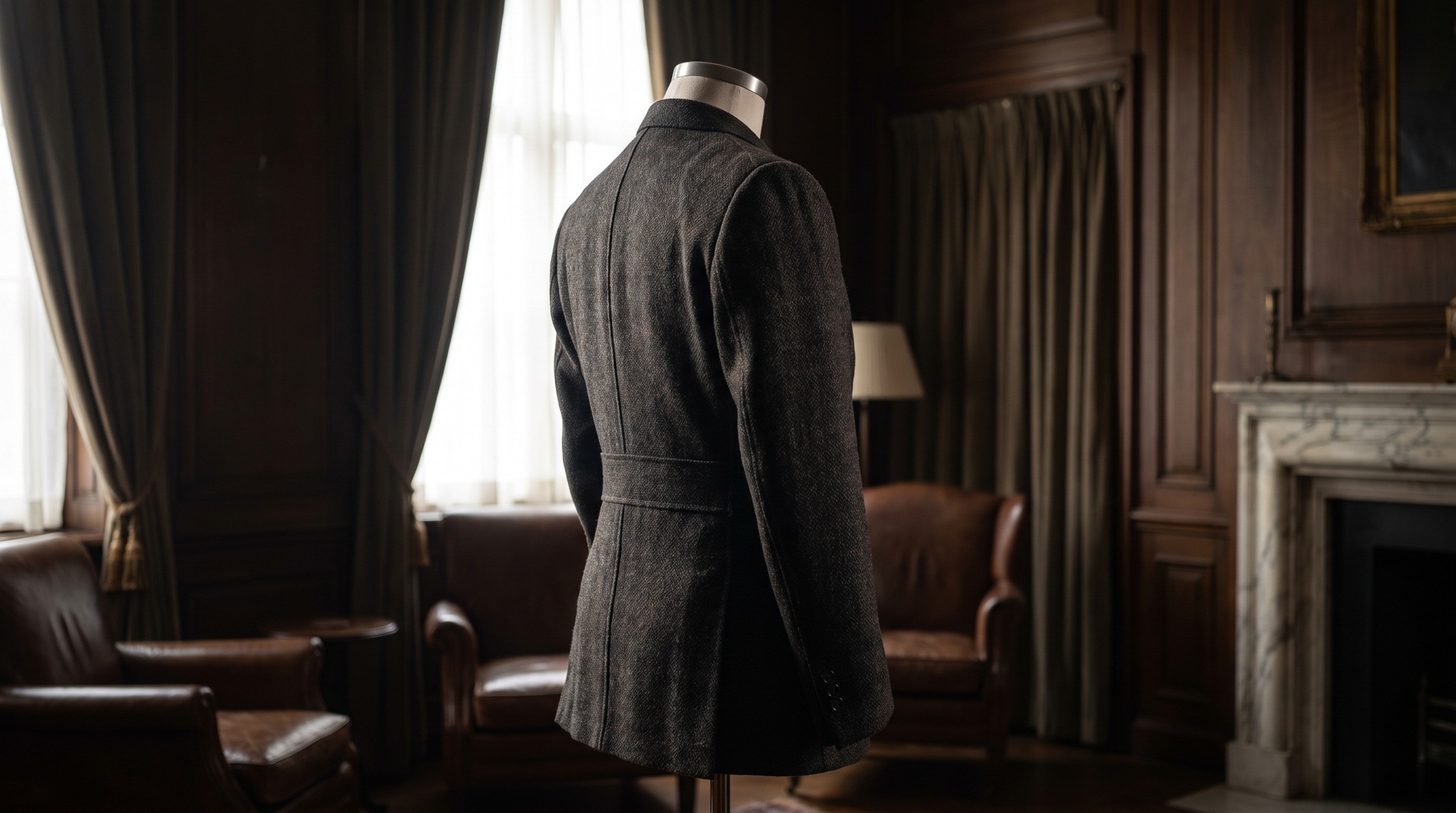
Jacket Tailoring: Where the Seam Shapes the Silhouette
You stand before the mirror and wonder why some jackets accentuate your silhouette while others appear shapeless? The difference lies in the tailoring, that vertical seam running from the armpit to the hem. This seam determines whether a jacket sculpts your upper body or conceals it. Those who wear statement pieces must understand exactly where this line runs and what effect it creates.
The Side Seam as a Design Element
The tailoring seam runs along the side line of the jacket, usually set slightly towards the back. In classic cuts, it sits approximately three to four centimeters behind the natural side line of your body. Strongly tailored models in the style of the 1920s guide this seam considerably tighter, often with a suppression of six to eight centimeters at waist level. The jacket thus becomes a sculptural element that emphasizes the V-shape of the upper body.
Measurement Points for Proper Tailoring
Tailoring is measured at three points: chest width at armpit level, waist width at navel height, and hem width at the lower end. A moderately tailored jacket shows a difference of approximately four centimeters between chest and waist. Extravagant cuts achieve eight to ten centimeters difference. Important reference points:
- Chest width: measured horizontally across the widest point
- Waist width: at the height of the natural waist, not the trouser waistband
- Hem width: should flare slightly again for freedom of movement
- Seam position: in zoot suit cuts, set distinctly towards the back
Single-Breasted versus Double-Breasted
In single-breasted jackets, the tailoring seam runs straight and visible. Double-breasted styles conceal the seam through the overlapping button panel, appearing broader and less figure-hugging as a result. For the characteristic look of the swing era, single-breasted cuts with pronounced tailoring are recommended. The Suits and jackets of this epoch deliberately emphasized visible shaping through the side seam.
Shoulder and Waist in Harmony
Tailoring only works in conjunction with the shoulder section. Wide, structured shoulders with padding intensify the contrast to the narrow waist. The ratio should be approximately 1.6 to 1: if the shoulder width is 48 centimeters, the waist width may be 30 centimeters. Without this proportion, even the strongest tailoring loses its effect.
Freedom of Movement Despite Close Fit
Strong tailoring does not mean restriction. The seam must be guided so that you can raise your arms without the jacket riding up. Look for action pleats in the back, so-called pleats or a back vent. Quality cuts rely on elastic lining fabrics and slight ease in the shoulder blade area. This keeps the silhouette sharp while allowing you to move freely.
Fitting and Adjustment
During fitting, fasten all buttons and raise your arms to shoulder height. The jacket must not pull, the tailoring seam must lie smooth. Folds radiating from the seam indicate too tight a fit. A skilled tailor can open or tighten the seam by one to two centimeters. More adjustment requires a complete recut of the side panels.
Related items: Luxury Slippers, Jewellery, Ladies Jewelry. The complete range: Men's Fashion and Accessories.
All Il Padrino Moda news at a glance
Related categories: Luxury Slippers, Jewellery, Ladies Jewelry. The full range: Men's Fashion and Accessories.
Read more: Belt Colour for Multi-Coloured Shoes: Choosing Main Tone or Accent, Steaming Pleated Trousers: Refreshing Creases Without an Iron, The Zoot Suit: Why the Long Jacket Changes Every Room, Ring Width and Hand Size: Narrow or Wide Band, How to Fasten a Belt Correctly: Which Hole for Which Fit