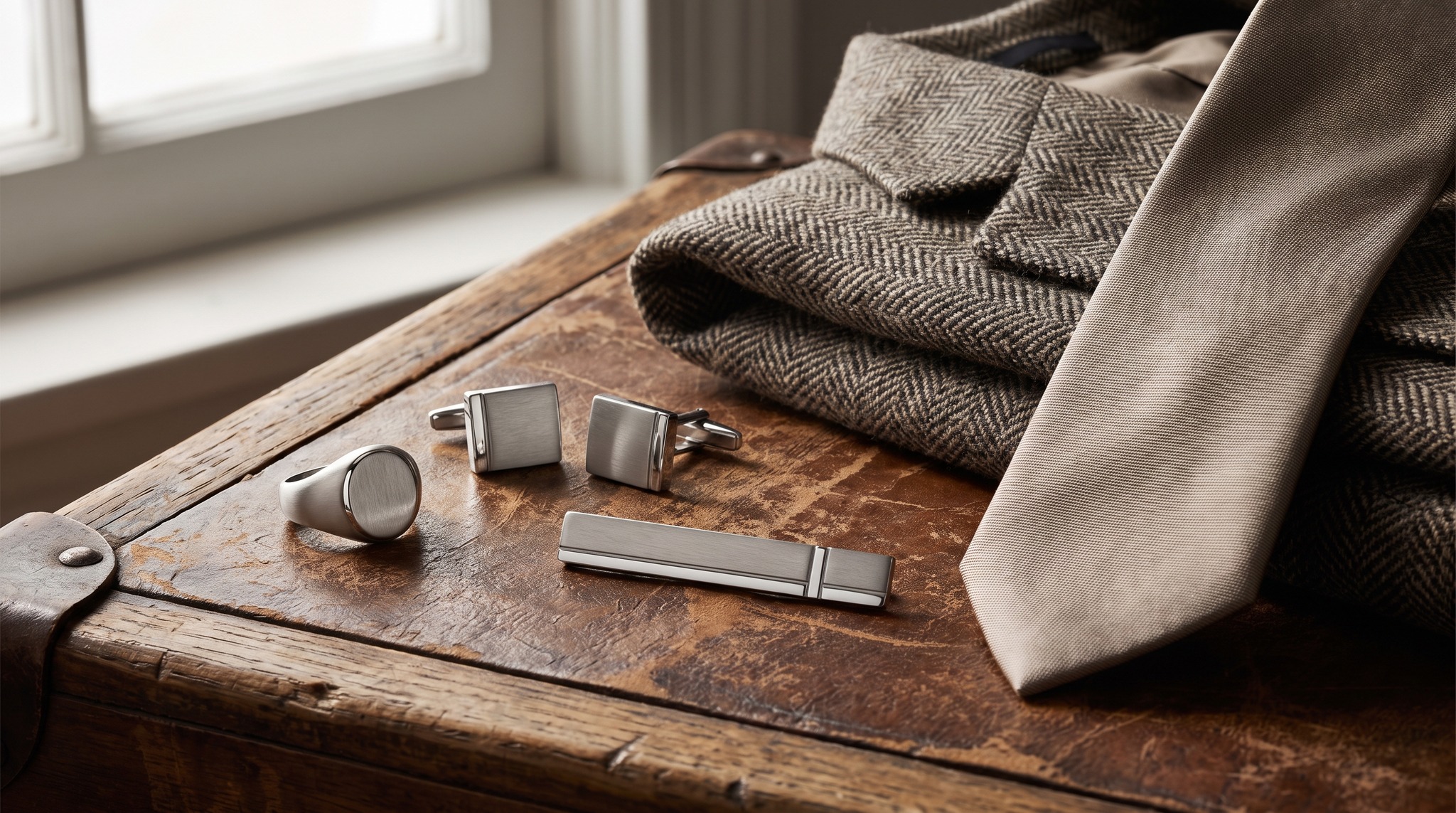
Matting men's jewellery: brush, paste or sandblasting
High-gloss polished silver or gold often appears too conventional, too tame. Many wearers prefer a matt, slightly rough surface that gives the piece depth and character. But which method is best suited for matting rings, bracelets or chains? And can the result be reversed later?
Matting with a wire brush: fast and controllable
A wire brush made of brass or stainless steel creates fine scratches that diffuse the light. It is either guided by hand or mounted on a polishing machine. This method is particularly suitable for larger surfaces such as wide cufflinks or belt buckles. The surface acquires a uniform, satin-matt texture. Important: always brush in one direction, otherwise uneven cross-hatching will occur. For Men's Jewelry made of sterling silver, a soft brass brush is usually sufficient; harder stainless steel brushes are more aggressive and leave deeper marks.
Matting paste: the gentle option for delicate pieces
Matting paste consists of fine abrasive powder in a creamy carrier base. It is applied with a soft cloth or sponge and rubbed in circular movements. The grit usually ranges between 800 and 1200, comparable to very fine sandpaper. This method protects engravings and filigree details because the pressure remains adjustable. After approximately three to five minutes of treatment, a velvety sheen appears. Afterwards, the piece must be thoroughly rinsed under running water to ensure no abrasive particles remain in crevices.
Sandblasting: professional and permanent
During sandblasting, a jet of corundum, glass beads or ceramic particles strikes the metal surface under high pressure. This process produces a very uniform, fine-grained matt finish that barely requires repolishing even after years. Jewellers and goldsmiths use sandblasting cabinets with grit sizes between 80 and 220 micrometres. The advantage: even intricate shapes and inner sides of rings can be precisely treated. The disadvantage: sandblasting cannot be carried out at home and costs between 15 and 40 euros per piece at a specialist, depending on quantity.
Which method for which material
Not every metal tolerates every technique equally well. Here is a guide:
- Sterling silver: all three methods possible, wire brush delivers the most natural patina
- Gold from 14 carat: prefer matting paste or sandblasting, brush can leave grooves that are too deep
- Stainless steel: sandblasting or hard stainless steel brush necessary, paste often proves too weak
- Brass and bronze: wire brush ideal, paste tends to remove the natural oxide layer unevenly
Care after matting
A matted surface only remains attractive if it is not constantly in contact with skin oils. Rings should be removed when washing hands, bracelets should be rinsed occasionally with lukewarm soapy water. Aggressive cleaners or ultrasonic baths are forbidden, as they smooth the texture again. Those who wish to preserve the matt look long-term should have the piece reworked every two to three years. Most goldsmiths offer this service for a modest fee.
Return to shine: polishing remains possible
Matting is not a permanent intervention. With polishing paste, felt disc or polishing cloth, any matted piece can be restored to high gloss. However, this removes minimal material, which is why frequent back and forth eventually reduces wall thickness. For high-quality pieces, a decision is therefore advisable: either permanently matt or permanently shiny. Those who love variety should own several variants of the same design.
Related: Suits, Suits and jackets, baroque mirrors. The complete range: Men's fashion and accessories.
All Il Padrino Moda news at a glance
Related categories: Suits, Suits and jackets, baroque mirrors. The full range: Men's Fashion and Accessories.
Read more: Pleated Trousers When Seated: Pleat and Leg Width with Bent Knee, Lengthening Suit Sleeves: Checking Seam Allowance and Adjusting Lining, Combining Accessories: Belt, Shoes, Watch in One Colour Family, Suit Jacket Vent: Centre, Side or None, Pleated Trousers with Leather Jacket: Proportions and Contrast