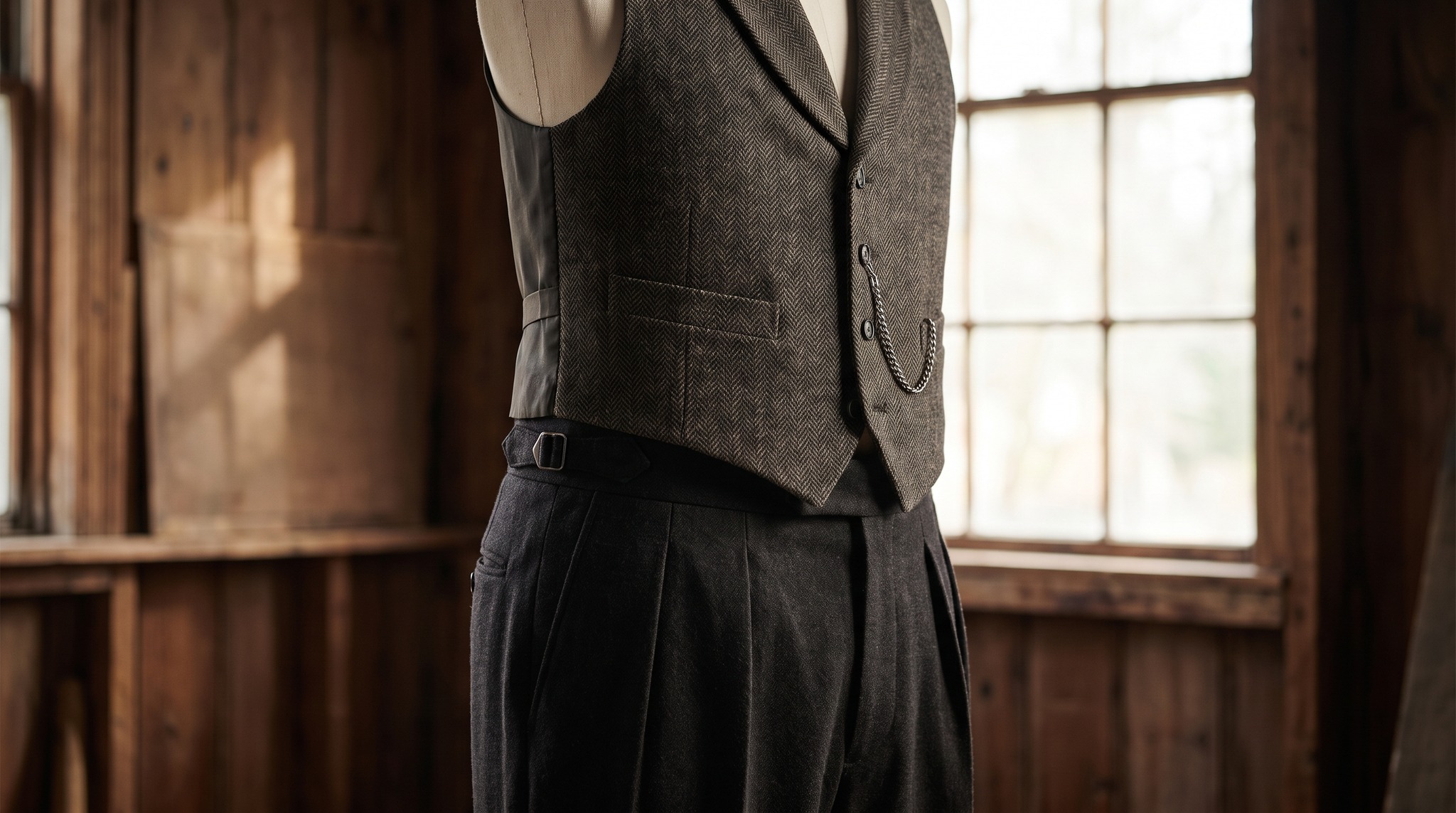
Pleated Trousers with Waistcoat: Coordinating Waistband Finish and Length
Anyone wearing a waistcoat is opting for elegance with structure. But where exactly does the waistcoat end, and how high does the waistband of the trousers sit? This question determines whether the outfit looks harmonious or whether unsightly gaps appear. Particularly with wide-cut trousers with a high waistband, the coordination between waistcoat and trouser waistband is crucial. We show you what to look out for so that waistband finish and length mesh perfectly.
The Classic Principle: The Waistcoat Covers the Waistband
A waistcoat should always completely cover the trouser waistband, even when you raise your arms or sit down. The lower hem of the waistcoat ideally ends approximately two to three centimetres below the waistband. This keeps the shirt invisible and the silhouette appears closed. With pleated trousers featuring a high waistband, which often sit between four and six centimetres above the hip bones, a correspondingly longer waistcoat is necessary.
Waistband Height and Waistcoat Length: Specific Measurements
Modern Pleated trousers in the style of the 1920s feature waistband heights of 32 to 38 centimetres measured from the crotch. The waistcoat should have a back length of at least 60 to 65 centimetres to ensure the transition remains clean. Measure whilst standing from the nape of the neck to the desired end point: the waistcoat may well reach just above the back pocket without covering the hip.
Sitting Test and Movement Check
Stand in front of a mirror and raise your arms. If the waistcoat rides up and exposes the waistband, it is too short or fits too loosely. Then sit down: the fabric should stretch slightly but not ride up. A well-fitting waistcoat remains at the waistband even when seated, without creating wrinkles or pulling tight. Ensure that the side adjustment straps or back strap are correctly adjusted.
Waistcoat in the Ensemble: Suit or Individual Piece
If you wear the waistcoat as part of a three-piece ensemble, jacket, waistcoat and trousers are coordinated with one another. In suits in the zoot suit style, the waistcoat is often cut somewhat longer to emphasise the extravagant silhouette. If you combine the waistcoat separately, however, choose trousers and waistcoat deliberately according to waistband height and length: high waistband requires a long waistcoat, low waistband permits shorter cuts.
Material and Fit Influence the Appearance
Heavy wool fabrics hang straight and remain in position, light blended fabrics tend to slip. A tailored waistcoat with six buttons sits more firmly than a straight-cut one with four buttons. The bottom button traditionally remains open so that the waistcoat does not pull tight when sitting. Check whether the fabric allows enough room without bulging: one finger's width of space between waistcoat and shirt is ideal.
Rule of Thumb for Coordination
- Waistband height plus three centimetres gives the minimum length of the waistcoat from the waist.
- The waistcoat never ends above the waistband, not even when seated.
- Back length of the waistcoat: at least 60 centimetres with a high waistband.
- Readjust side straps until the waistcoat sits taut but not tight.
Related categories: Suits.
Related items: baroque mirrors, Accessoires, Caps. The complete range: Menswear and Accessories.
All Il Padrino Moda news at a glance
Related categories: baroque mirrors, Accessoires, Caps. The full range: Men's Fashion and Accessories.
Read more: Suit Collar: Coordinating Height and Width with Collar Size, Women's Jewellery with Men's Suits: Contrast or Harmony, Suit Combination: Coordinating Two Trousers with One Jacket, Adjusting Suspenders: Length, Clips, Buttonholes, Women's Jewellery in the 1920s Style: Length, Material, How to Wear