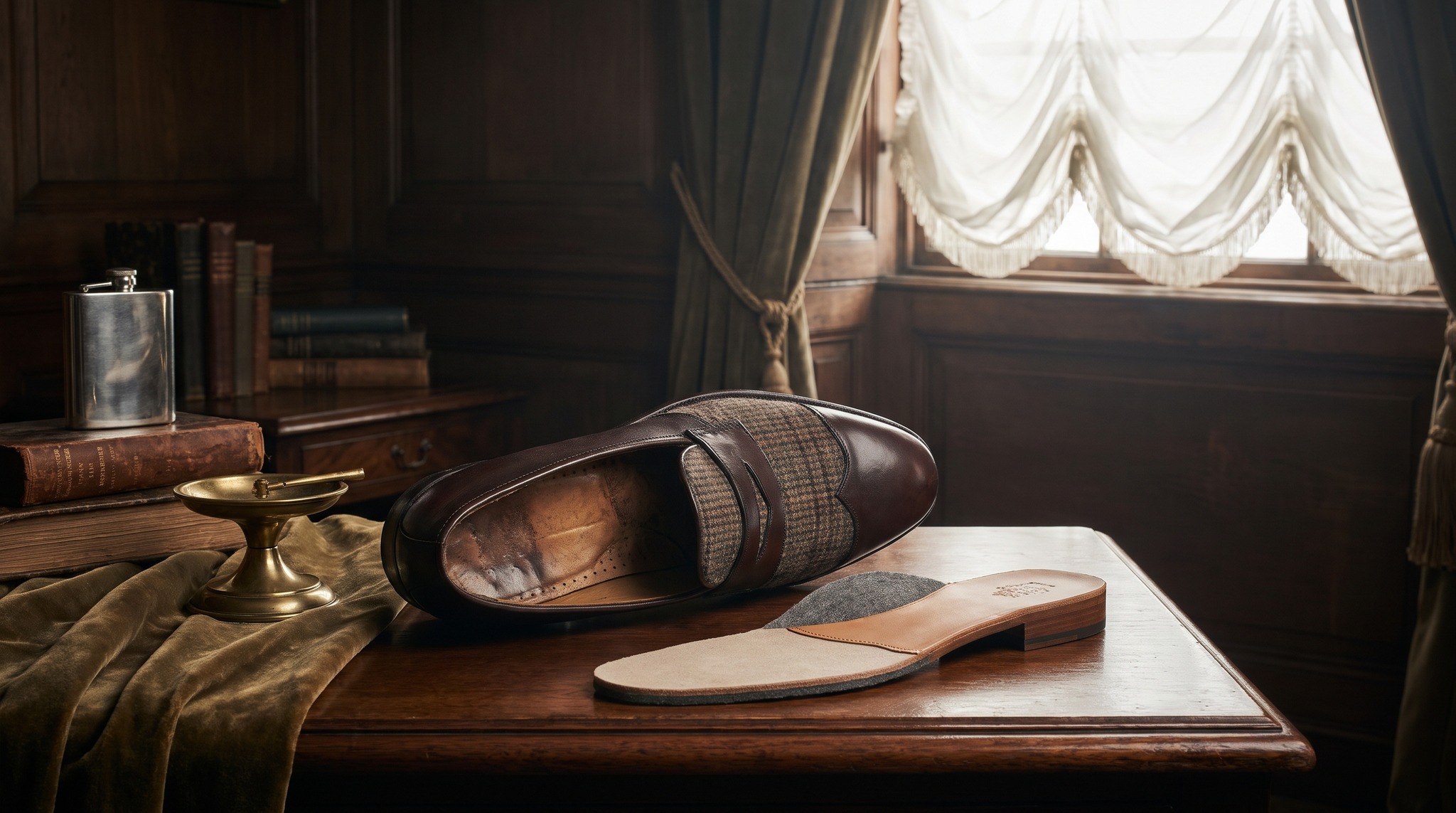
Replacing Slipper Insoles: When to Renew Padding or Footbed
High-quality slippers accompany their wearer for years, but eventually wear appears where it is least visible: on the insole. The footbed loses its support function, the padding gives way, comfort diminishes. When is it worthwhile to replace the insole, and when is it time for professional renewal? This question arises for anyone who has invested in statement pieces and wishes to wear them long-term.
Recognising Signs of Wear on the Footbed
The insole shows clear signals when it no longer fulfils its function. Flattened areas under the ball and heel, visible impressions of the foot contour or worn-through spots on the leather indicate advanced wear. If the material smells musty or the surface feels rough and brittle, the sole has exceeded its lifespan. With Luxury Slippers made from fine calfskin or suede, wear often becomes noticeable earlier than with synthetic materials, because natural leather adopts the foot shape more precisely.
Replaceable Insoles versus Permanently Bonded Footbeds
Not every insole can be replaced without difficulty. Loose insoles can be removed and replaced yourself, permanently bonded or stitched footbeds require craftsmanship. High-quality slippers frequently feature a multi-layer system: a supporting midsole made of cork or latex, with a padded top sole made of leather above it. If only the uppermost layer is affected, a new top sole often suffices. If the entire padding gives way, a cobbler must renew the complete insole.
Guidelines for Replacement Timing
As a rule of thumb: if you wear your slippers daily, you should check the insole after 12 to 18 months. With occasional wear, this period extends to two to three years. However, what matters is less the months than the wearing intensity and foot climate. The following points help with assessment:
- Foot impression sunken deeper than 3 mm: replacement recommended
- Padding under ball or heel completely flat: immediate change necessary
- Leather cracked, discoloured or odour-intensive: renewal overdue
- Footbed slips when walking: bonding loosened, re-attachment required
Professional Renewal or Self-Help
You can replace loose insoles yourself by inserting suitable replacement soles made of leather or with activated charcoal padding. Pay attention to the exact length and width so that the sole does not slip. For permanently installed footbeds, a visit to the cobbler is recommended: he removes the old sole, cleans the base, sands down unevenness and glues or stitches in a new insole. For extravagant Luxury Slippers with special lasts, you should choose a specialist workshop familiar with high-quality men's shoes.
Care Extends Service Life
Regular care considerably delays insole wear. Air your slippers after each wearing for at least 24 hours on shoe trees so that moisture can escape. Occasionally wipe the insole with a slightly damp cloth and treat smooth leather with special insole oil. Cedar shoe trees absorb moisture and neutralise odours. Those who wear several pairs in rotation extend the lifespan of each individual pair by double.
When the Investment is Worthwhile
Replacing an insole costs between 30 and 60 euros at the cobbler, depending on effort and material. For statement pieces in the three-figure price range, this investment is certainly worthwhile. You receive a pair that feels like new, without losing the already broken-in fit and patina of the exterior. Slippers with characterful ageing and fresh footbed combine the best of both worlds: the style of matured leather and the comfort of a new shoe.
Related items: Pleated trousers, Accessoires, Caps. The complete range: Men's Fashion and Accessories.
All Il Padrino Moda news at a glance
Related categories: Pleated trousers, Accessoires, Caps. The full range: Men's Fashion and Accessories.
Read more: Replacing a Belt Buckle: Releasing the Mechanism and Fitting a New Clasp, Attaching Suitcase Straps: How to Properly Install Stitching, Rivets or Buckles, Jewellery Storage for Travel: Case or Roll, Slipper Shaft Height: Low, Medium or High to the Ankle, Bag with Combination Lock: Forgotten Code, What Now