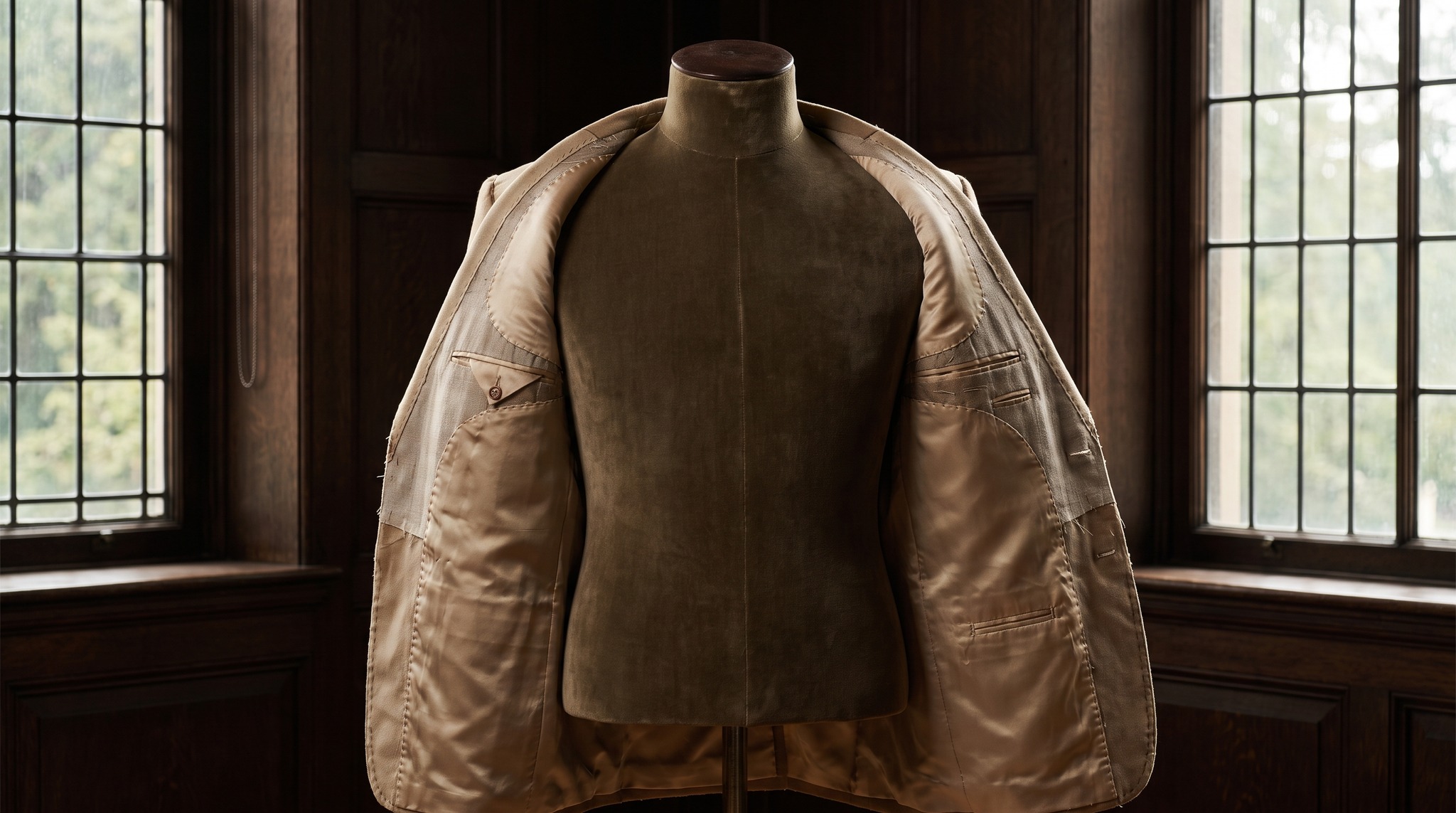
Replacing Suit Lining: When the Effort is Worthwhile
The lining of a jacket or suit wears out, tears at the shoulders or discolours over the years. While the outer fabric still appears flawless, the interior shows clear signs of wear. Many wearers then ask themselves: is replacing the lining worthwhile at all, or would it be better to invest in a new piece? The answer depends on the material, construction and personal value of the garment.
When the Lining Should Be Replaced
Replacing the lining makes sense when the outer fabric is high quality and intact, but the lining tears at the seams, detaches from the outer fabric or becomes brittle from perspiration. Particularly with Suits and jackets made from pure virgin wool, cashmere or fine worsted, the fabric quality justifies the effort. The investment is also worthwhile for bespoke pieces or vintage items with a perfect fit, as these qualities are rarely achieved with new ready-to-wear garments.
Assessing Costs and Effort Realistically
A complete lining replacement by a tailor costs between 150 and 300 euros, depending on the region and effort involved. The jacket is completely disassembled, the old lining removed and a new one sewn in. The process usually takes two to three weeks. For inexpensive ready-to-wear pieces, this price often exceeds the purchase price, whilst for high-quality suits it corresponds to approximately one third to half of the acquisition costs.
Material Selection for the New Lining
Classic viscose lining offers good wearing comfort at a moderate price. Cupro, a high-quality regenerated cotton fibre, regulates moisture better and feels cooler. For summer suits, Bemberg lining is suitable, as it is particularly breathable. Silk appears luxurious but requires more care. The lining weight should match the outer fabric:
- Lightweight summer fabrics up to 250 g/m²: lining 60 to 80 g/m²
- Year-round fabrics 250 to 350 g/m²: lining 80 to 100 g/m²
- Winter fabrics from 350 g/m²: lining 100 to 120 g/m²
Replacing Partial Lining Instead of Full Lining
It is not always necessary to replace the entire lining. Often it is sufficient to renew heavily stressed areas such as the shoulder sections, sleeves or back section. This partial replacement costs approximately half and largely preserves the originality of the piece. For Suits and jackets in vintage style, a contrasting lining can also become a stylistic element.
When Purchasing New is More Sensible
If the outer fabric itself shows wear, shiny areas on elbows or collar, faded colours or thread breaks, replacing the lining is not worthwhile. Even if the fit is no longer correct or the cut no longer appears contemporary, purchasing new is the better choice. For machine-manufactured mass-produced items with simple construction, the repair costs usually significantly exceed the value of the garment.
Related items: Luxury Slippers, Jewellery, Ladies Jewelry. The complete range: Menswear and Accessories.
All Il Padrino Moda news at a glance
Related categories: Luxury Slippers, Jewellery, Ladies Jewelry. The full range: Men's Fashion and Accessories.
Read more: Travel Cases for Jewellery: Compartments, Padding and Closures, Belts for High-Waisted Jeans: Matching Width and Buckle, Genuine Leather Luggage: How to Recognise Quality Craftsmanship, Baroque in Fabric and Space: Why 1920s Cuts and Heavy Furniture Share the Same Attitude, Luxury Slippers: The Entrance Starts at the Floor