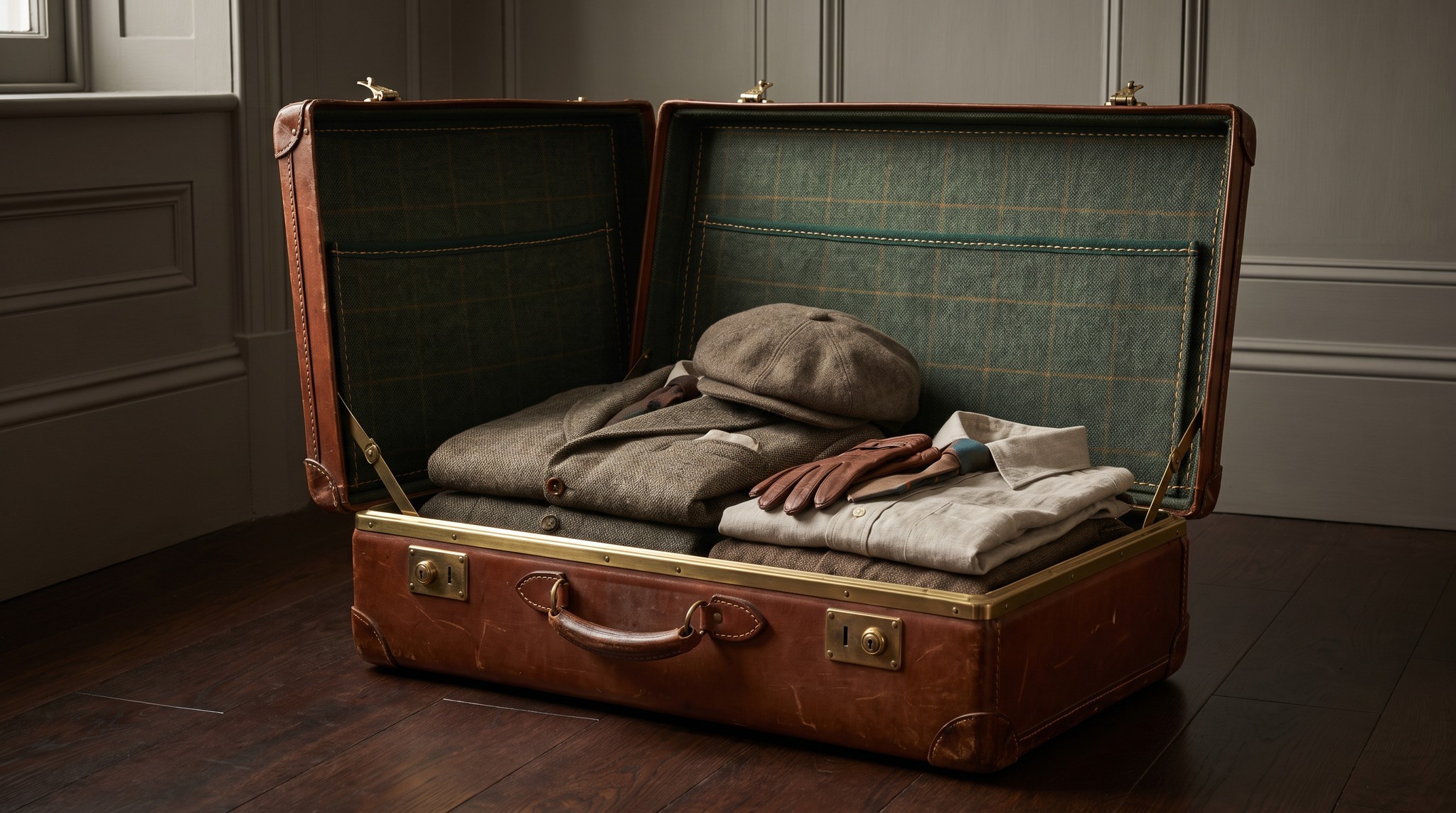
Replacing Suitcase Lining: Fabric, Seams, Odour Removal
A high-quality leather suitcase will accompany you for years, but eventually the inner lining shows signs of wear. Stains, tears in the fabric or a musty smell that will not go away: then the question arises whether you should have the lining replaced or do it yourself. We explain what matters when replacing it, which materials are suitable and how to remove old seams without damaging the body.
Why Replacing the Lining is Worthwhile
Many vintage suitcases from the 1920s or 1930s have outer shells made of robust leather or reinforced cardboard, whilst the interior consists of cotton sateen, linen or artificial silk. These fabrics suffer from moisture, dust and mechanical friction. A new lining considerably extends the lifespan and preserves the character of the piece. Furthermore, you can adapt colour and texture to your personal style: silk sateen in burgundy or classic cotton twill in cream create different accents.
Removing Old Seams: Tools and Procedure
Before you install new fabric, you must completely remove the old lining. Use a seam ripper with a fine point to cut open the stitches individually. Work from the inside outwards and take care not to pierce the backing material. For glued sections, a hairdryer helps: heat the area on a low setting until the adhesive feels soft, then carefully pull off the fabric. Remove adhesive residue with isopropyl alcohol on a cotton cloth.
Material Selection: Weight, Feel, Care Properties
For the new lining, fabrics with a weight between 120 and 180 grams per square metre are suitable. Lighter qualities tend to crease, heavier ones are difficult to lay into corners and edges. Proven options:
- Cotton sateen: smooth surface, breathable, washable at 30 degrees
- Viscose twill: silky feel, good colour brilliance, hand washing recommended
- Linen blend: robust, natural appearance, tends to crease
- Polyester taffeta: crease-resistant, quick-drying, less refined in feel
Permanently Neutralising Odours
Musty smell is caused by mould spores or trapped moisture in the backing material. Before you install the new lining, treat the inner surfaces with a mixture of bicarbonate of soda and water in a ratio of 1:3. Apply the paste thinly, leave it to dry for twelve hours and vacuum up the residue. Alternatively, place activated charcoal sachets in the closed suitcase for 48 hours. If the wood or leather itself smells, only professional ozone treatment by a specialist company will help.
Installing New Lining: Seam or Adhesive
Professional saddlers sew in the lining by hand with waxed linen thread, stitch length approximately five millimetres. This method allows later repairs without residue. For home use, you can also use double-sided textile adhesive tape: apply it along the edges, remove the protective film and press the fabric firmly. Start at the back wall, work your way to the sides and fold over the fabric edges so that no frayed edges remain visible. Cut corners diagonally and fold them overlapping.
Care After Replacement
To keep the new lining fresh for a long time, air the suitcase after each journey for at least 24 hours with the lid open. Avoid direct sunlight, which fades colours. Dab stains immediately with a damp cloth without rubbing. High-quality Cases and Bags deserve this attention, because they are more than means of transport: they are an expression of a lifestyle that values detail.
Related items: Caps, Belts, Luxury Slippers. The complete range: Menswear and Accessories.
All Il Padrino Moda news at a glance
Related categories: Caps, Belts, Luxury Slippers. The full range: Men's Fashion and Accessories.
Read more: Suit Button Colour: Horn, Mother-of-Pearl or Metal to Match the Fabric, Wearing Pleated Trousers Without a Belt: Waistband Width and Fit, Reinforcing Luggage Corners: Retrofitting Metal Fittings, Jacket Lining Torn: Repair or Complete Replacement, Cap for the Season: When Tweed, When Linen