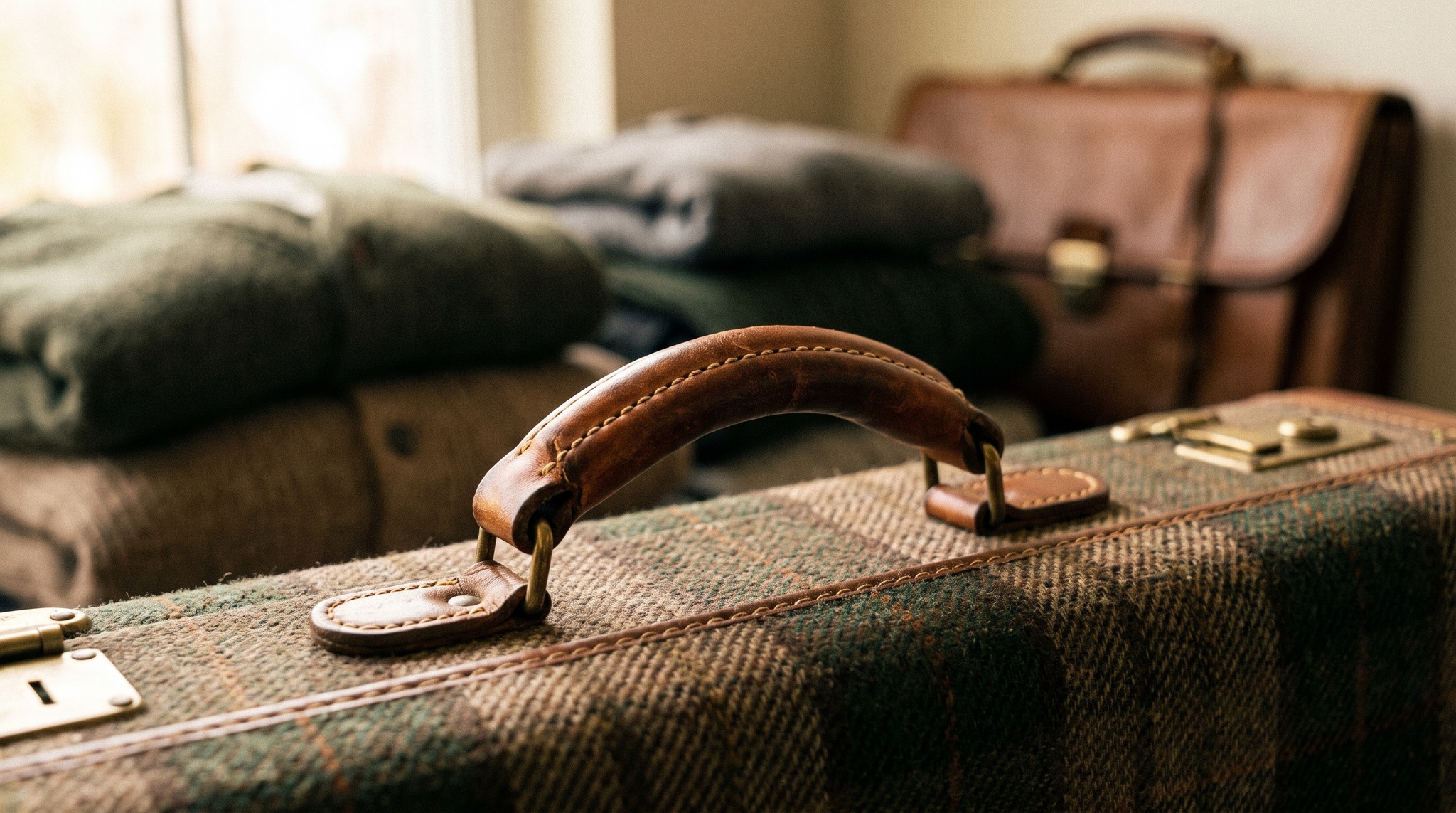
Retrofitting Suitcase Handles: Renewing Leather Wrapping Yourself
Is the carrying handle of your vintage suitcase worn, the leather cracked, or the wrapping coming loose? Restoration is particularly worthwhile for high-quality luggage pieces in the style of the 1920s and 1930s. Instead of replacing the entire suitcase, you can renew the leather wrapping on the handle yourself. With the right materials and a little patience, you can give your companion new lustre and preserve its authentic character.
Material Selection: Which Leather is Suitable for Handle Wrapping
To renew the handle, you need a leather strip approximately 2 to 3 cm wide and at least 80 cm long, depending on the handle size. Choose cowhide leather with a thickness between 1.5 and 2.5 mm: thinner leather is easier to wrap, thicker leather provides more padding. Vegetable-tanned leather ages more beautifully than chrome-tanned leather and develops a noble patina over time. You should coordinate the colour with the fittings and body of your suitcase; classic choices are brown tones from cognac to dark brown or elegant black.
Preparation: Removing Old Wrapping and Cleaning the Handle
First, remove the old leather wrapping completely. Carefully cut open the seam or adhesive bond and unwind the material. Clean the underlying metal bracket thoroughly with a slightly dampened cloth and remove adhesive residue with methylated spirits. Check whether the handle itself is still stable and all rivets or screws are firmly seated. If the handle itself is damaged, you should have it repaired or replaced before rewrapping.
Wrapping Technique: How to Apply the Leather Tightly to the Handle
Begin the wrapping at one side of the handle, where it meets the suitcase mounting. Fix the leather end with a drop of contact adhesive or an initial tight wrap. Now guide the leather strip spirally around the handle, with each turn overlapping the previous one by about half. Pay attention to even tension: too loose looks untidy, too tight can constrict or tear the leather. At the end, fix the leather again with adhesive and sew the last turn with waxed linen thread or thin leather cord.
Finishing: Sealing and Care of the New Wrapping
After drying, you can treat the wrapping with leather grease or leather balm. Apply the care product sparingly and work it in with a soft cloth. This makes the leather supple and protects it from moisture. Avoid high-gloss polishes that impair the authentic look. With regular use, you should care for the wrapping every three to six months to prevent the leather from drying out and becoming brittle.
Alternative: Professional Restoration for Demanding Pieces
If you are uncertain or if it concerns a particularly valuable piece of luggage, consulting a specialist is advisable. Saddlers and specialised leather goods workshops have original tools and can precisely replicate historical wrapping techniques. At Cases and Bags in vintage style, you often receive recommendations for restorers who specialise in luggage from the era of the great transatlantic voyages. The investment is worthwhile if the suitcase is to serve not only functionally but also as a statement piece.
Related items: Caps, Belts, Luxury Slippers. The complete range: Menswear and Accessories.
All Il Padrino Moda news at a glance
Related categories: Caps, Belts, Luxury Slippers. The full range: Men's Fashion and Accessories.
Read more: Combining Accessories: Belt, Shoes, Watch in One Colour Family, Women's Jewellery as an Investment: Material, Craftsmanship and Resale, Suitcase Handle: Leather or Metal, Testing Carrying Comfort, Belts Without Buckles: Clamp Closures and Slide Bars in Detail, Jewellery on Aeroplanes: Hand Luggage or Worn on the Body