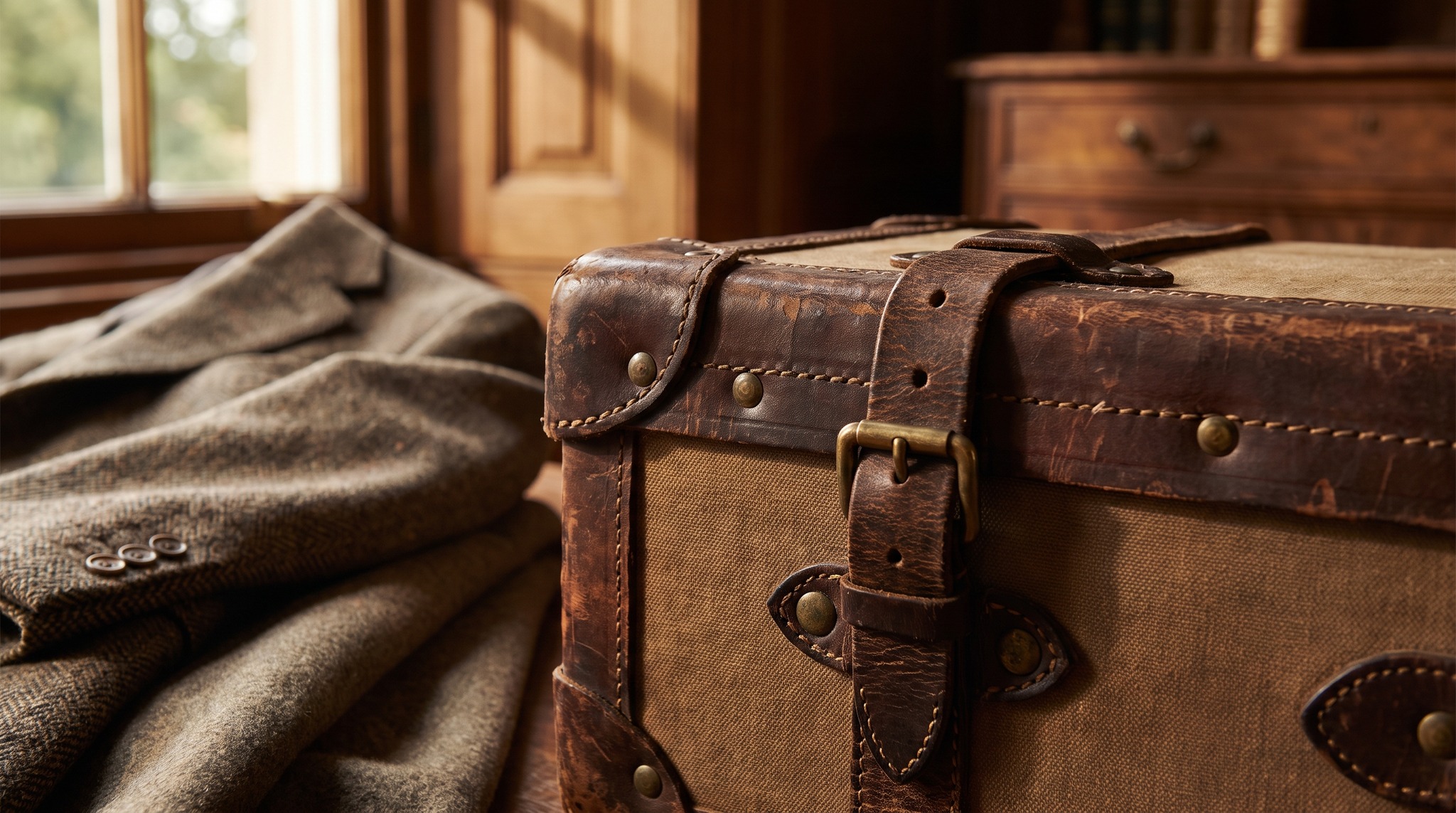
Retrofitting Suitcase Straps: Material, Width, Attachment
You own a high-quality leather suitcase or a vintage travel bag, but the carrying strap is missing or worn out? Retrofitting a strap not only gives the piece of luggage new functionality, but can also become a stylish detail. Particularly with classic suitcases in the style of the 1920s, it is worth investing in a suitable strap that reflects the material and craftsmanship of the original. The right choice of material, width and attachment determines whether the strap becomes a harmonious component or appears out of place.
Material: Leather, Cotton or Synthetic Fibre
For suitcases with leather trim or full leather covering, a strap made of cowhide or buffalo leather is recommended. The thickness should be between 3 and 4 millimetres so that the strap remains dimensionally stable and does not stretch out. Cotton webbing in twill weave suits canvas suitcases and sailcloth bags, but looks out of place on polished leather suitcases. Synthetic fibre straps with nylon fabric offer high tensile strength, but rarely harmonise with the aesthetics of classic luggage. Those who value patina should choose vegetable-tanned leather, which darkens over time and develops signs of use.
Width and Length According to Suitcase Size
The strap width depends on the weight and format of the suitcase. For hand luggage up to 8 kilograms, 30 millimetres is sufficient; for larger travel suitcases, it should be 40 to 50 millimetres. The length is determined by the carrying method: shoulder straps require 120 to 140 centimetres, adjustable versions 100 to 150 centimetres. A strap that is too narrow will cut in under load, one that is too wide looks bulky and may not fit through existing eyelets or loops. Measure the existing attachment points before having a strap made.
Attachment Options: Carabiners, Loops, Rivets
The attachment depends on the construction of the suitcase. Classic methods are:
- Carabiner hooks made of brass or stainless steel for eyelets and D-rings on the suitcase
- Sewn-on loops that are placed around existing handles
- Rivets or screws that go directly through strap and suitcase frame
- Buckles with prong that allow length adjustment
Carabiners offer flexibility but can rattle. Sewn loops sit firmly but cannot be removed. Rivets hold permanently but require holes in the suitcase.
Check Workmanship and Seams
With finished straps, look for double seams at the stress points. The seam should be executed with waxed thread, ideally in saddle stitch. With riveted connections, the rivets must be flush-finished, without sharp edges. Cheap straps often show untidy cut edges where the leather frays. High-quality versions have sealed or dyed edges. In the category Cases and Bags you will find luggage whose straps already incorporate these quality features.
Colour Coordination and Patina
A new strap in cognac brown looks out of place on a patinated black leather suitcase. Either have the strap colour-matched or deliberately choose a contrast that suits the overall appearance. Brass fittings harmonise with warm brown tones, chrome-plated or nickel-plated elements with black or dark brown. Those who want to age a new strap more quickly can treat it with leather grease and deliberately create signs of use. However, this only works with undyed or lightly dyed leather, not with fully dyed straps.
Related items: Caps, Belts, Luxury Slippers. The complete range: Menswear and Accessories.
All Il Padrino Moda news at a glance
Related categories: Caps, Belts, Luxury Slippers. The full range: Men's Fashion and Accessories.
Read more: Suit Trousers with Crease: How Often to Refresh, Adjusting Bracelet Length: Measuring Your Wrist and Allowing Play, Genuine Leather Luggage: How to Recognise Quality Craftsmanship, Baroque in Fabric and Space: Why 1920s Cuts and Heavy Furniture Share the Same Attitude, Luxury Slippers: The Entrance Starts at the Floor