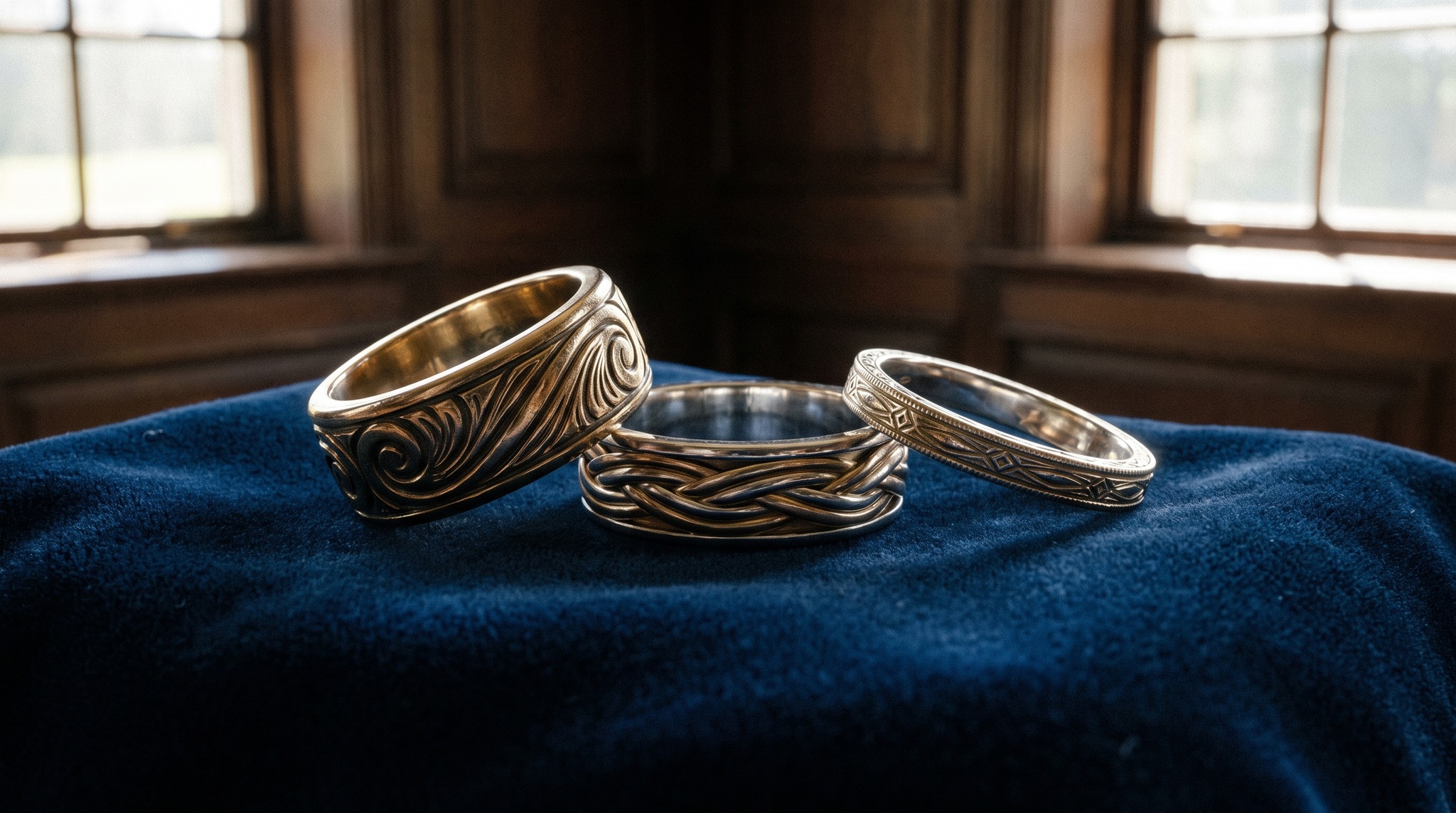
Ring Width and Hand Size: Narrow or Wide Band
You are choosing between a delicate signet ring and a statement piece with a twelve-millimetre band width. The decision does not depend solely on personal taste: hand size, finger length and proportions help determine which ring width looks harmonious on your hand. A band that is too narrow can get lost on strong fingers, while a model that is too wide visually shortens delicate hands. How do you find the right measure?
Hand Size and Finger Proportions as a Starting Point
Large, strong hands with broad finger joints can easily accommodate rings from eight millimetres width upwards. The surface offers enough space so that the band does not appear like a narrow strip. With slender, longer fingers, you may also choose wider models, but should then pay attention to the height of the ring: flat profiles create an elongating effect, high curves can shorten. Delicate hands with short fingers harmonise better with band widths between four and six millimetres that do not dominate the finger.
Specific Measurements for Guidance
As a rule of thumb: measure the circumference of your ring finger. With a circumference up to 56 millimetres, band widths up to six millimetres appear balanced. From size 60 onwards, eight to ten millimetres are appropriate. For sizes over 65, twelve millimetres or more are also suitable. These guidelines apply to classic D-profiles, meaning slightly curved bands:
- Ring size 52 to 56: band width 4 to 6 mm
- Ring size 58 to 62: band width 6 to 9 mm
- Ring size 64 and larger: band width 9 to 14 mm
Considering Wearing Comfort and Weight
Wide rings occupy more space between the finger joints. Those who move their hands frequently or play instruments sometimes find models over ten millimetres obstructive. Weight also plays a role: a solid silver ring with twelve millimetres width and three millimetres thickness weighs considerably more than a five-millimetre narrow band. When in doubt, test whether you find the weight comfortable throughout the entire day.
Question of Style and Occasion
Narrow bands up to six millimetres fit discreetly into formal contexts, while wide statement rings from ten millimetres onwards demand stage and evening. Those who wear several rings in everyday life often combine different widths: a dominant piece on the middle finger, narrower accents on the neighbouring fingers. In the Jewellery section, you will find models that deliberately play with contrasts and show presence through their width.
Material and Surface Treatment
Polished, shiny surfaces make wide rings appear even more substantial, while matte or textured finishes visually reduce the volume. Engravings, chasing or incorporated patterns lighten broad bands and give them depth. Those seeking Men's Jewelry with recognition value often choose models where the width of the ring provides space for artistic details without appearing overloaded.
Fitting and Everyday Test
Take your time with the selection. Wear the ring on a trial basis for a few hours, move your hand, clench your fist. Does the band slip, does it press on the sides or does it feel stable? Wide rings often require half a size larger than narrow ones, as they have more contact surface. Ensure that the inside is slightly rounded so that no edges cut into the skin.
Related to this: Ladies Jewelry, Suits, Suits and jackets. The complete range: men's fashion and accessories.
All Il Padrino Moda news at a glance
Related categories: Ladies Jewelry, Suits, Suits and jackets. The full range: Men's Fashion and Accessories.
Read more: Steaming Pleated Trousers: Refreshing Creases Without an Iron, Bending a Cap Brim: Adjusting the Shape Without Breaking, Storing Caps: Maintaining Shape Without Pressure, Brooch on the Lapel: Position, Weight, Pin Fastening, Suit Waistcoat: Back, Button Count, Length to Trousers