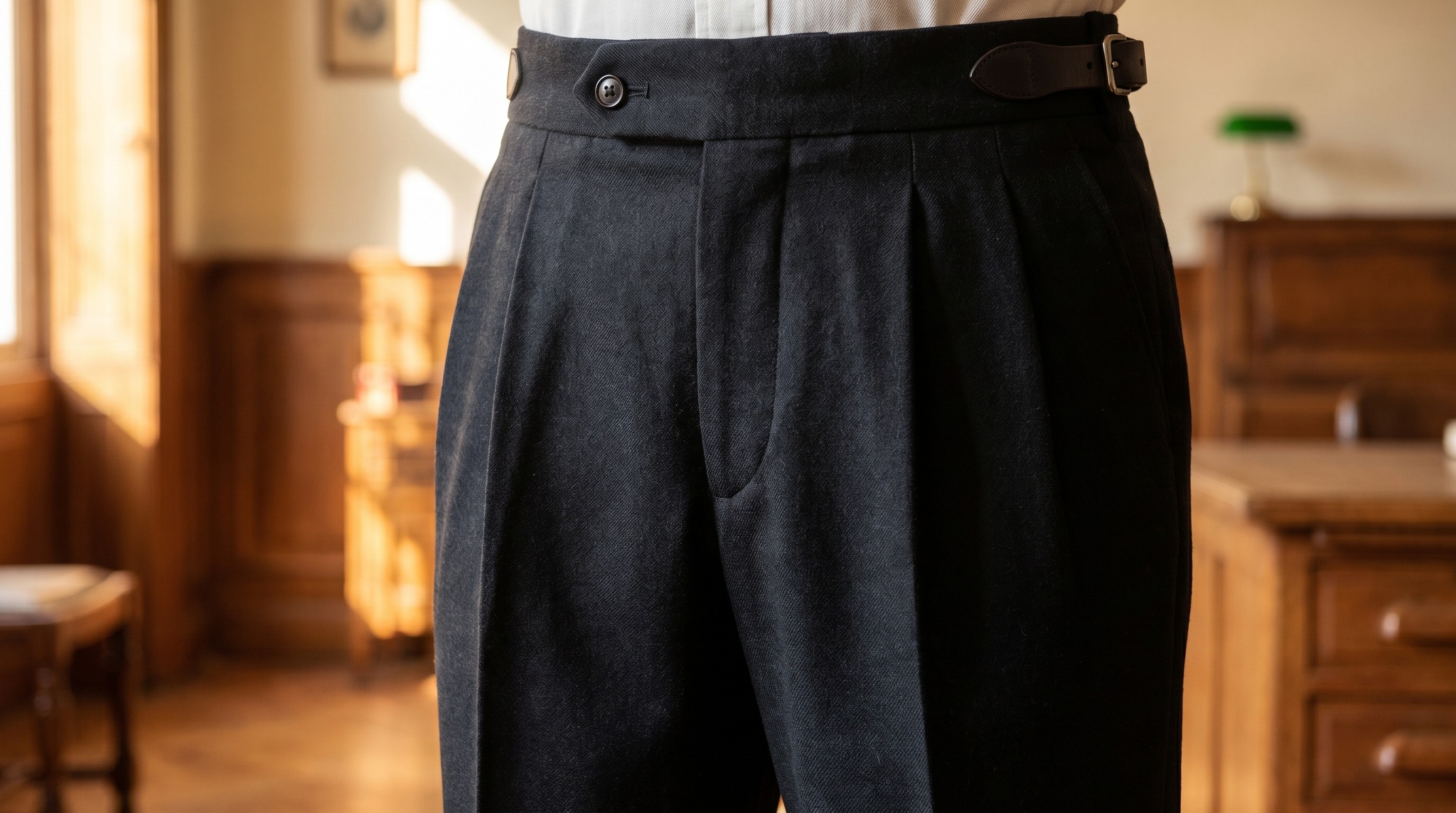
Rise and Leg Width: The Measurements Behind the 1920s Cut
You have chosen the classic style of the 1920s and want to understand what makes an authentic silhouette? The characteristic look of this era does not emerge by chance, but through precise proportions. Rise and leg width form the foundation of the 1920s cut. Those who know these measurements can deliberately select pieces that come close to the original, rather than settling for modern compromises.
The Rise: Where the Trousers Actually Sit
In the 1920s, the waistband did not end at hip level, but well above the natural waist. An authentic rise measures 32 to 36 centimetres above the top of the hip bone, measured at the side seam. This high position optically lengthens the legs and creates the typical V-shape of the upper body. Modern trousers often place the waistband 15 to 20 centimetres lower, which changes the entire proportion. The high rise requires braces or a well-fitting belt, as it is structurally designed for this support.
The Leg Width: Generosity with System
The leg width of 1920s trousers begins at the thigh with a circumference of 35 to 40 centimetres and tapers only minimally to the hem. At the ankle, a classic version still measures 24 to 26 centimetres, even more in zoot suits. This consistently wide form allows freedom of movement and creates the characteristic drape. Pleated trousers enhance this effect through sewn-in pleats at the waistband, which give the fabric additional volume. The ratio between waist and hem width should not exceed 1.6:1, so that the silhouette remains harmonious.
Crotch Length and Break: Details of the Fit
The crotch length in historical cuts is more generous than is common today. Allow for 2 to 4 centimetres more fabric between waistband and crotch, which makes the fit more comfortable and prevents the trousers from pulling when sitting down. The break over the shoe, that is, the fold that the fabric creates at the instep, should be clearly visible. A rule of thumb: the hem touches the shoe in the rear third and falls slightly over the lacing at the front. This length usually requires alteration after purchase, as ready-made measurements rarely fit exactly.
Fabric Weight and Drape
The measurements alone do not guarantee an authentic look. The fabric weight plays a decisive role: 280 to 350 grams per square metre is ideal for the typical drape. Lighter fabrics flutter, heavier ones appear stiff. Wool, wool blends or high-quality cotton twills with body allow the wide form to fall elegantly, rather than adding bulk. The fabric must have enough weight to form the pleats cleanly, without broadening the silhouette.
Trying On: What You Should Look For
When trying on, first check the waistband fit: it should sit firmly but not constrictively on the natural waist. The trouser fly must lie flat, without gaping. No pulling should occur at the crotch when you move or sit down. The leg width appears generous when standing, but must not drag between the legs when walking. Wear the shoes you will later combine during the fitting, as even two centimetres of heel height noticeably change the hem length.
Care: Maintaining the Measurements
To preserve the proportions, clean high-quality pieces by dry cleaning or hand washing in cold water. Machine washing can cause wool to shrink and permanently alters leg width and crotch length. Always iron pleats from the inside out to keep the edges sharp. Hang the trousers on clip hangers that grip at the hem, so that the fabric remains smooth under its own weight and retains its shape.
All Il Padrino Moda news at a glance
Related categories: Belts, Cases and Bags, Luxury Slippers. The full range: Men's Fashion and Accessories.
Read more: Shoulder, Length, Waist: What Makes a Jacket Look Large or Small, Cufflinks, Pocket Square, Chain: How Much Detail Can an Outfit Handle, Pleated Trousers in 1920s Style: Wide Cut, Sharply Pressed, Arm Jewellery for Men: Pearls, Stone and Metal in 1920s Style, From the Ballroom to the Screen: The History of the Zoot Suit