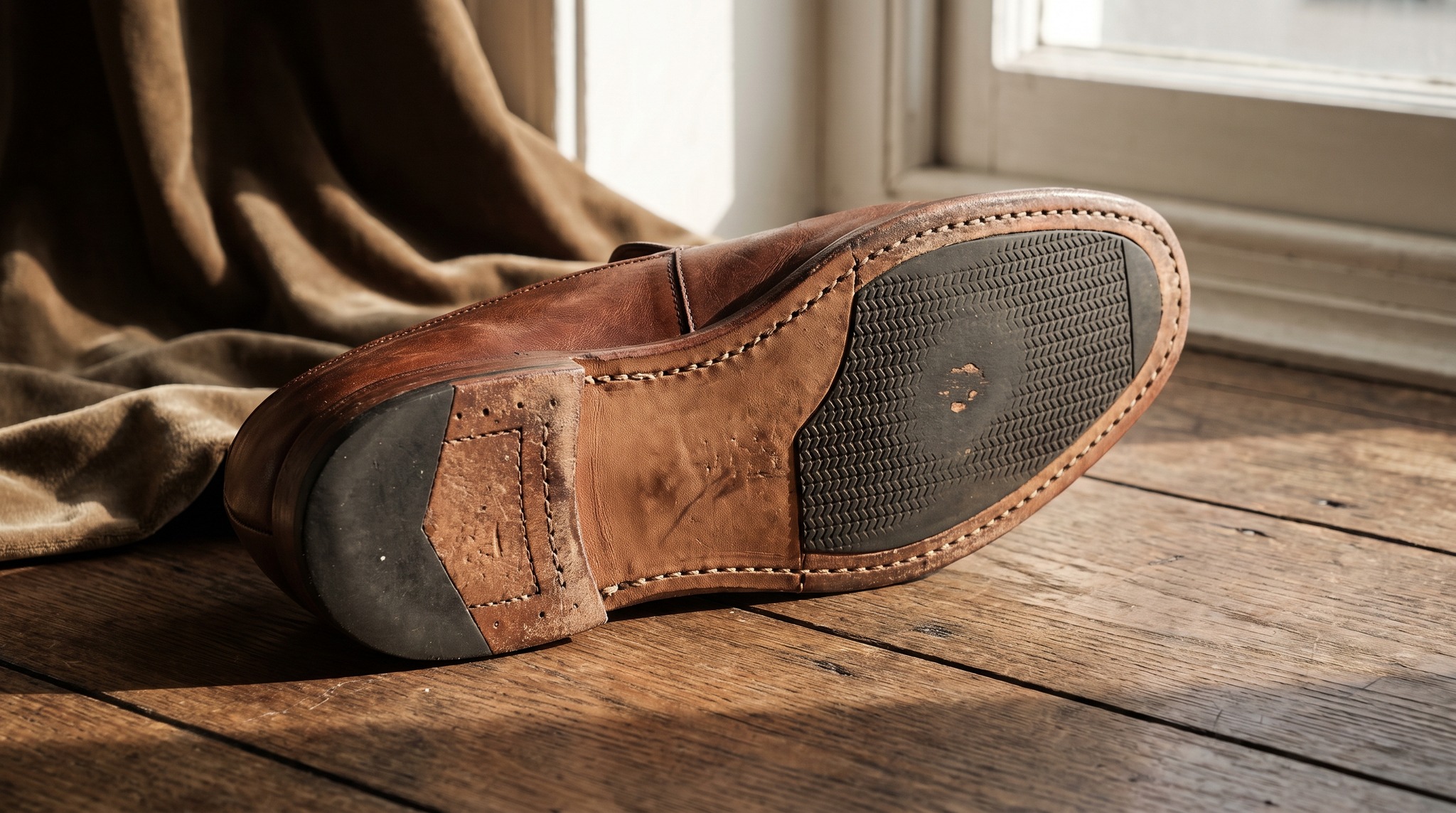
Slipper Insert: Rubber Stopper Under the Leather Sole
You enjoy wearing your leather slippers, but on smooth floors every step becomes a slippery affair? Or the sole shows noticeable wear after just a few weeks? Many wearers of high-quality slippers wonder whether a rubber stopper under the leather sole makes sense and how this modification affects appearance, wearing comfort and longevity. We examine when the insert is worthwhile and what you should consider when having it fitted.
Why Leather Soles Are Slippery
Leather soles consist of several layers of tanned cowhide that are firmly glued and stitched together. The smooth, porous surface offers hardly any grip on polished tiles, marble or lacquered parquet. Particularly with new soles, the roughening that only develops after repeated wear is missing. In addition, leather becomes even more slippery when wet because the fibres absorb moisture and seal the surface.
What a Rubber Stopper Achieves
A rubber stopper, also called a top sole or protective sole, is glued or sewn onto the walking surface by a cobbler. It usually consists of natural rubber or synthetic rubber in thicknesses between 2 and 4 millimetres. The profiled surface significantly increases grip on smooth surfaces. At the same time, the stopper protects the leather sole from direct abrasion on asphalt or concrete, which can extend the lifespan by two to three times. Visually, the insert remains inconspicuous as it is colour-matched to the sole.
When the Insert Is Worthwhile
For Luxury Slippers that you frequently wear on urban pavements or in interiors with smooth floors, a rubber stopper is a sensible investment. Particularly with models featuring Goodyear welted construction, where resoling is elaborate and costly, the insert protects the original material. Even if you tend to have sweaty feet, the rubber layer prevents moisture from softening the leather sole from the inside. You can forgo the stopper if you wear the slippers exclusively on carpets or dry wooden floorboards and appreciate the direct leather contact with the floor.
Fitting by a Professional
Always have the rubber stopper fitted by an experienced cobbler. They will first roughen the leather sole so that the adhesive bonds optimally, and cut the rubber to fit precisely. The edges are ground flush so that no ridge forms. Some workshops also offer stitching, which provides additional stability. The procedure takes about 30 minutes per pair and costs between 25 and 50 euros depending on the region. Ensure that the cobbler uses breathable rubber so that the leather sole can continue to release moisture outwards.
Care and Replacement
A rubber stopper lasts approximately six to twelve months depending on walking volume. Check regularly whether edges are coming loose or the tread is worn down. As soon as the rubber is worn through, you should have it renewed before the underlying leather sole is damaged. Clean the rubber sole with a soft brush and lukewarm water to remove embedded dirt. Avoid aggressive cleaners that could attack the adhesive. This way your slipper remains slip-resistant and elegant at the same time.
Related items: Pleated trousers, Accessoires, Caps. The complete range: Men's Fashion and Accessories.
All Il Padrino Moda news at a glance
Related categories: Pleated trousers, Accessoires, Caps. The full range: Men's Fashion and Accessories.
Read more: Switching from Belt to Braces: Waistband Holes and Button Placement, Jacket Sleeve End: Button Spacing and Cuff Length, Luggage Size: Carry-On, Checked Baggage, Weekend Bag, Luggage Locks: TSA, Combination, Classic Bolt, Baroque Armchairs for Statement Outfits: Furniture as a Stage