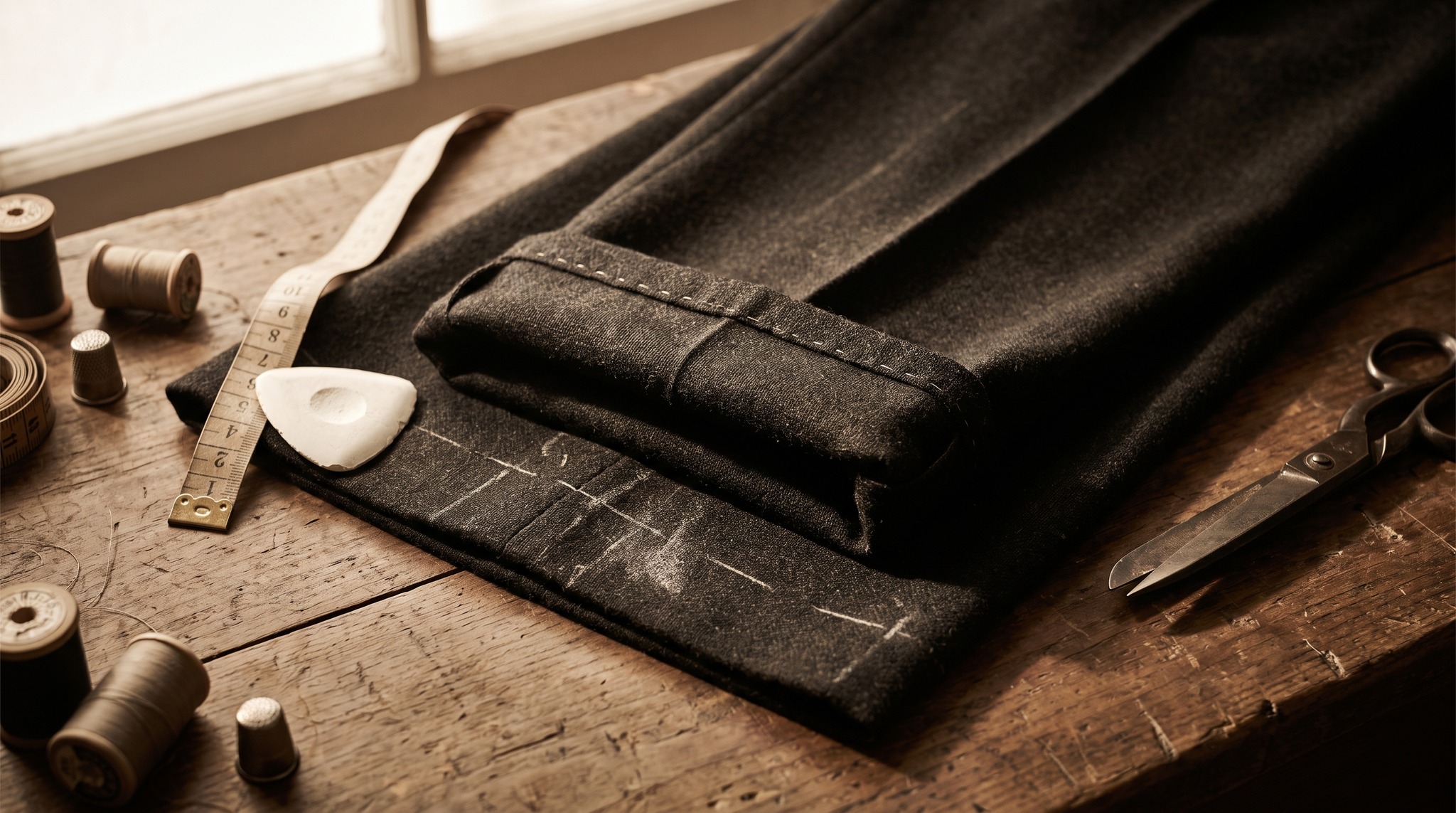
Shortening Pleated Trousers: Cuff or No Cuff
You have chosen pleated trousers and now face the question of whether to wear the trouser leg with or without a cuff. This decision is not merely a matter of personal taste, but influences the entire silhouette and effect of your look. The cuff adds extra weight to the hem and emphasises the classic character, while a plain finish can appear more modern and slimmer. We show you which variant suits which style.
The Classic Rule: Cuff for Wide Cuts
For Pleated trousers with a wide leg and high waist, the cuff is part of the traditional design language. It ensures that the fabric falls better at the hem and does not ride up. The standard height is between 4 and 5 centimetres, and for particularly wide cuts, 5.5 to 6 centimetres is also acceptable. The cuff gives the trousers visual weight and emphasises the vertical line, which is particularly important for voluminous cuts.
When You Should Omit the Cuff
A plain hem finish is suitable if you prefer a continuous, slim line or wish to visually elongate your height. For trousers with a narrower leg width, a cuff can appear too bulky and disrupt the proportions. Also, if you wear the trousers with trainers or flat shoes, a cuff often appears too formal. In this case, simply have the hem finished straight and shortened to the desired length.
The Correct Length with Cuff
With a cuff, the trousers should be shortened so that the hem rests lightly on the shoe and creates a subtle break. The front edge of the cuff ideally ends about one centimetre above the heel. This length is perfect for classic leather shoes or loafers. Trousers with cuffs that are cut too short appear unbalanced, as the cuff then appears too dominant and upsets the proportions.
Technical Notes for Shortening
Always try on the trousers with the shoes you will later wear with them. The heel height makes a considerable difference. For a clean cuff, you need at least 8 to 10 centimetres of additional fabric length, which is folded inwards. A good tailor fixes the cuff invisibly from the inside so that it does not open. Ensure that the pleats and cuff are in a vertical line, which creates visual calm.
A Matter of Style: Your Personal Appearance Decides
Ultimately, the decision for or against the cuff is a question of your personal style. If you wish to authentically interpret the extravagant look of the 1920s, the cuff is essential. It emphasises the confident, strikingly elegant character and makes a clear statement. Those who prefer a more contemporary interpretation can omit the cuff and wear the trousers in a modern, purist manner. Both variants have their justification, as long as the proportions are correct.
Related items: Belts, Cases and Bags, Luxury Slippers. The complete range: Menswear and Accessories.
All Il Padrino Moda news at a glance
Related categories: Belts, Cases and Bags, Luxury Slippers. The full range: Men's Fashion and Accessories.
Read more: Suit button stance: one, two or three buttons to fasten, Stacking Jewellery: Combining Rings and Bracelets with Skill, The Zoot Suit: Why the Long Jacket Changes Every Room, Slipper Heel: Flat or Slightly Raised with Trousers, Styling Pleated Trousers: Which Top Suits the Wide Silhouette