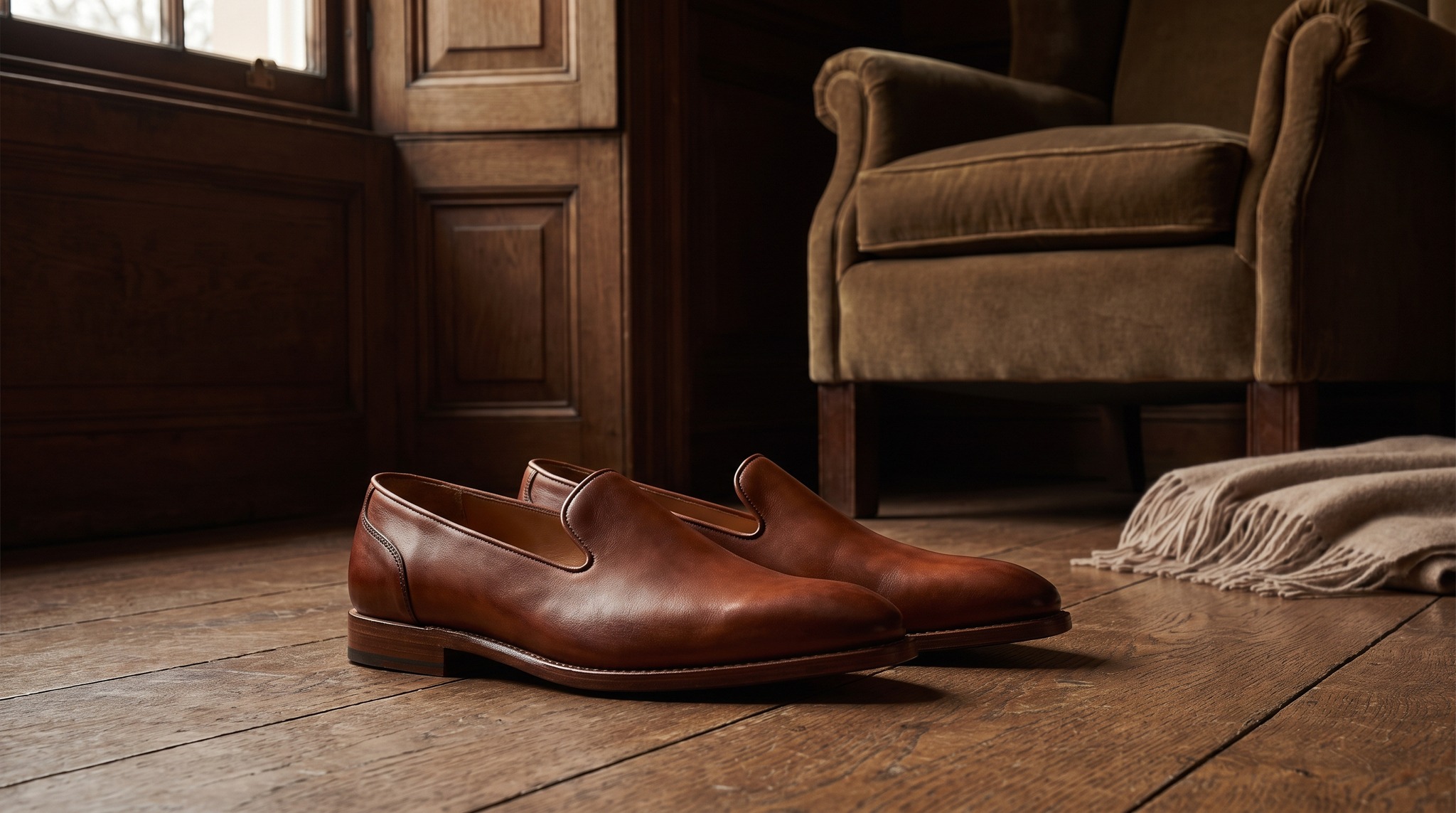
Slipper Fit: Where the Shoe May Pinch and Where It Must Not
You have just unpacked your slippers and are wondering whether the slight feeling of tension across the instep is normal or whether you should have chosen a size larger. Perhaps the heel slips slightly when walking, or the ball of the foot feels constricted. With slippers that have no lacing, the fit is particularly critical, as incorrect purchases cannot be compensated for by adjustment. This guide shows you which pressure points are acceptable and which indicate the wrong size.
The Heel Area: Firm Fit Without Friction
The heel must sit in the shoe without slipping out when rolling forward. One millimetre of play is tolerable, no more. However, if the heel counter presses against the Achilles tendon attachment or rubs laterally on the ankle, the last is cut too narrow. High-quality Luxury Slippers have a padded heel section that adapts to your anatomy after a few days. A slight feeling of tension there is normal in the first hours, pain or skin redness is not.
Ball Area and Toe Box: Freedom of Movement as the Standard
The widest part of your foot, the ball point, should coincide with the widest part of the shoe. If it pinches laterally there, the slipper is too narrow. The toes need space: eight to twelve millimetres of clearance should remain in front of the longest toe, and fifteen for models that taper to a point. Your toes must not overlap or push against the front cap. At the same time, the box must not be too wide, otherwise you lose support and the foot slides forward with every step.
The Instep: Where Pressure Is Desirable
This is the greatest source of error when choosing the size. The instep may indeed make contact with the upper material, in fact it must, so that the slipper does not fall off the foot. An even, surface pressure across the entire instep is correct. It becomes problematic when individual seams or edges cut in or when you have the feeling that the shoe is squeezing the foot from above. After ten minutes of wearing, the feeling of tension should diminish, not increase.
Sole and Footbed: Check the Contact Surface
Your sole should rest fully on the footbed, without the foot protruding laterally over the edge. If your arch is under tension or does not touch the footbed at all, the curvature of the shoe does not match your anatomy. With a flat footbed, you can help with insoles; with shoes that are too strongly arched, only a different model will help. The sole must not bend or form creases anywhere when rolling forward.
Trying On: The Two-Hour Rule
Initially wear new slippers only at home on carpet, for at least one hour at a time. Genuine leather gives way, synthetic material hardly at all. After two hours you will know whether pressure points remain or disappear. Pay particular attention to:
- Redness on the heel, ankle or little toe
- Numbness in the ball area
- Burning under the sole
- Blister formation on the Achilles tendon
None of these signals should occur after the break-in phase. Slippers are comfort shoes, they must never cause pain, not even on the first day.
Related items: Pleated trousers, Accessoires, Caps. The complete range: Menswear and Accessories.
All Il Padrino Moda news at a glance
Related categories: Pleated trousers, Accessoires, Caps. The full range: Men's Fashion and Accessories.
Read more: Suit Jacket Vent: Centre, Side or None, Jewellery Patina: When Tarnishing Is Intentional, Belt with Pleated Trousers: Buckle Centred or Offset to the Side, Jacket Lining: Smooth, Patterned or Contrasting Colours, Shortening Pleated Trousers: Cuff or No Cuff