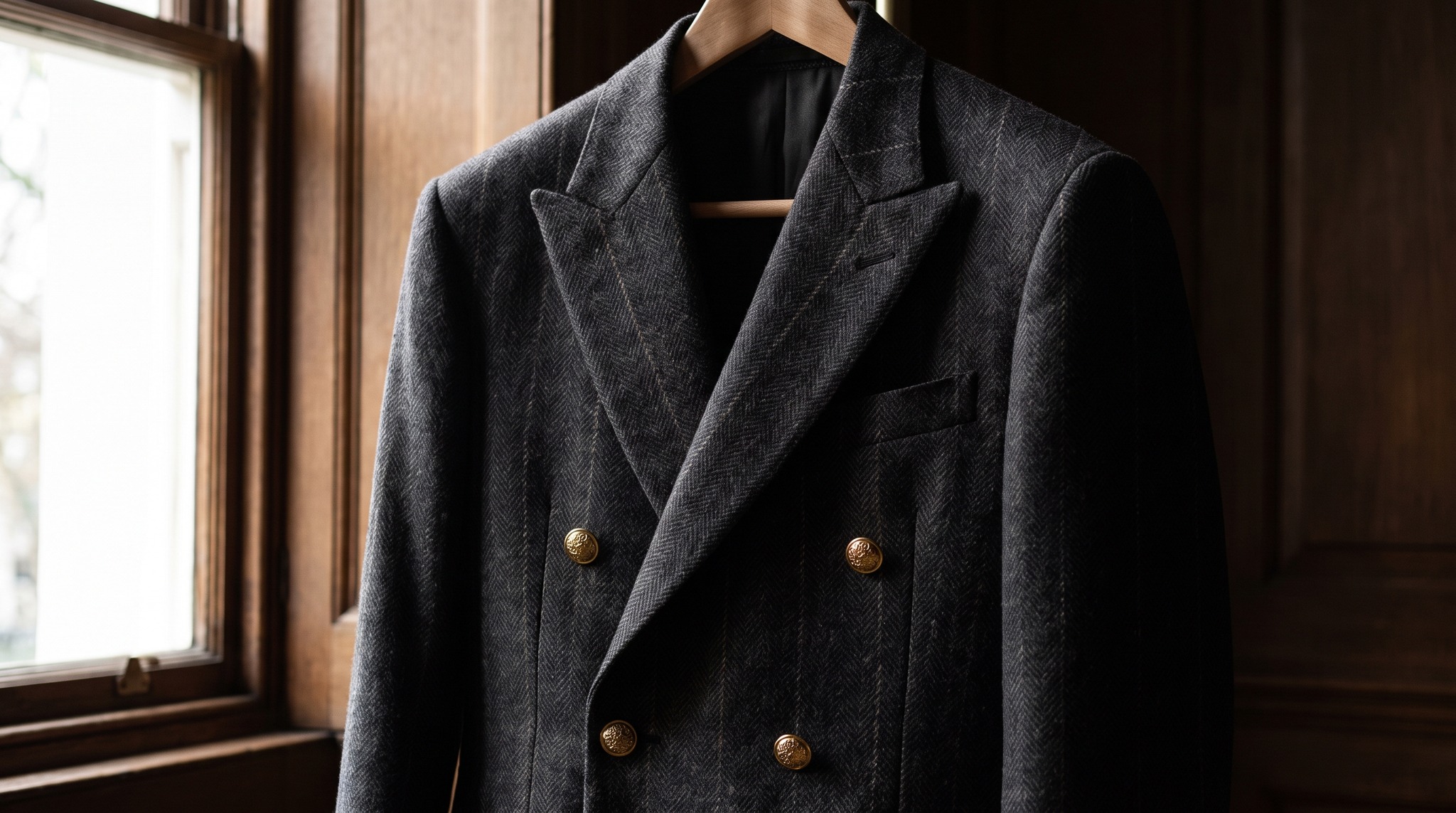
Suit button stance: closing one, two or three buttons
You stand before the mirror, the jacket fits perfectly, but which buttons do you fasten? The question sounds trivial, yet the button rule determines proportions, freedom of movement and stylistic effect. A wrongly buttoned single-breasted jacket appears strained or careless, even when cut and fabric are flawless. Those who know the convention move with confidence.
Single-breasted with two buttons: fasten the top one
With the classic two-button jacket, the simplest of all rules applies: fasten only the top button, the bottom one always remains open. This rule dates back to the time when King Edward VII left his bottom button open because it would no longer close after dinner. Since then, this practice has defined the waist suppression and prevents the fabric from pulling across the hip. As soon as you sit down, unfasten the button completely.
Three-button jacket: middle button is essential
With three buttons, you fasten the middle one, optionally the top one as well. The bottom one always remains open. Some cuts position the top button so high on the lapel that it appears purely decorative and is not meant to be fastened at all. Pay attention to button placement: when the middle button sits at waist height, it creates the desired V-shape that lengthens the torso and balances proportions.
One-button variant: always fastened or completely open
The one-button jacket follows its own logic. Here you fasten the single button when standing, or you wear the jacket deliberately open, for instance on casual occasions. Buttoned up, the one-button cut emphasizes a long, continuous line and appears formal. In Suits with wide pleated trousers and high waistband, the one-button harmonizes particularly well because it does not interrupt the vertical silhouette.
Double-breasted: all or only lower buttons
The double-breasted jacket typically has four or six buttons, of which only two are functional. Always fasten both functional buttons when standing. Some cuts allow fastening only the lower one if the upper one sits very high. Double-breasted jackets remain fastened even when seated, as the overlapping fabric would otherwise gape open. Those who wear Suits and jackets in the style of the 1920s will find the most distinctive button configuration here: broadly overlapping, often with peaked lapels.
Why the rule works: cut and movement
Tailors construct jackets so that the fabric drapes precisely when the designated buttons are fastened. If you fasten the bottom button, the hem pulls inward, the jacket bulges over the hip, wrinkles form. The button rule is not an etiquette game but follows the cut construction: darts, waist suppression and back length are calibrated for the open lower section. This keeps the jacket in motion, when walking, when reaching into the pocket.
Rule of thumb for all occasions
- Two buttons: fasten top, leave bottom open
- Three buttons: fasten middle, leave bottom open, top optional
- One button: fasten or deliberately leave open
- Double-breasted: fasten both functional buttons, even when seated
- When sitting down, unfasten single-breasted jackets completely, double-breasted remain fastened
Those who master these conventions demonstrate knowledge and respect for the craft. The jacket drapes as it should, and you move freely.
Related items: Men's Jewelry, baroque mirrors, Pleated trousers. The complete range: menswear and accessories.
All Il Padrino Moda news at a glance
Related categories: Men's Jewelry, baroque mirrors, Pleated trousers. The full range: Men's Fashion and Accessories.
Read more: Stacking Jewellery: Combining Rings and Bracelets with Skill, Slipper Heel: Flat or Slightly Raised with Trousers, Wide Cut Yet Elegant: What Determines the Fit, The Zoot Suit: Why the Long Jacket Changes Every Room, Bag Closures: Zip, Buckle or Twist Lock Compared