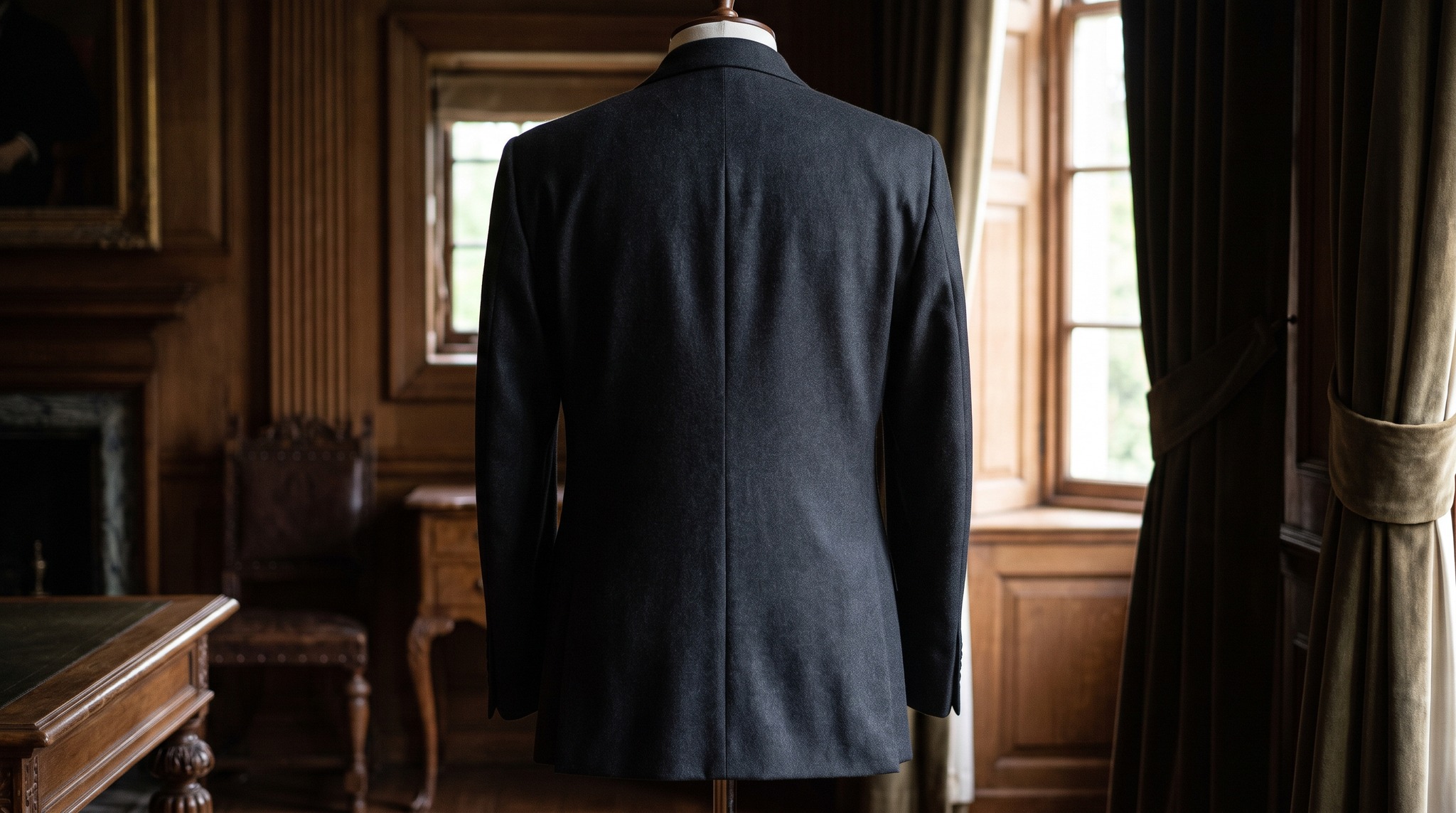
Suit Jacket Vent: Centre, Side or None
When choosing a new suit, you face a detail question that may seem secondary at first glance: should the jacket have a vent, and if so, which type? The answer affects not only the silhouette from behind, but also wearing comfort and freedom of movement. Whether you opt for a centre vent, two side vents or a closed back depends on your style, your figure and the occasion. Each variant has its own history and effect.
The Centre Vent: American Tradition
A single centre vent is considered an American classic. It originated for practical reasons: riders needed freedom of movement in the saddle without the fabric bunching up. Today, this variant offers a clean, tidy rear view and is particularly suitable for slim to average figures. The centre vent usually extends 35 to 40 centimetres upwards from the hem and opens slightly when walking, creating subtle dynamism. However, on fuller seat areas, it can gape unfavourably.
Side Vents: British Elegance
Two side vents, also called side vents, originate from British tailoring. They sit approximately 8 to 12 centimetres from the side seams and run parallel upwards. This construction distributes tension more evenly and prevents pockets from bulging or the fabric from distorting when you put your hands in your trouser pockets. Side vents optically lengthen the legs and create a sporty-elegant line that works particularly well with statement Suits.
Without Vent: Italian Austerity
The closed back without any vent follows Italian tradition and appears particularly formal. This variant creates a smooth, continuous silhouette that radiates elegance and discipline. However, it restricts freedom of movement: when sitting down, the fabric pulls more tightly; when walking, the natural swing is missing. A jacket without a vent should therefore fit perfectly and not be too tight. It is particularly suitable for ceremonial occasions and wearers who value a strictly formal appearance.
Practical Decision Guide
When choosing the right back vent, the following rules of thumb help:
- Centre: for slim figures, American style and moderate formality
- Side: for all figures, best freedom of movement, versatile
- None: for formal occasions, Italian elegance, requires perfect fit
- Consider waist height: with high-waisted pleated trousers, side vents harmonise particularly well
Movement and Fit in Everyday Wear
The back vent shows its true function only in motion. Side vents open symmetrically when walking and give the jacket a flowing drape. The centre vent, however, opens centrally and can emphasise the seat area on fuller figures. Without a vent, the jacket remains closed, which can lead to creasing when sitting. If you frequently wear your jacket whilst seated or are actively on the move, side vents offer the best compromise between elegance and functionality. The choice should also match the width of your trousers: wide-cut pleated trousers particularly suit the generosity of side vents.
Stylistic Effect and Occasion
Each vent variant sends a subtle message. Side vents appear confident and modern, the centre vent traditional-conservative, the closed back strictly ceremonial. For extravagant Suits in the style of the 1920s, side vents are recommended, as they emphasise the wide cuts and freedom of movement of that era. For stage appearances or special occasions where you move about frequently, two vents are the more practical choice. Ultimately, the decision should suit your wardrobe, your figure and your personal presentation.
Related items: Accessoires, Caps, Belts. The complete range: Menswear and Accessories.
All Il Padrino Moda news at a glance
Related categories: Accessoires, Caps, Belts. The full range: Men's Fashion and Accessories.
Read more: Suitcase Lining: Fabric, Padding and Odour Neutrality, Storing Caps: Maintaining Shape Without Pressure, Luggage Locks: TSA, Combination, Classic Bolt, Baroque Armchairs for Statement Outfits: Furniture as a Stage, Slipper Sole: Leather or Rubber for Dance Floor and Pavement