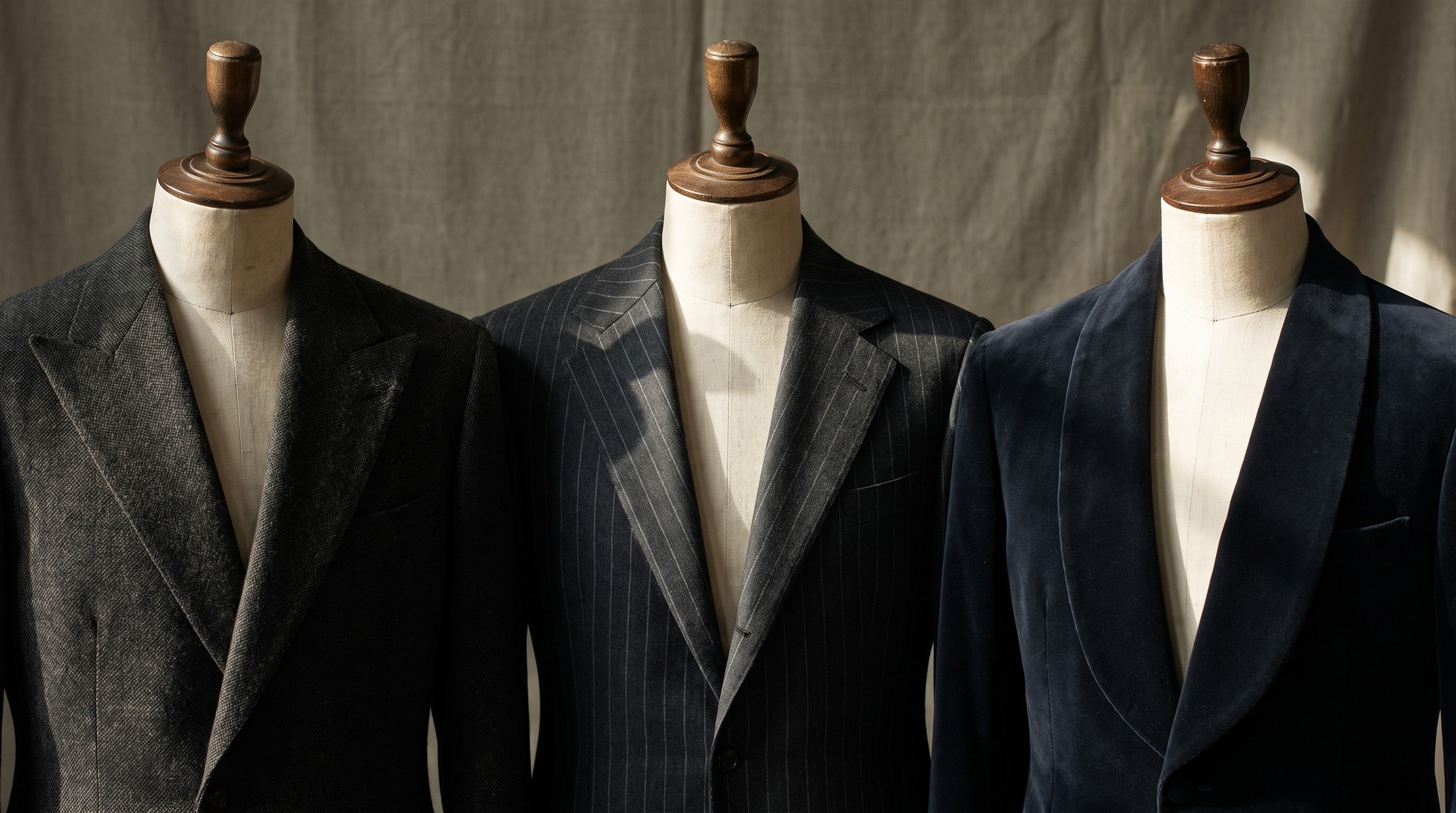
Suit Lapels: Peaked, Notch or Shawl Collar for Your Build
You stand in front of the mirror and wonder why some suits make your shoulders appear broader while others compress your silhouette? The answer often lies in the lapel. Peaked, notch or shawl collar are not merely a matter of taste, but influence how your upper body, neck and face appear proportioned. Those who wear statement pieces should know which lapel accentuates their own stature rather than counteracting it.
Peaked Lapel: Vertical Line for Narrow Shoulders
The peaked lapel runs upward toward the shoulder and creates an ascending line. This shape optically lengthens the upper body and emphasizes the shoulder area. Men with narrow or sloping shoulders benefit from this, because the lapel reinforces the horizontal axis. At the same time, the peaked lapel appears more formal and stage-worthy than the notch lapel, which is why it became the standard for elevated evening wear in the 1920s and 1930s.
Notch Lapel: Classic for Broad Shoulders and Strong Builds
The notch lapel shows a notch between collar and lapel and runs slightly downward. This shape softens broad shoulders and creates a calmer, less dramatic silhouette. For strong or athletic figures, the notch lapel is suitable because it does not additionally emphasize volume. In our Suits and jackets you will find both lapel variants, often with wide cut and high waist that convey the style of the swing era.
Shawl Collar: Soft Line for Short Necks and Round Faces
The shawl collar, also called shawl lapel, runs without interruption from the collar to the first button row. This flowing shape optically lengthens the neck and softens angular facial features. Men with short necks or round faces appear more balanced with shawl collars. Moreover, this lapel shape radiates elegance and theatricality, ideal for stage performances or evening events. The shawl collar was particularly widespread in the 1920s on dinner jackets.
Lapel Width: Rule of Thumb and Proportions
The lapel width should match the collar width and tie width. A rule of thumb states:
- Narrow lapels (7 to 8 cm): for petite builds and narrow faces
- Medium lapels (8.5 to 10 cm): all-rounder for most figures
- Wide lapels (10.5 to 12 cm): for strong men, statement looks and vintage cuts
Wide lapels extend the vertical line and create presence, but quickly appear oversized on small men. Those who wear extravagant fashion may deliberately play with extra-wide lapels, but should then keep shoulder width and overall proportions in view.
Roll Line and Button Point: Details with Impact
The roll line describes where the lapel folds over. A high roll line stretches the upper body, a low one optically shortens it. The button point, meaning the position of the uppermost closed button, determines how much shirt and tie remain visible. In the Suits of the swing era, the button point was often higher than today, which emphasized the waist and made the legs appear longer. Those with tall stature can choose lower button points, shorter men should close higher.
Fabric and Construction: Lapels Must Have Body
A good lapel rolls cleanly, lies flat and does not spring back. This is ensured by interlining, pressing work and fabric weight. Light summer fabrics under 250 grams per square meter tend toward soft lapels, heavy flannels or tweed from 350 grams provide more structure. Hand-crafted interlinings made of horsehair or linen shape the lapel permanently, while glued interlinings lose their shape after several cleanings. Pay attention to clean seam guidance at the lapel edge: it reveals the quality of construction.
Related items: Men's Jewelry, baroque mirrors, Pleated trousers. The complete range: men's fashion and accessories.
All Il Padrino Moda news at a glance
Related categories: Men's Jewelry, baroque mirrors, Pleated trousers. The full range: Men's Fashion and Accessories.
Read more: Luggage Wheels: Two or Four Wheels for Which Surface, Jacket Lining: Smooth, Patterned or Contrasting Colours, Women's Jewellery in a Masculine Style: Wearing Chains, Rings and Bangles with Confidence, Cap Material: Wool, Linen or Cotton Depending on the Season, Belt Hole Spacing: Which Width Helps with Weight Fluctuations