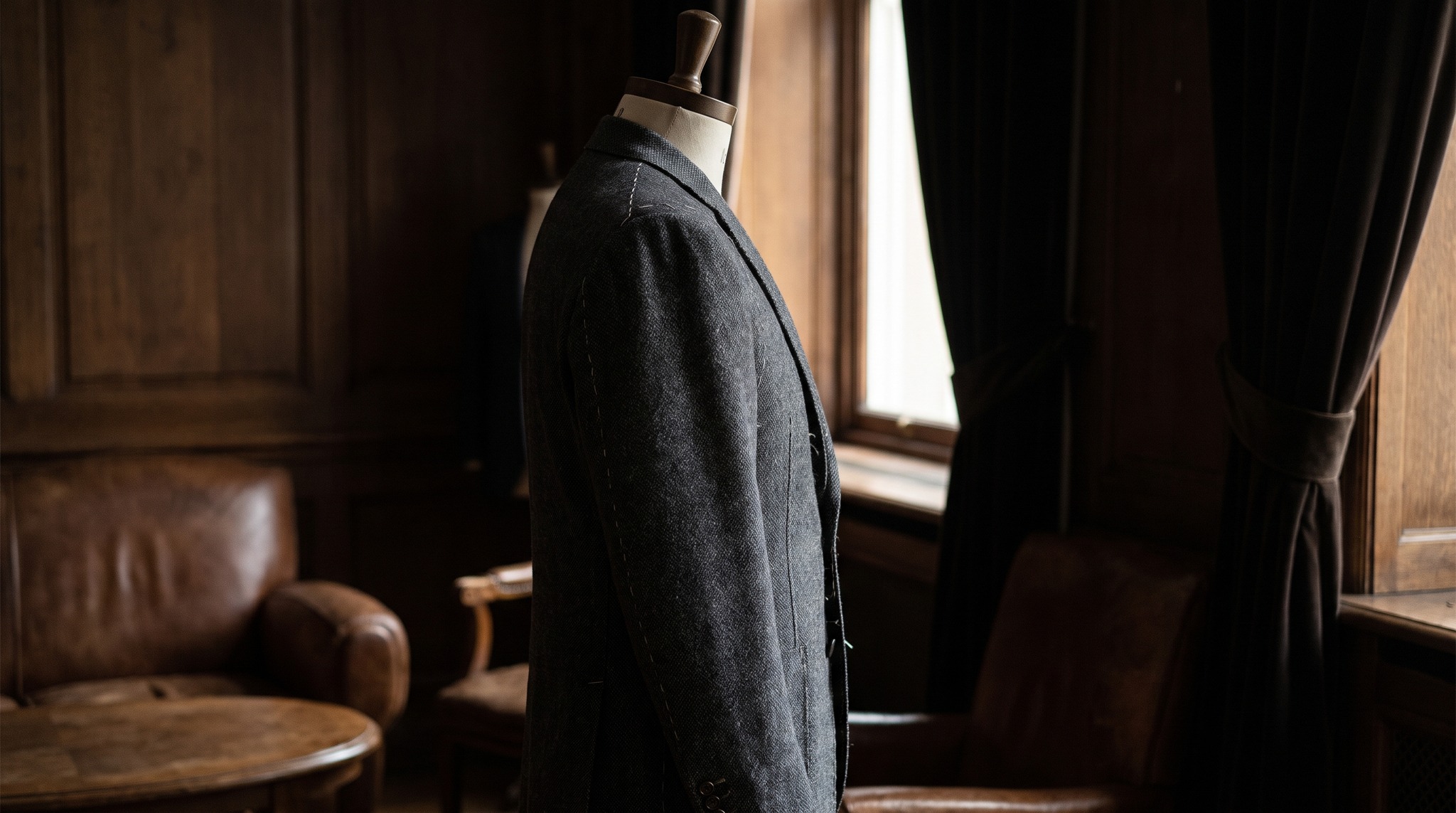
Suit Shoulder: Natural, Padded or Pagoda Shaped to Suit Your Build
The shoulder area determines the effect of a suit more than any other detail. It decides whether you appear broad and powerful or elegant and understated. But which shoulder shape suits your build? And which style underlines your personality? The choice between natural, padded or pagoda shoulder is not merely a matter of taste, but a question of proportion.
The Natural Shoulder: Purism and Lightness
A natural shoulder follows the body line without significant padding. The seam sits exactly where your arm begins. This construction gives the suit lightness and appears particularly flattering on slim to athletic builds. The fabric drapes softly, the silhouette remains organic. Men with broad shoulders benefit from this restraint because no additional width is created. The natural shoulder is the choice for those who value understatement and wish to dispense with superfluous construction.
The Padded Shoulder: Structure and Presence
Padded shoulders give the jacket structure and deliberately build up the silhouette. The padding ranges from subtle to pronounced, depending on the desired effect. For narrow or sloping shoulders, this construction is ideal: it balances proportions and conveys presence. The shoulder width can extend two to four centimetres beyond the natural line. Ensure that the padding runs evenly and does not end abruptly. A well-padded jacket stands more firmly, maintains its shape for years and conveys authority without stiffness.
The Pagoda Shoulder: Statement of the Twenties
The pagoda shoulder is the hallmark of the 1920s and 1930s. It rises slightly towards the outer edge and creates a striking, almost architectural line. This form is found primarily in Suits in the zoot suit style and gives the wearer an unmistakable silhouette. The pagoda suits confident men who appreciate extravagance. It emphasises width and makes the waist appear narrower. Combined with wide pleated trousers, it creates the classic V-shape that defined stage and dance hall.
Shoulder Width and Build: Concrete Guidelines
The correct shoulder width is based on your build. As a rule of thumb:
- For narrow shoulders: padding of 2 to 3 cm beyond the natural line
- For normal shoulders: light padding or natural form
- For broad shoulders: natural shoulder without additional width
- For dramatic silhouettes: pagoda shoulder with up to 4 cm extension
The shoulder seam should always end where your arm actually begins. If it sits too far inward, the jacket appears too small. If it sits too far outward, the fabric hangs and the fit collapses.
Care and Shape Retention of the Shoulder Area
The shoulder padding retains its shape only with proper care. Always hang your jacket on a wide hanger with shaped shoulders. Narrow wire hangers permanently deform the padding. After wearing, the suit should air for at least 24 hours before you hang it back in the wardrobe. Moisture and body heat must be able to escape. For heavily padded or pagoda shoulders, professional cleaning is recommended, as home washing can destroy the structure. Those who invest in high-quality Suits should also respect their construction.
Related items: Accessoires, Caps, Belts. The complete range: Menswear and Accessories.
All Il Padrino Moda news at a glance
Related categories: Accessoires, Caps, Belts. The full range: Men's Fashion and Accessories.
Read more: Slipper Heel Height: Choosing Flat or Raised Heels with Pleated Trousers, Luggage Weight: Planning Leather, Reinforcement and Contents Realistically, Belt Width and Buckle Shape: Which Proportions Harmonise, Pleated Trousers When Seated: Pleat and Leg Width with Bent Knee, Rubber Stopper for Leather Soles: Function and Use with Slippers