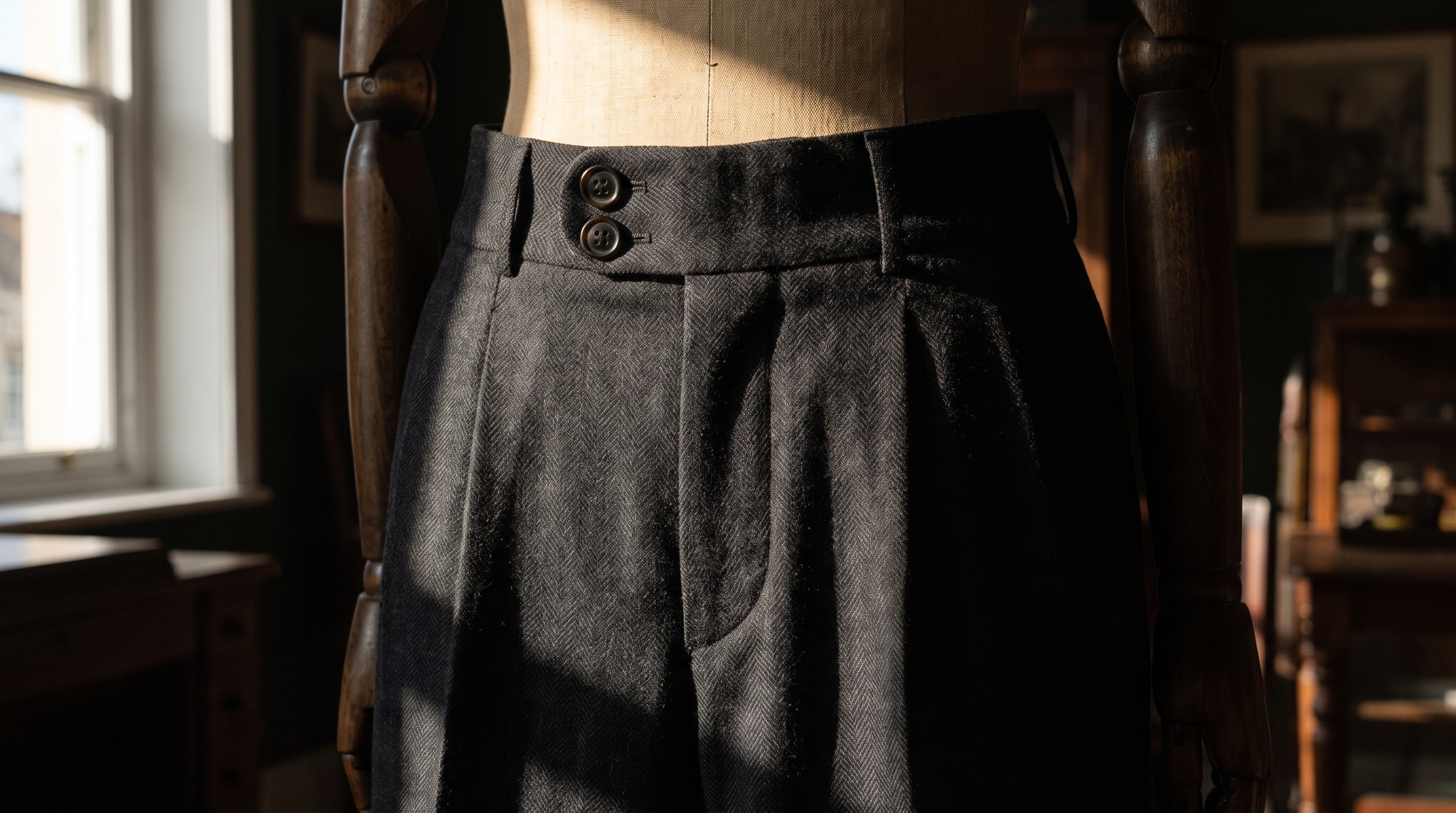
Suit Trousers Without Belt Loops: Waist Measurement and Fit
You have purchased suit trousers without belt loops or are planning to do so. This raises the question: How do you determine the correct waist measurement to ensure the trousers fit perfectly without slipping or cutting in? What special considerations apply to trousers that rely solely on braces or waistband fastening? This guide shows you what matters when it comes to fit and measurements.
Why Trousers Without Belt Loops Require a Precise Waist Measurement
Trousers without belt loops are held exclusively by the waistband and, if applicable, by braces. The waistband must therefore fit exactly: too wide and the trousers slip, too tight and they cut in or create wrinkles. Unlike trousers with a belt, there is no subsequent correction option by adjusting the buckle. The waist measurement is therefore the decisive factor for wearing comfort and elegance.
Determining the Correct Waist Measurement
Measure your waist circumference where the trousers will sit later. With classic Pleated trousers, the waistband usually sits above the hips, often at navel height or just below. Place the tape measure snugly but not constrictingly. Add two to three centimetres of freedom of movement to this measurement. The result is your ideal waist measurement. Ensure that after fastening the waistband, there is still room for one finger between the fabric and your body.
Waistband Height and Fit in Classic Cuts
Trousers in the style of the 1920s are characterised by high waistbands that often end ten to twelve centimetres above the top of the hip bone. This waistband height creates an upright silhouette and prevents the trousers from shifting during movement. The waistband should run horizontally and not tilt forwards or backwards. In vintage-style Suits, this high rise is an essential style element that harmoniously connects jacket and trousers.
Braces as a Functional Addition
Many trousers without belt loops have buttons for braces sewn inside the waistband. Braces take over the holding function and relieve the waistband. They should be adjusted so that the trousers are gently pulled upwards without creating tension in the crotch. The waist measurement may then be slightly wider, as the braces carry the weight of the trousers. Ensure that the braces are attached symmetrically to prevent the waistband from twisting.
Materials and Their Effect on Fit
Wool fabrics with a higher weight, from about 280 grams per square metre, retain their shape better and are less prone to stretching. Lighter fabrics or blended materials may widen slightly during the course of the day. Check after the first few hours of wear whether the trousers still fit optimally. High-quality workmanship with a reinforced waistband and clean seams ensures that the fit is maintained long-term. Professional adjustment by a tailor can perfect waist measurement and fit if required.
Care and Shape Retention
Clean your suit trousers only as often as necessary to preserve the material. After wearing, hang the trousers on a trouser hanger with clips so that the waistband retains its shape. Avoid machine washing if possible: dry cleaning or steam treatment protects the fibres and prevents shrinkage that could alter the waist measurement. This way, the perfect fit is maintained for years.
Related items: baroque mirrors, Accessoires, Caps. The complete range: Menswear and Accessories.
All Il Padrino Moda news at a glance
Related categories: baroque mirrors, Accessoires, Caps. The full range: Men's Fashion and Accessories.
Read more: Jacket Shoulder Pads: When Reinforcement Changes the Line, Belts Without Buckles: Clamp Closures and Slide Bars in Detail, Styling Pleated Trousers: Which Top Suits the Wide Silhouette, Having Pleats Sewn In: When Alterations Are Worth It, Suit Storage: Hangers, Covers, Spacing in the Wardrobe