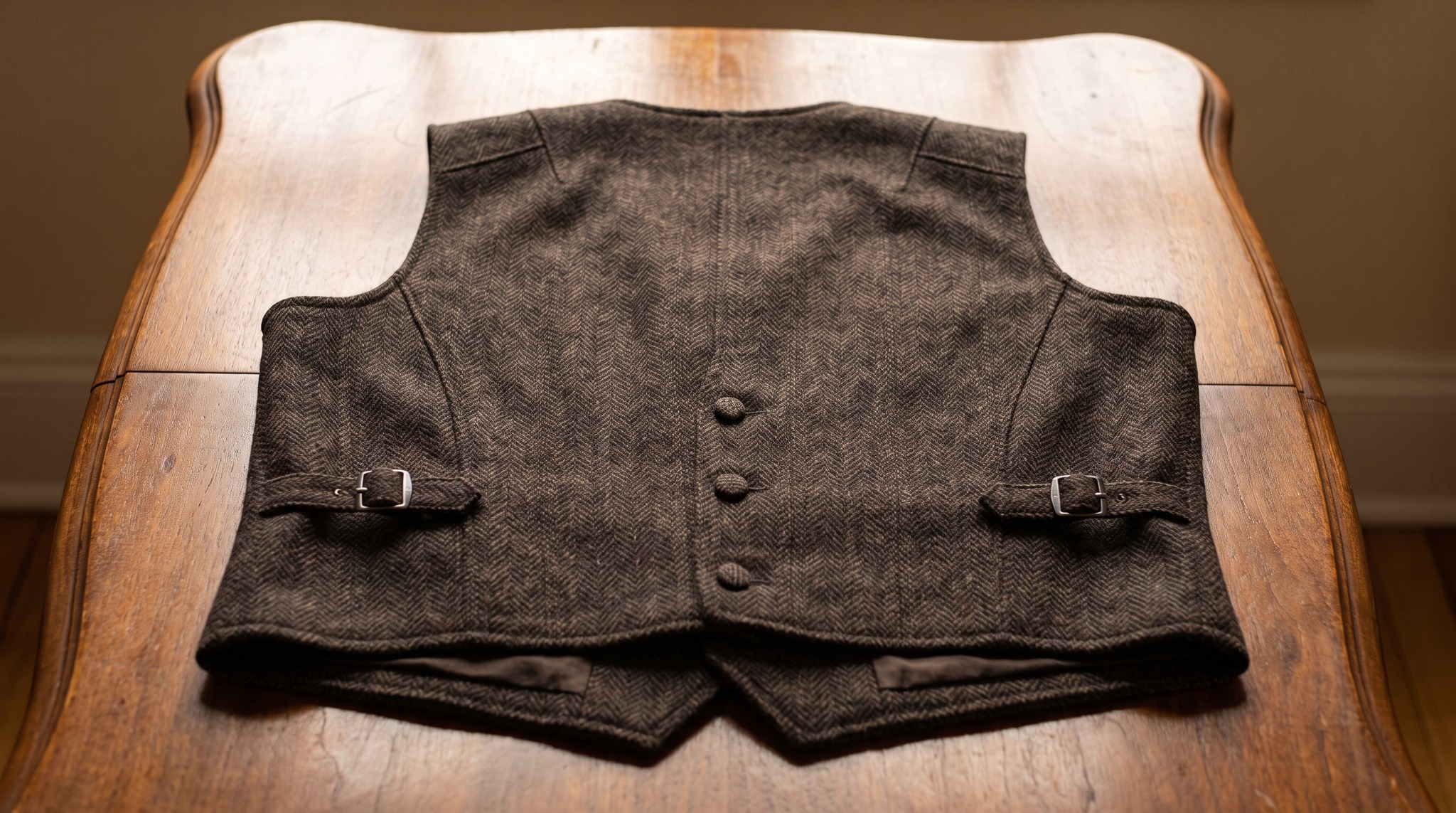
Suit Waistcoat: Back, Button Count, Length to Trousers
You wear a waistcoat with your suit and wonder which details truly matter? Back design, button count and the correct length to the trousers determine whether the waistcoat elongates or shortens your silhouette. Particularly with wide-cut pleated trousers and jackets in the style of the 1920s, the waistcoat requires precise proportions. This guide shows you what to pay attention to.
Back Design: Fabric or Lining
The back of a suit waistcoat can be made entirely from the outer fabric or from lightweight lining material, often viscose or silk. A fabric back appears more formal and complete, ideal for three-piece Suits with statement character. A lining back, however, saves weight, sits more comfortably on the shirt and shows fewer creases under the jacket due to its smooth surface. For summer occasions or extended wear, the lining back is recommended as it is more breathable. Many classic waistcoats also feature an adjustable back strap with buckle that adapts the fit to your waist.
Button Count: Three, Five or Six Buttons
The button count determines the visual effect of your waistcoat. Three buttons create a sporty, relaxed line and suit shorter jackets well. Five buttons are considered the classic standard, they elongate the upper body moderately and harmonize with most suit cuts. Six buttons or more extend the front additionally and emphasize a slim waist, as is typical with zoot suits. Note the rule of thumb: the bottom button always remains open. With a five-button waistcoat, you therefore fasten only four, with six buttons only five.
Length to Trousers: The Waistband Must Disappear
A correctly fitting waistcoat covers the trouser waistband completely, even when you raise your arms or sit down. As a guideline: the lower hem of the waistcoat should reach at least two to three centimeters beyond the belt line. With high-waisted pleated trousers that sit at navel height or above, you need correspondingly longer waistcoats. Measure while standing from the shoulder seam to the desired length, typically 50 to 55 centimeters for average height. Waistcoats that are too short allow a strip of shirt or belt to become visible, which interrupts the elegant line.
Fit at Shoulder and Armhole
The shoulder seam of the waistcoat should end exactly on your natural shoulder edge, not beyond it. The armhole may fit closely without pulling, so that no creases form under the jacket. Ensure that the waistcoat lies smoothly across the chest area: waistcoats that are too tight pull horizontal creases, those too loose form vertical creases. The button placket must close without tension, while the waistcoat is slightly tapered at the waist. With made-to-measure waistcoats, you can have darts and side seams individually adjusted.
Fabric and Weight: Coordination with Jacket and Trousers
Choose the fabric weight of your waistcoat to match the rest of your wardrobe. For three-piece suits made from wool or wool blends, a waistcoat from the same material is recommended, typically 240 to 300 grams per square meter. Lighter summer waistcoats made from linen or cotton weigh 180 to 220 grams and are suitable for warmer months. Pay attention to color coordination: the waistcoat should either match the suit tone-in-tone or create a deliberate contrast, for example through pinstripes, checks or paisley patterns on the back.
Care: Cleaning and Storage
Waistcoats made from wool or silk belong in dry cleaning, not in the washing machine. Air the waistcoat on a hanger after each wear so that moisture can escape. Store it hanging, not folded, to avoid creases. Lining backs can wear out faster than fabric backs under heavy use, but are easier to replace. Check the buttons regularly for secure attachment and have loose buttons sewn on immediately before they are lost.
Related items: Accessoires, Caps, Belts. The complete range: Menswear and Accessories.
All Il Padrino Moda news at a glance
Related categories: Accessoires, Caps, Belts. The full range: Men's Fashion and Accessories.
Read more: Slipper Insole: Leather, Cushioning or Footbed Compared, Leather Travel Bag: Checking Handles, Seams, and Reinforcements, The Right Bag for Every Occasion: Evening Wear and Travel, Braces or Belt: What Suits High Pleated Trousers, Statement Pieces for Stage, Dance Floor and Photoshoot