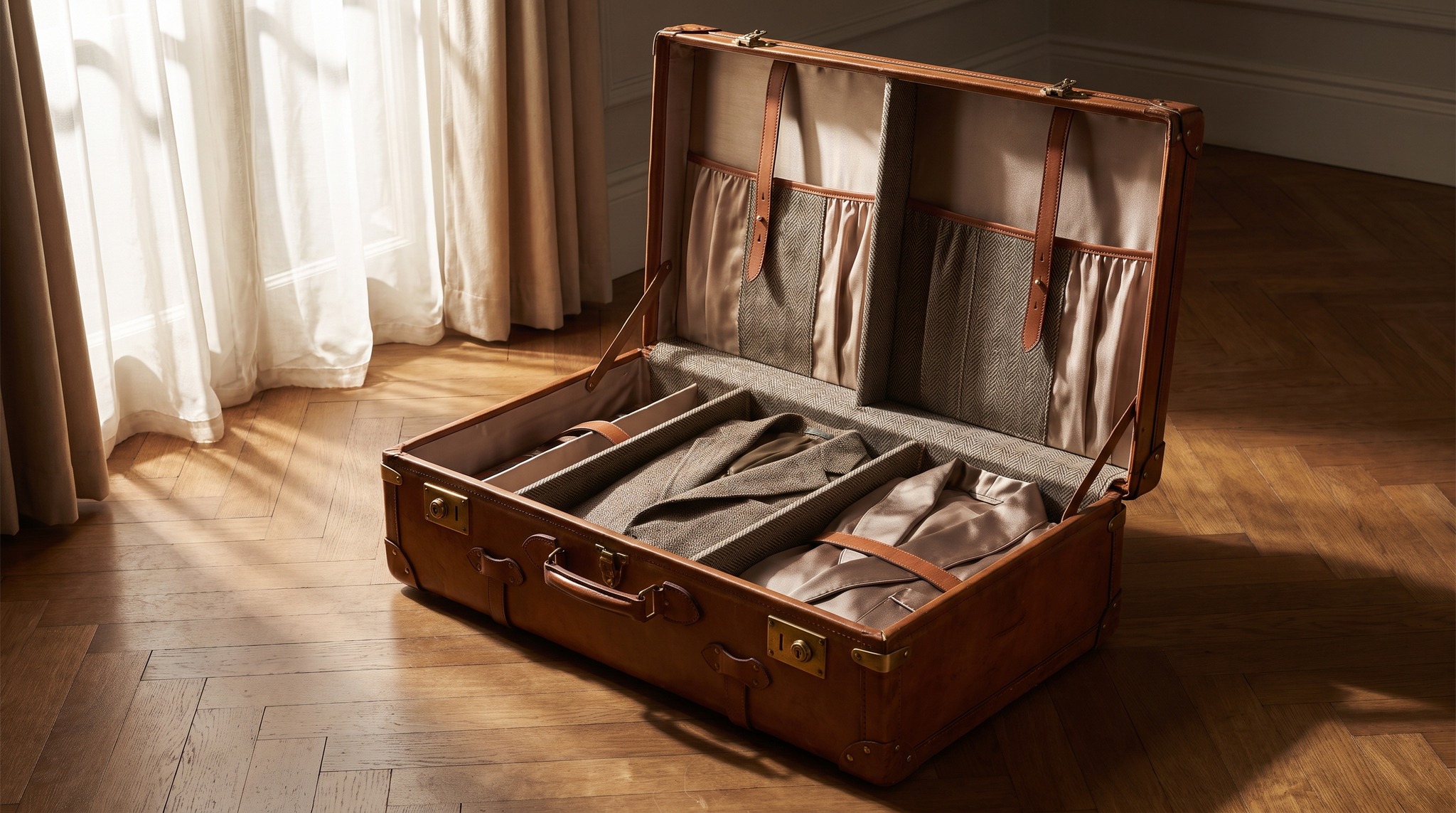
Suitcase Lining: Fabric, Padding, Odour Neutrality
When purchasing a high-quality suitcase, most people focus on workmanship, locks and exterior material. Yet what truly protects your wardrobe during travel lies inside: the lining. Which materials are used, how do padding and fabric quality differ, and why does odour neutrality play a greater role than you might suspect? We address these questions below.
Materials in Lining: From Cotton to Synthetic Fibres
Traditional travel cases rely on cotton fabric or linen, which are breathable and regulate moisture. Modern variants frequently use polyester or nylon, because these fibres are lighter, more tear-resistant and easier to care for. High-quality Cases and Bags combine both worlds: a textile surface made from natural fibre for contact with clothing, backed with a thin plastic layer as a moisture barrier. This keeps the interior dry without your suits or shirts sticking to synthetic material.
Padding: Protection for Delicate Fabrics
A thin foam layer between outer shell and inner lining cushions impacts and prevents pressure marks. In suit carriers, padding is usually located in the area of the hanger rail and along the side walls. Typical thicknesses range between three and eight millimetres. More padding means better protection, but costs interior volume. Ensure that the padding is firmly bonded and does not shift: loose foam layers form creases that can leave impressions on fine fabrics.
Odour Neutrality: Why the Lining Must Not Smell
Newly purchased suitcases often emit a chemical odour from adhesive, plasticisers or dyes. This odour becomes embedded in textiles, particularly in wool and silk. Quality manufacturers air their products before sale or use solvent-free adhesives and tested fabrics. Check the lining before first use: if it smells neutral, you can pack immediately. With a slight odour, airing for two to three days in a dry location helps. Persistent fumes indicate inferior workmanship.
Care and Cleaning of the Lining
Stains in the lining can usually be removed with a damp cloth and mild soap. Avoid aggressive cleaners that attack the material or leave discolouration. With textile lining fabrics, a soft brush helps against dust and lint. Leave the suitcase open after each journey so that residual moisture can escape. This prevents mould formation and musty odours. Removable inner pockets made from fabric can often be washed separately; observe the manufacturer's care instructions.
Rule of Thumb for Selection
When purchasing, you should look for the following features:
- Lining lies smooth, without creases or loose areas
- Seams are cleanly finished and double-stitched
- Padding feels uniformly firm
- No chemical odour when opening the suitcase
- Zips of inner pockets run smoothly
A well-lined suitcase not only protects your wardrobe mechanically, but also preserves the freshness of your clothing. Those who invest in statement pieces should not leave their transport to chance.
Related items: Caps, Belts, Luxury Slippers. The complete range: Menswear and Accessories.
All Il Padrino Moda news at a glance
Related categories: Caps, Belts, Luxury Slippers. The full range: Men's Fashion and Accessories.
Read more: Storing Caps: Maintaining Shape Without Pressure, Storing belts: rolling, hanging or laying flat, Rise and Leg Width: The Measurements Behind the 1920s Cut, Men's Jewellery as a Statement: One Chain, One Rule, The Complete Look: Trousers, Jacket, Shoe, Jewellery