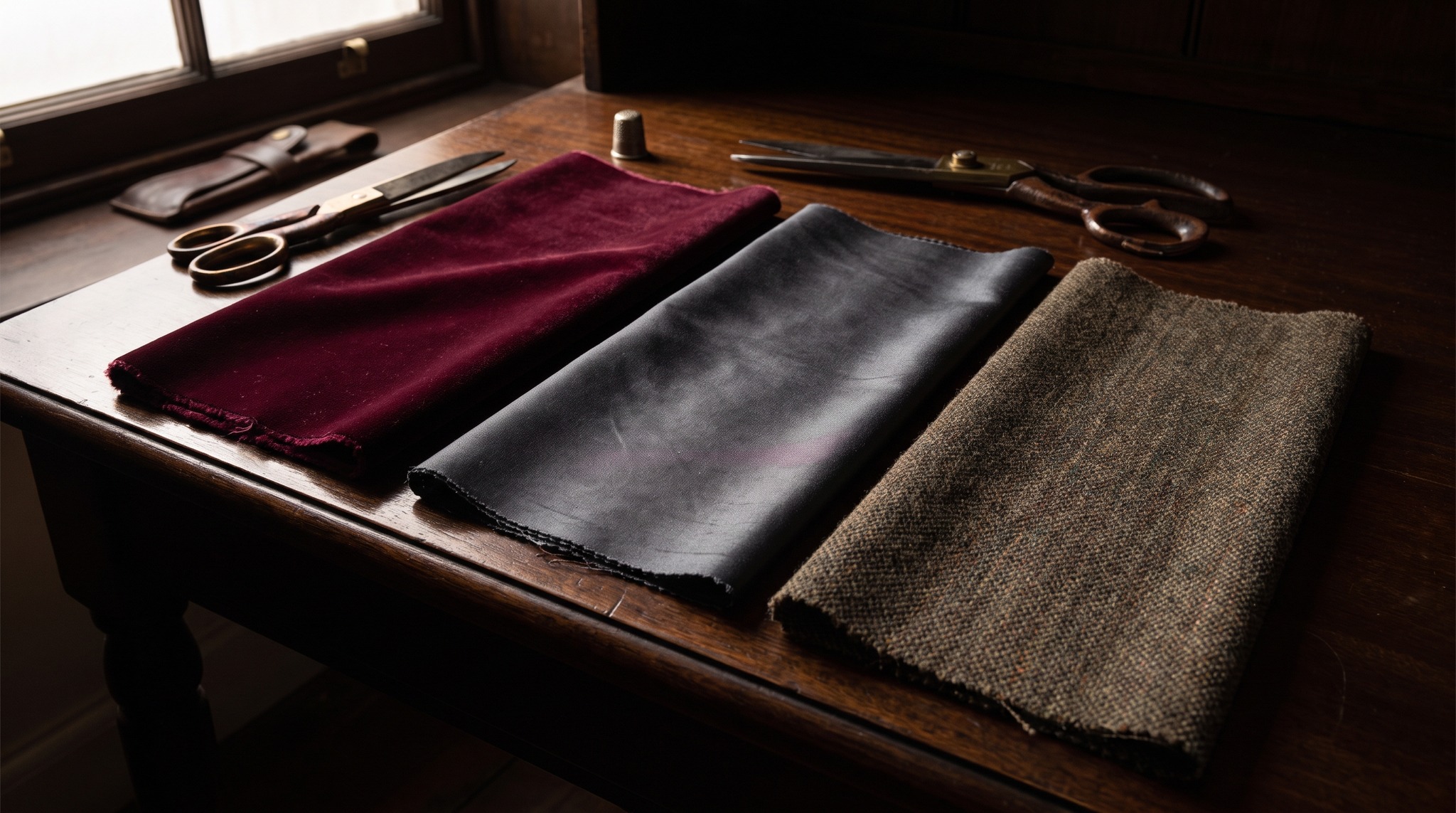
Velvet, Silk, Wool: How Each Fabric Shapes the Cut
You have found the perfect cut, wide-leg trousers with a high waist or a jacket with broad shoulders. But then the question arises: which fabric best showcases this silhouette? The choice of material determines how the cut drapes, how it moves and what effect it creates. Not every fabric suits every form, and those who wear statement pieces should understand what the weave does to the silhouette.
Wool Shapes the Structure
Wool is the backbone of classic menswear. It holds the shape, supports broad shoulders and allows pleats to fall cleanly. A worsted weave of 280 to 320 grams per square metre gives a jacket body without appearing stiff. Flannel at 350 to 400 grams nestles more softly against the body whilst maintaining the contour. For Suits in the style of the 1920s, wool is the first choice: it forms clean lines, forgives movement and returns to its original shape.
Velvet Breaks the Light
Velvet alters the cut not through structure but through surface. The pile captures light, absorbs it or reflects it back, depending on the angle. A wide-cut jacket in cotton velvet appears more voluminous than it is because the texture creates depth. Silk velvet, on the other hand, shines and emphasises every fold, every seam. Those who choose velvet opt for contrast: the fabric transforms a restrained cut into a stage piece, an already striking design into a statement.
Silk Moves Along
Silk flows. It follows movement, swings along and settles anew. A shirt of pure silk at 80 to 100 grams per square metre drapes loosely without fluttering. For Pleated trousers, silk is only suitable to a limited extent: the fabric has too little weight to allow wide legs to fall cleanly. As lining, however, silk is unbeatable. It glides over shirt and skin, facilitates dressing and undressing and cools in summer.
Linen Creases Intentionally
Linen refuses perfect form. It creases, throws folds and shows every movement. That is precisely what constitutes its character. A jacket of 250-gram linen retains shoulder width, but the sleeves crease, the back throws waves. Those who wear linen accept this vitality. The fabric suits relaxed cuts, unlined jackets and trousers with soft waistbands. For strictly structured silhouettes, it is too wilful.
Blended Fabrics Combine Properties
Wool-silk blends unite structure and sheen. A weave of 70 per cent wool and 30 per cent silk holds shape like pure wool but shimmers subtly. Wool-linen fabrics at 60 to 40 per cent offer stability with summery lightness. Cotton-elastane blends give wide cuts freedom of movement without bagging. The rule of thumb is: the higher the wool content, the more shape-stable the cut. The higher the proportion of silk or linen, the softer and more mobile the result.
The Fabric Determines the Effect
An identical cut creates three completely different impressions in flannel, velvet or silk. Flannel appears solid, velvet theatrical, silk elegantly casual. Those who wear statement pieces choose the fabric not by chance but according to occasion and intention. For the stage, velvet is appropriate, for everyday wear wool, for summer linen. The silhouette remains, but the message changes with each weave.
All Il Padrino Moda news at a glance
Related categories: baroque mirrors, Accessoires, Caps. The full range: Men's Fashion and Accessories.
Read more: Shoulder, Length, Waist: What Makes a Jacket Look Large or Small, Cufflinks, Pocket Square, Chain: How Much Detail Can an Outfit Handle, Black, Gold, Bordeaux: Colours That Work on the Dance Floor, The Fashion of the Mafia Epics: Why This Look Never Fades, Ladies Jewellery With Character: Necklaces, Rings, Earrings